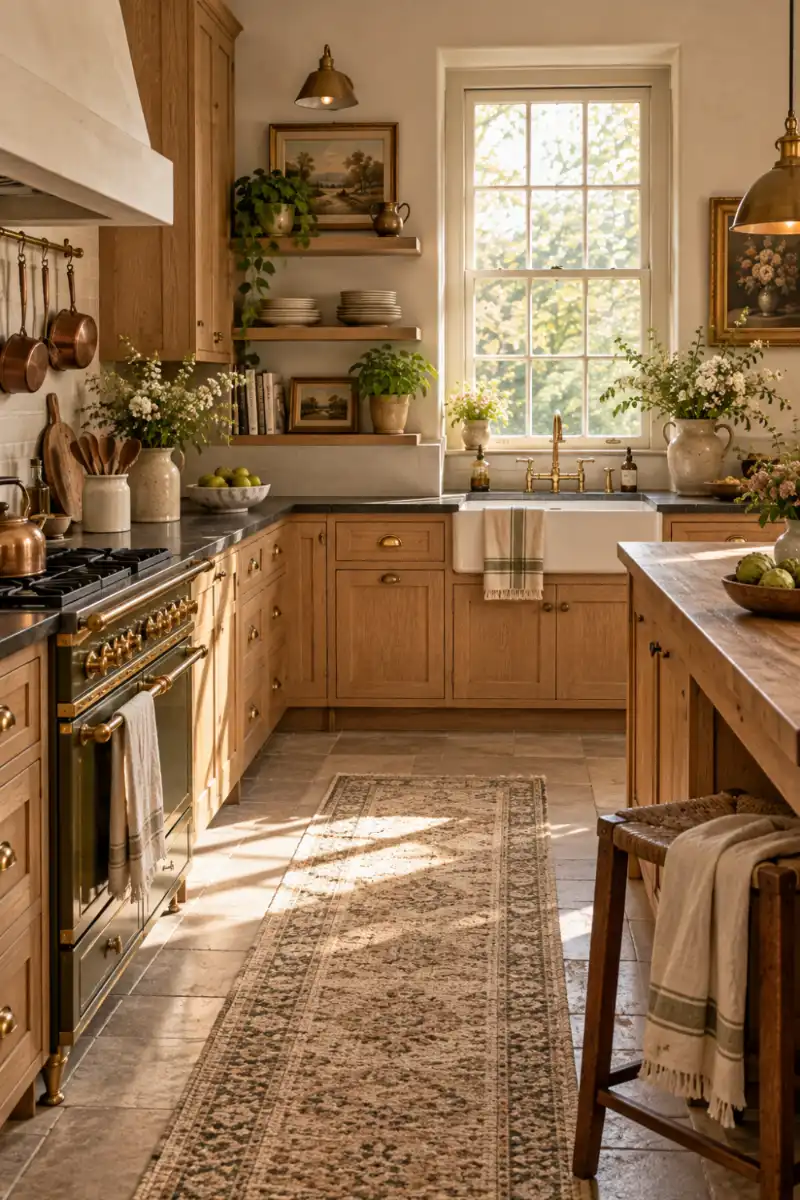
A kitchen can feel current without looking brand new. Modern rustic kitchens bring together clean lines, warm timber, durable stone, and details that feel gathered over time. The result is calm rather than themed, with enough texture to make everyday cooking feel more welcoming.
These 23 ideas show how to build that balance through cabinetry, lighting, finishes, storage, and small styling choices. Use one idea for a gentle refresh or layer several into a larger renovation. I have noticed that the rooms with the most staying power usually leave some breathing room around their character pieces.
Warm Oak Cabinets
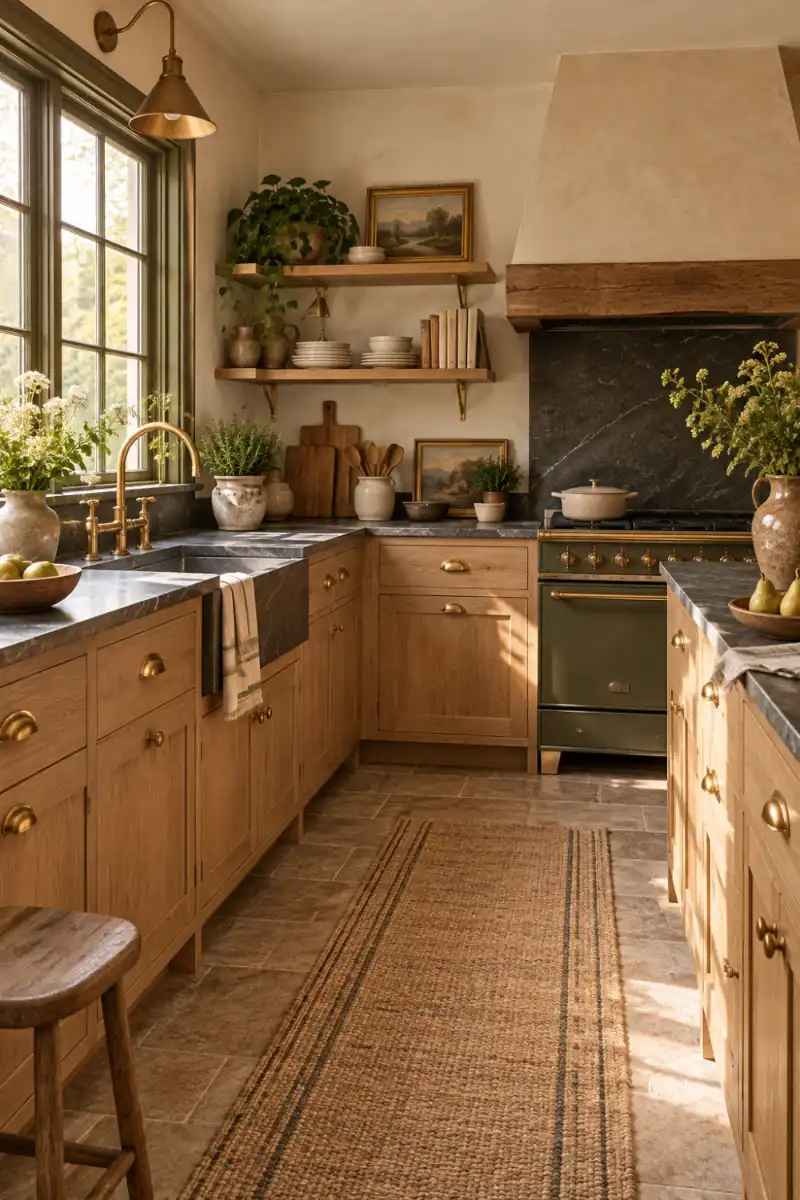
Warm oak gives a streamlined kitchen a grounded, welcoming base. Choose a low-sheen finish that lets the grain show, then keep door profiles simple. Flat fronts and narrow shaker doors both work well because they feel orderly without looking stark.
Pair the wood with creamy walls and a dark counter so the room has contrast. Skip overly orange stains and glossy lacquer. A natural mid-tone oak ages kindly and makes everyday marks less noticeable.
Stoneware Shelves
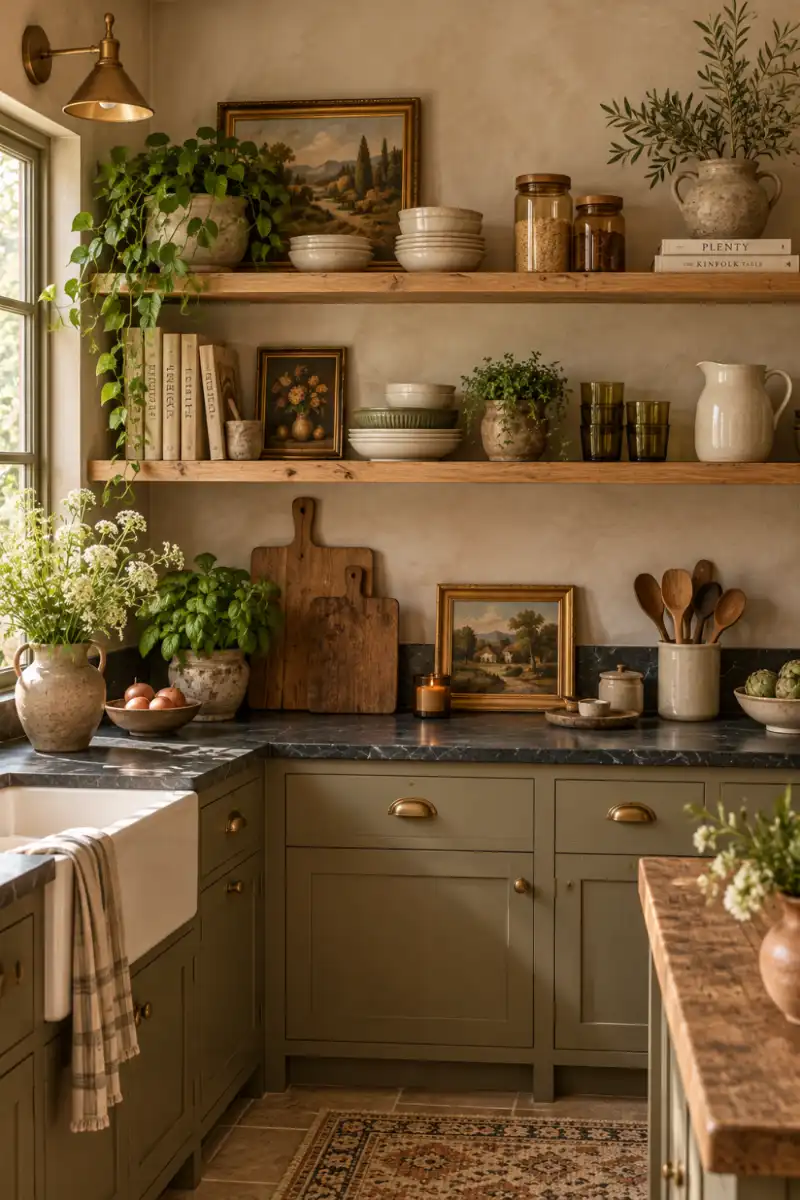
- Keep the shelf depth modest so pieces stay easy to reach.
- Stack everyday bowls in a small palette of cream, oatmeal, and soft green.
- Mix one framed sketch or cookbook between practical items.
- Leave a little empty shelf space so the display does not become visual clutter.
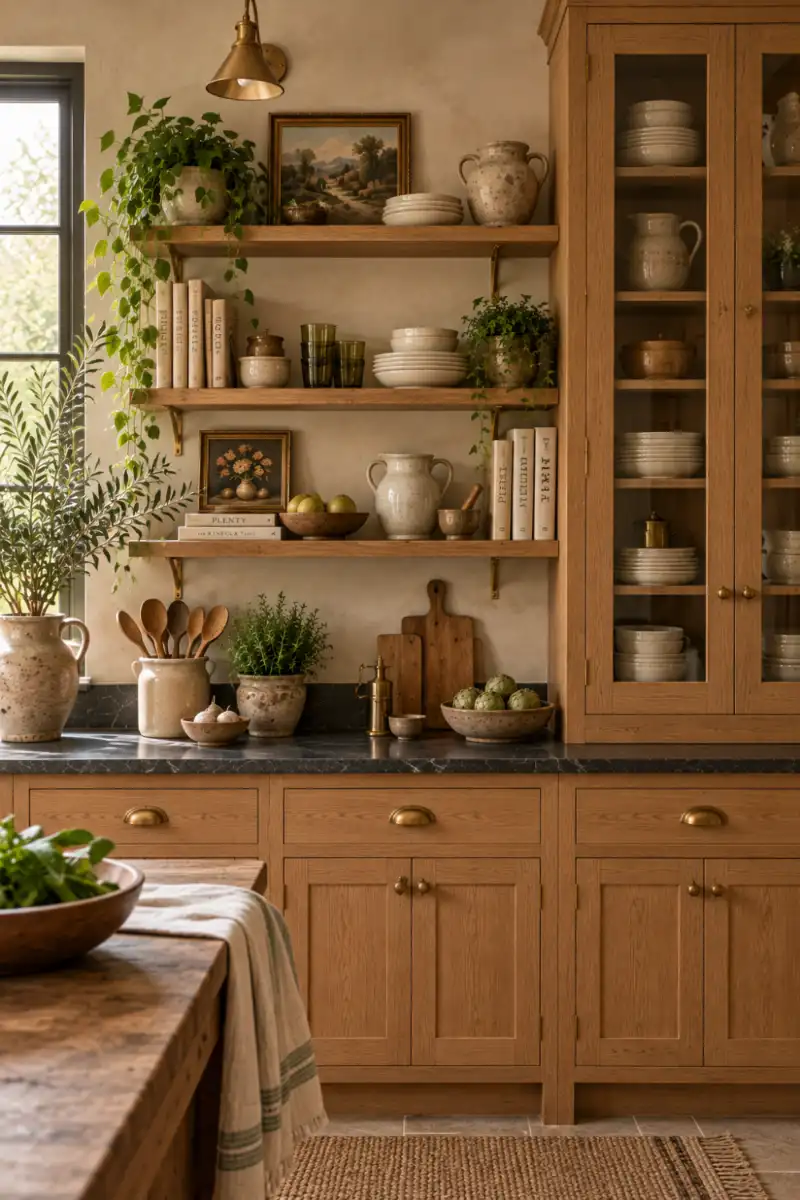
Open shelves work best when they hold the things you actually use. Their gentle imperfection softens a run of cabinets, while the repeated shapes of bowls and mugs keep the look calm. Rotate one or two special pieces seasonally instead of filling every inch.
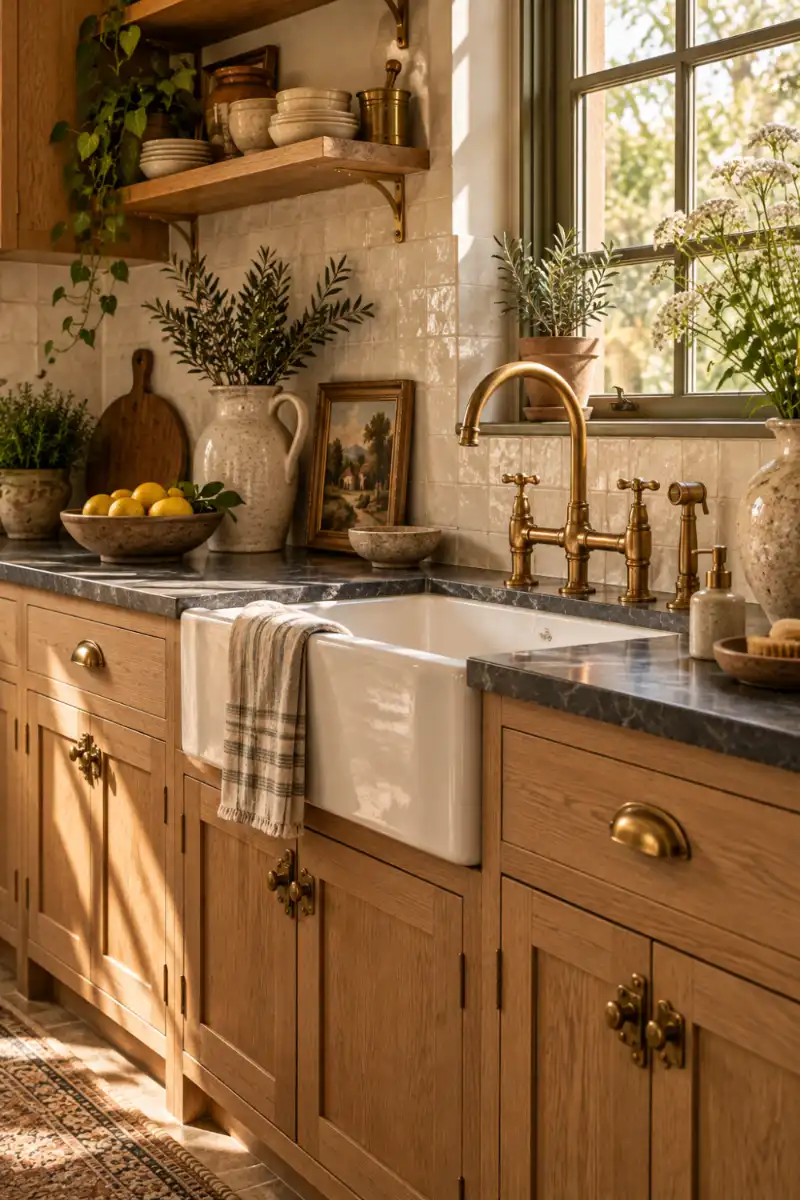
Aged Brass Details
Quick Tip:
Use aged brass in two or three places, such as the faucet, cabinet pulls, and pendant lights. A limited repeat looks intentional. Let the finish deepen naturally instead of polishing it to a bright shine.
Brass adds warmth where wood and stone can feel visually heavy. It is especially useful around a dark counter or charcoal cabinet, where a few warm metal notes prevent the palette from becoming severe. If you are refinishing nearby surfaces, keep fresh air moving and follow the EPA guidance on ventilation.
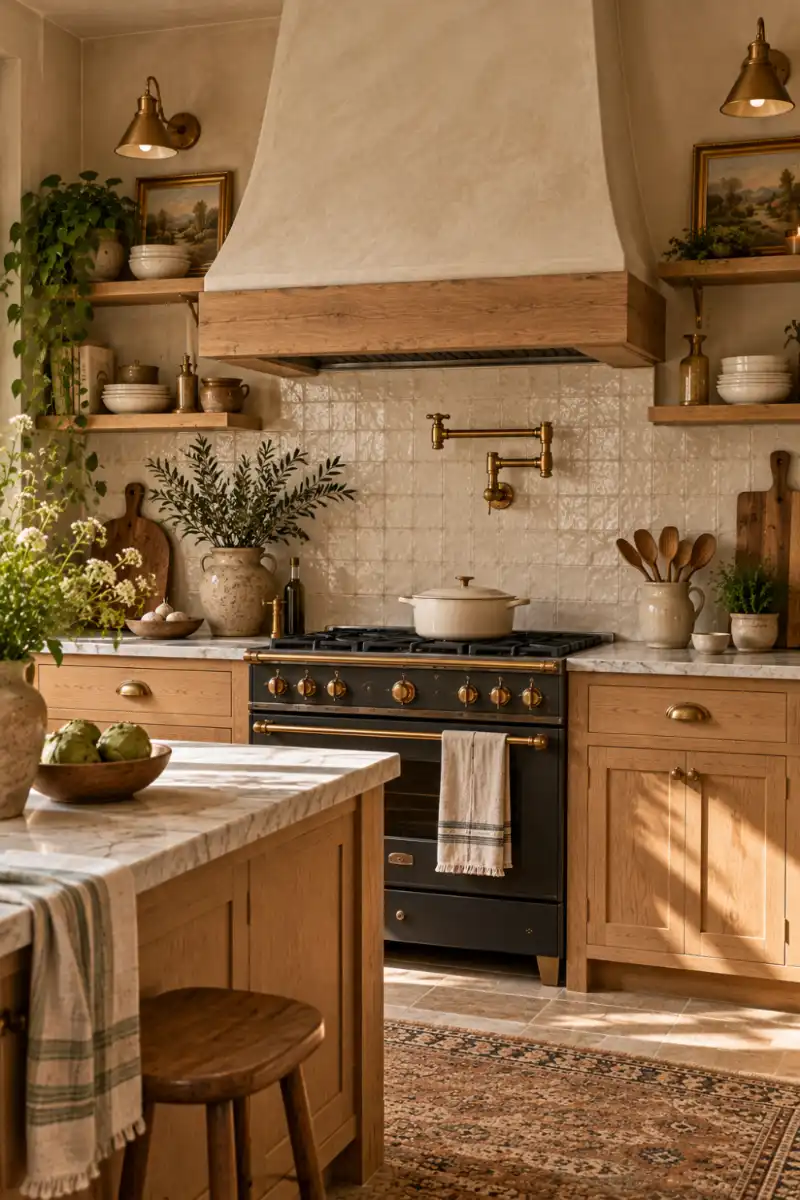
Plaster Range Hood
BEFORE
A standard metal hood can become a hard visual break above the range. It may be practical, but it often leaves the cooking wall feeling like a collection of appliances.
AFTER
A softly shaped plaster hood turns that same wall into an architectural focal point. Its matte surface catches light gently and connects with stone, tile, and painted walls.
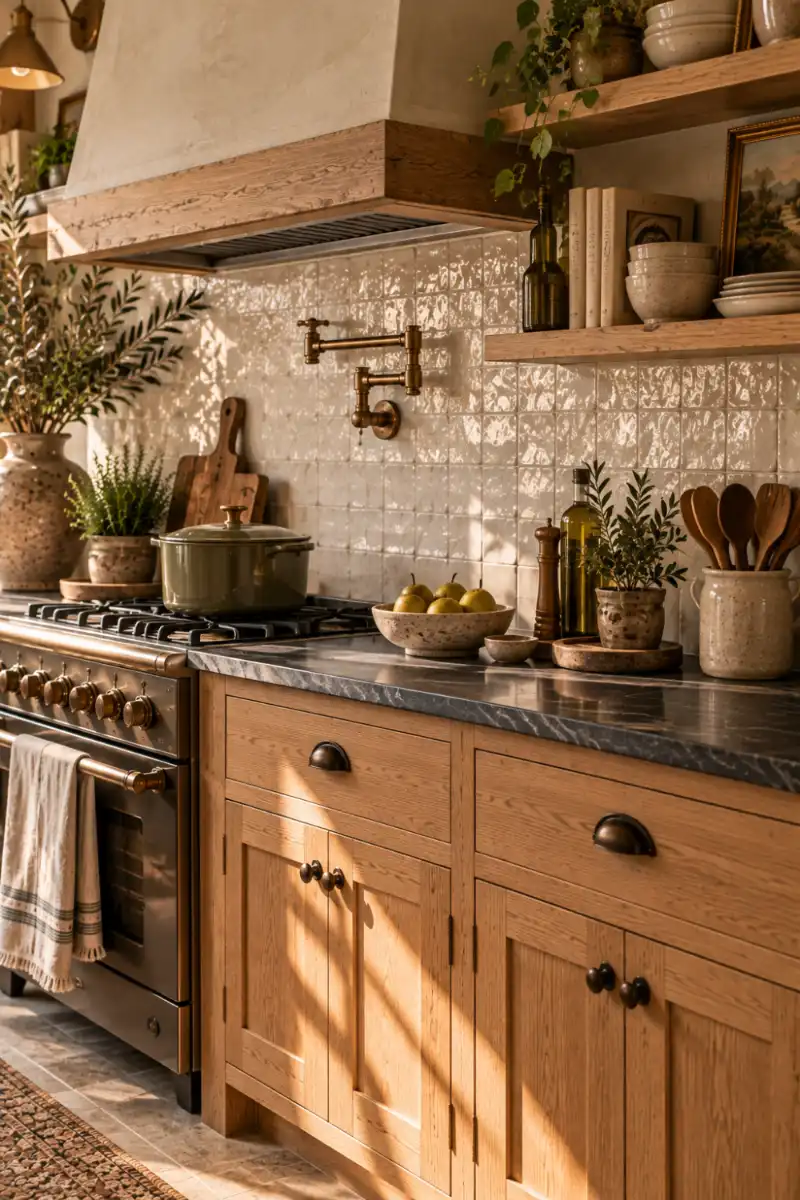
Keep the silhouette simple with a broad lower edge and minimal trim. The quiet curve or tapered form is enough. Handmade tile beneath it adds another layer of texture without asking for a busy pattern.
Vintage Wood Table
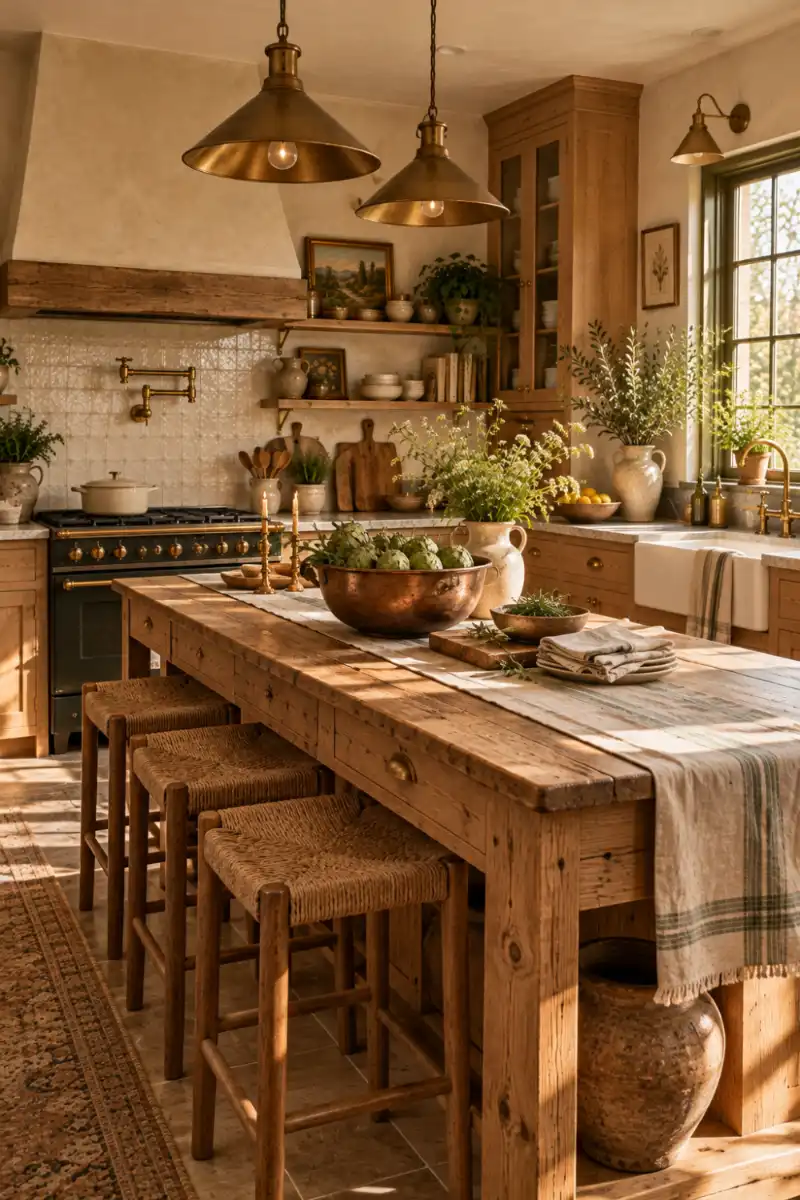
- Measure clear walking paths before choosing a table for the center of the room.
- Look for a sturdy base with room for knees and stools.
- Use a food-safe finish if the surface will be used for prep.
- Add one low bowl or crock rather than crowding the worktop.
A timeworn table makes an island feel less fitted and more personal. The scratches and softened edges bring welcome history to new cabinetry. For more ways to layer this feeling through a room, see these vintage decorating ideas. Practical character wins here.
Open Shelf Balance
| Approach | Best Use | Look |
|---|---|---|
| One open bay | Everyday dishes | Calm and edited |
| Full open wall | Large collections | More casual and busy |
| Closed cabinets | Appliances and pantry goods | Clean and practical |
Most kitchens benefit from a mix of open and closed storage. A single open section breaks up a long cabinet wall, while doors hide the less photogenic necessities. In my experience, this balance feels easier to maintain than an entire wall of exposed shelves.
Handmade Tile
DO
- Choose a softly varied glaze that catches the light.
- Use a grout color close to the tile for a quieter wall.
- Sample tile beside the cabinet wood before ordering.
DON’T
- Mix a heavily patterned tile with several other strong finishes.
- Expect every handmade tile to match perfectly.
- Use a high-contrast grout unless you want a graphic grid.
Slight color shifts and uneven edges give a backsplash depth that flat machine-made tile cannot copy. Let those variations be the feature, then simplify the counter and hardware around them. It is a small surface with a large effect.
Soft Layered Lighting
Cost: Start with bulbs and one small lamp before replacing fixtures.
Time: An afternoon for a simple lighting refresh.
Best For: Kitchens that feel flat after sunset.
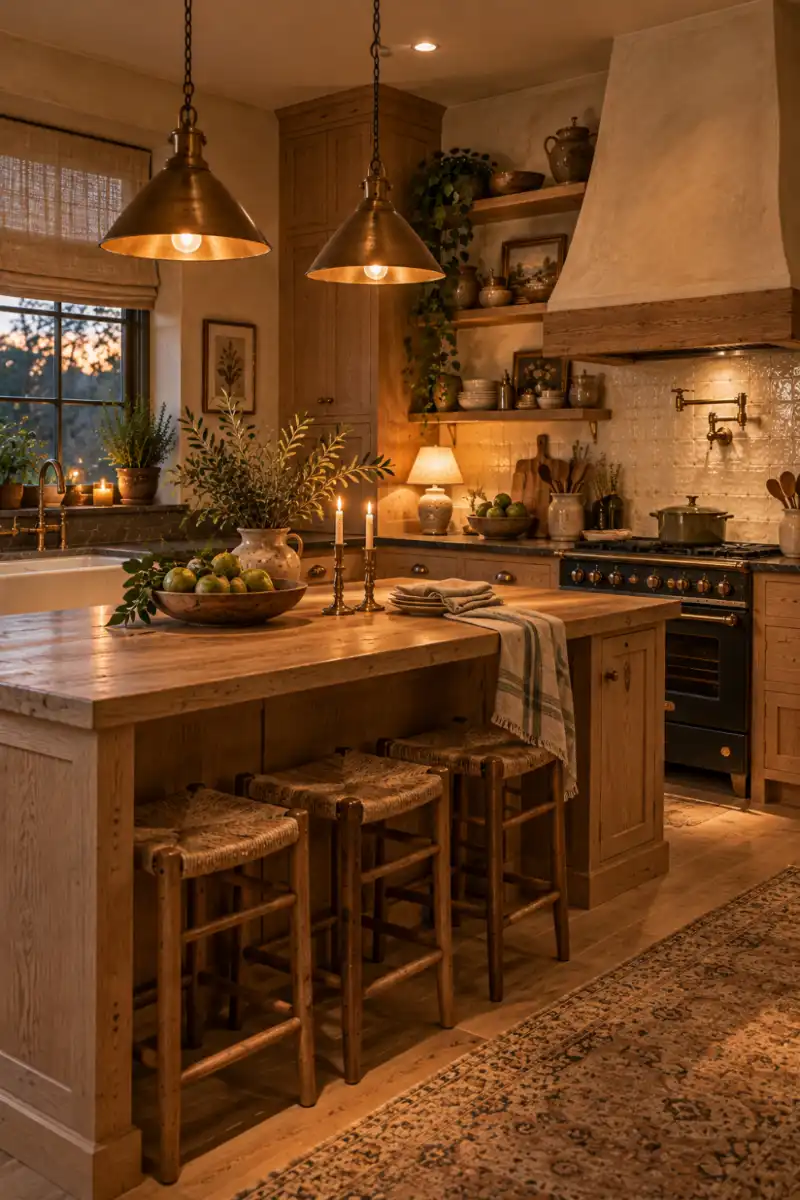
Result: Softer zones for cooking, eating, and lingering.
Use a ceiling fixture for task light, then add a lamp or small sconce for glow. Warm-toned LEDs help wood and brass look richer. The Department of Energy lighting guide explains how lower Kelvin values read warmer, which is helpful when shopping for bulbs.
Natural Linen Windows
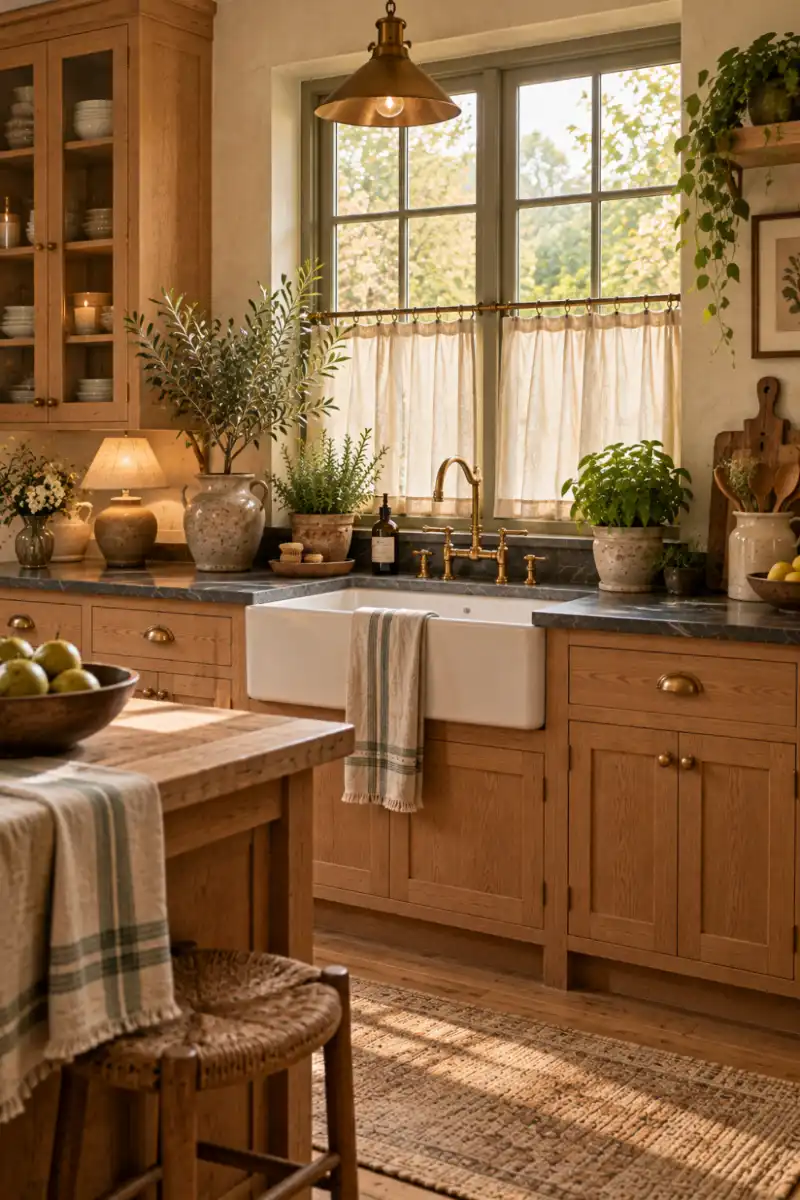
Linen at the window brings softness without blocking the daylight a kitchen needs. Café curtains, a relaxed Roman shade, or a simple half panel all suit the look. Choose flax, warm white, or a faded stripe instead of a crisp bright white.
Keep the hardware modest and mount it high enough to reveal the window shape. The fabric should look a little rumpled, not tailored within an inch of its life. That easy texture makes hard kitchen surfaces feel more settled.
Dark Lower Cabinets
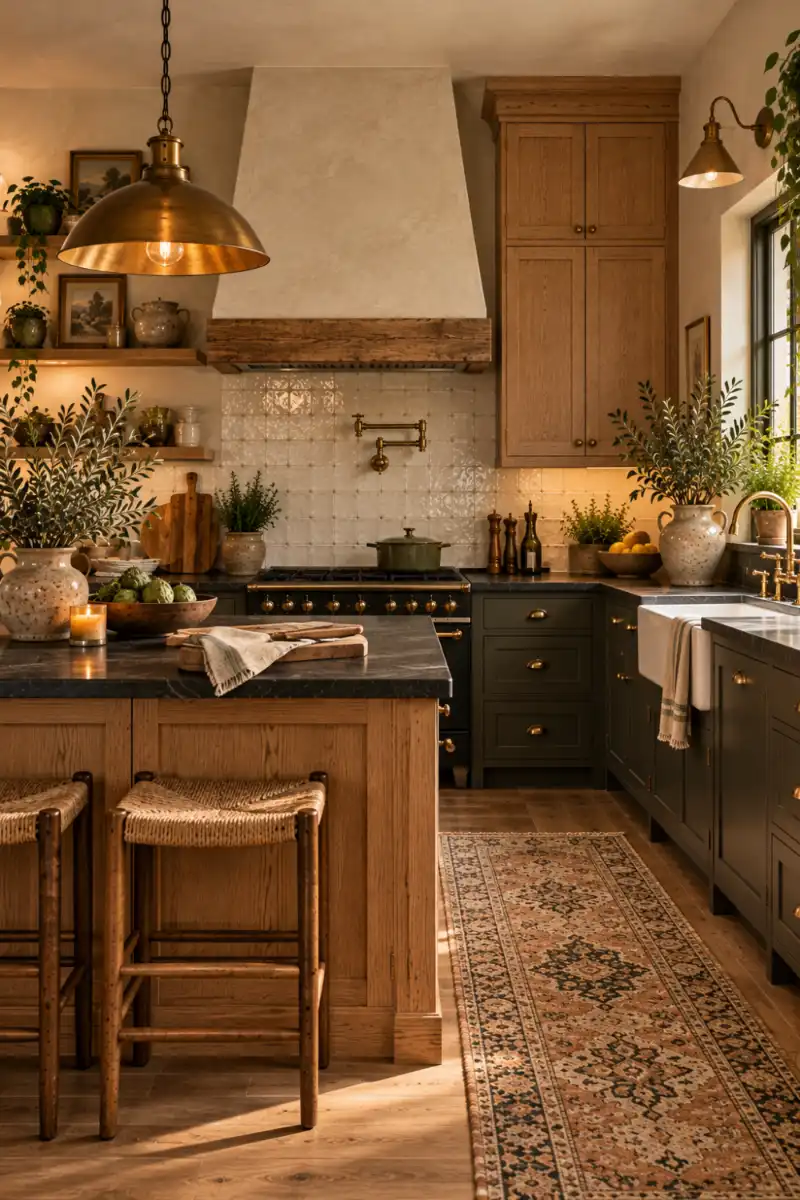
- Charcoal grounds a bright room without becoming black.
- Deep olive links naturally with oak and brass.
- Warm brown-black looks softer than a cool blue-black.
- Use pale uppers or open shelving to keep the room airy.
Two-tone cabinetry gives modern rustic kitchens useful contrast while keeping the wood visible. The darker color belongs low in the room, where it can anchor the island or base cabinets. Test samples beside your floor at different times of day before making the final call.
Copper Pot Rails
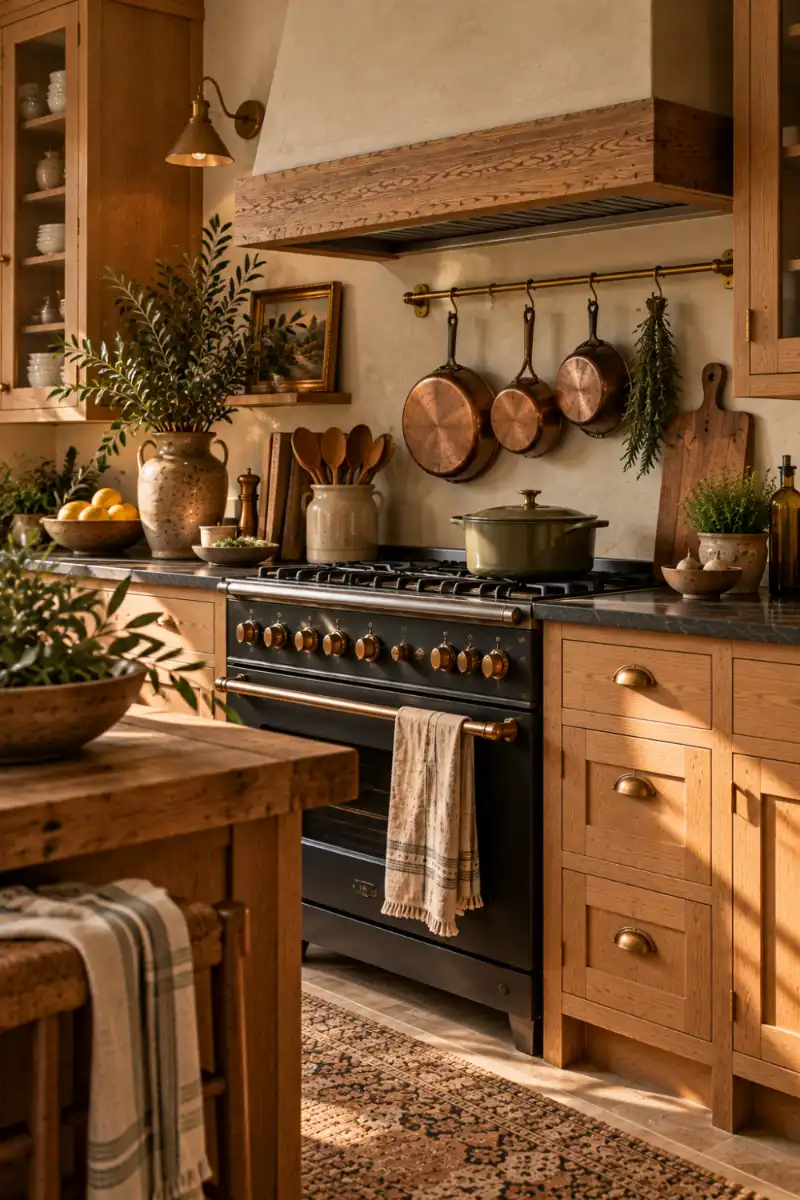
Quick Tip:
Hang only the pans you use often. A rail should make cooking easier, not create a shiny wall of storage. Choose a length that leaves breathing room at both ends.
Copper brings a living finish and warm color to a working wall. A small group looks more refined than a packed collection, especially near handmade tile. Let the pieces show their age. Polished perfection would work against the relaxed feel.
Butcher Block Island
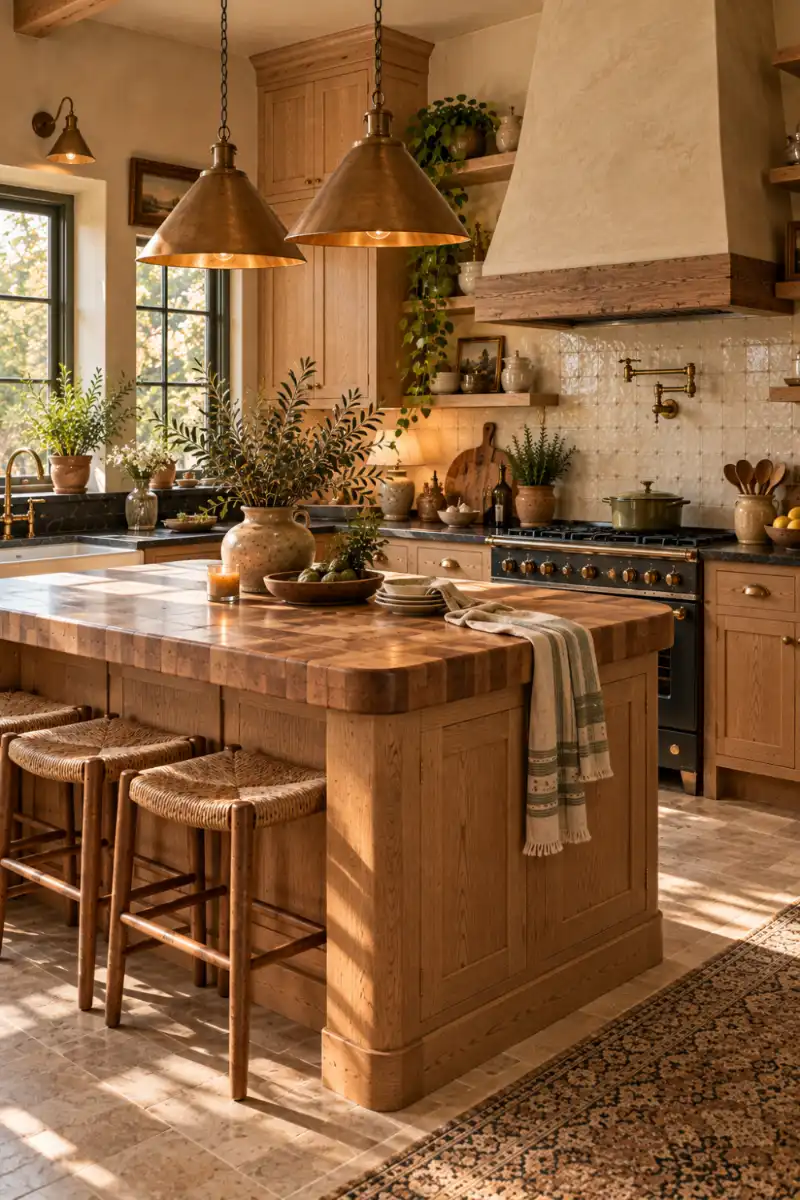
BEFORE
A large stone island can make a compact kitchen feel hard and formal. Its broad, continuous surface often becomes the dominant visual note.
AFTER
A wood top introduces warmth at the center of the room. End grain and thick planks both feel substantial, especially when the base is kept clean-lined.
Reserve butcher block for an area you can maintain, then use stone around the sink and range if that fits your routine. The material mix gives the room a collected quality. It also makes the island feel like furniture rather than cabinetry.
Antique Pantry Doors
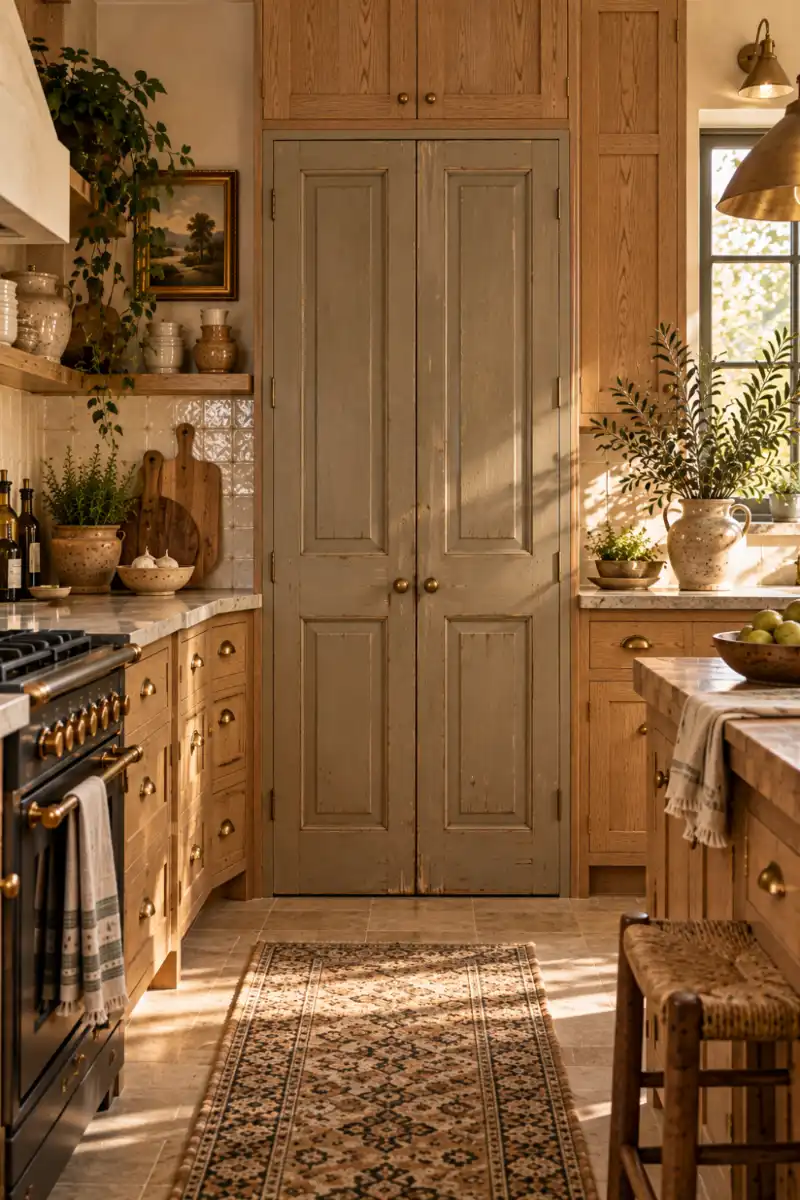
- Check that the doors are straight enough for their new opening.
- Keep the original paint only if it is safe and stable.
- Use simple hinges and knobs that suit the scale of the panels.
- Let new cabinetry around the doors stay quiet.
Salvaged pantry doors make a kitchen feel established without requiring every surface to look old. Their paneling creates a focal point at the end of a run of cabinets. A single rescued element carries more charm than a room full of imitation distressing.
Woven Runner Layering
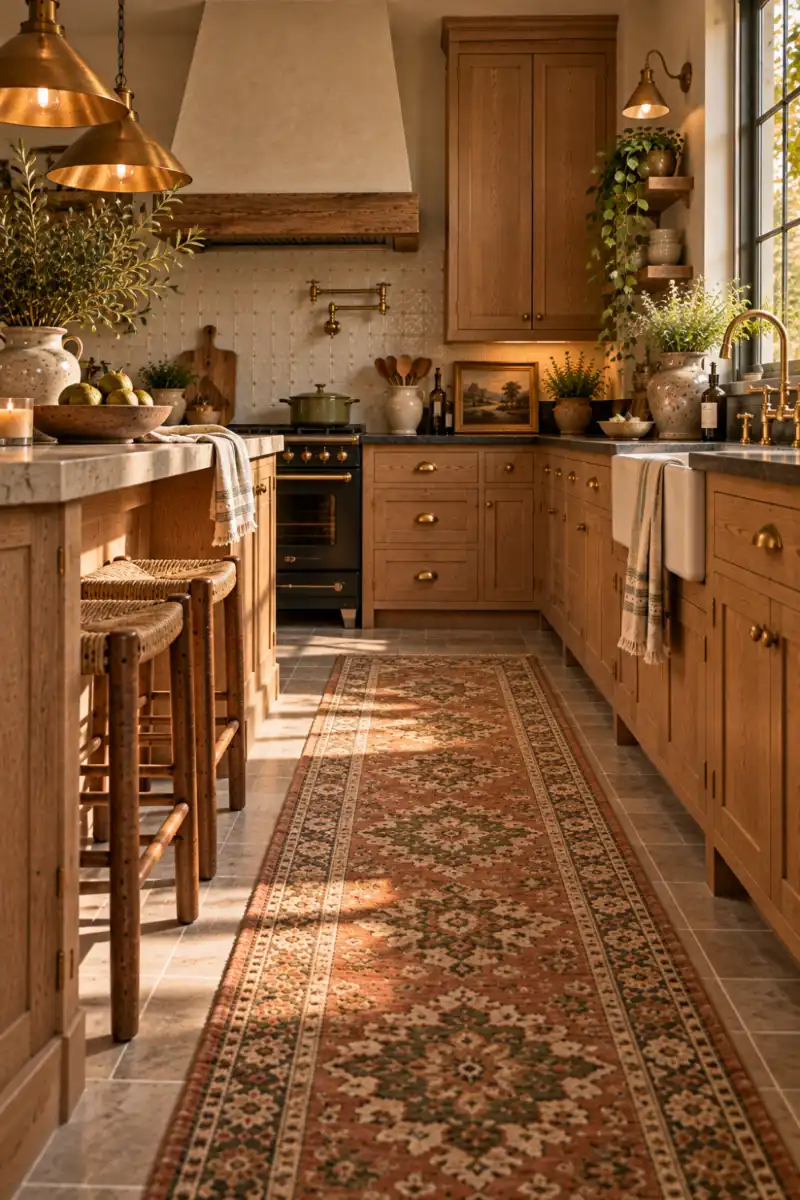
| Runner Type | Best Spot | Practical Note |
|---|---|---|
| Flatwoven wool | Galley walkway | Easy to shake out |
| Washable low pile | Sink zone | Helpful for splashes |
| Vintage-style weave | Island side | Adds soft color |
A runner changes the feeling underfoot and adds a place for faded color. Choose a low profile so cabinet doors and stools move freely. For a nearby room with the same welcoming mix of texture and warmth, borrow a few ideas from these cozy rustic living rooms.
Window Herb Corner
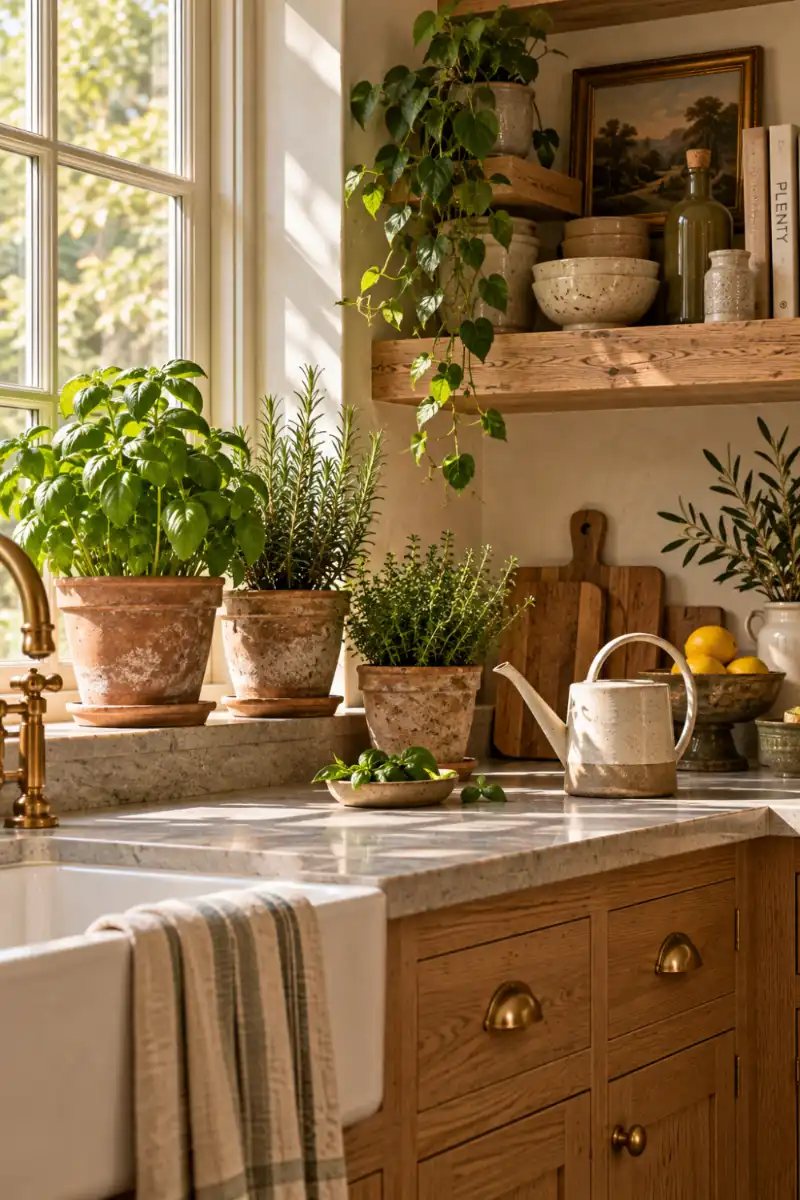
DO
- Group herbs in matching terracotta or stone pots.
- Use a tray to protect the sill from water rings.
- Keep the herbs close to the cooking area.
DON’T
- Fill the whole sill with unrelated decor.
- Use thirsty plants in a dim corner.
- Forget a saucer beneath each pot.
A living herb corner gives the room a useful softness. Rosemary, basil, and thyme add color, scent, and a reason to linger near the window. Keep the grouping small enough that it still feels like a kitchen, not a greenhouse.
Quiet Neutral Palette
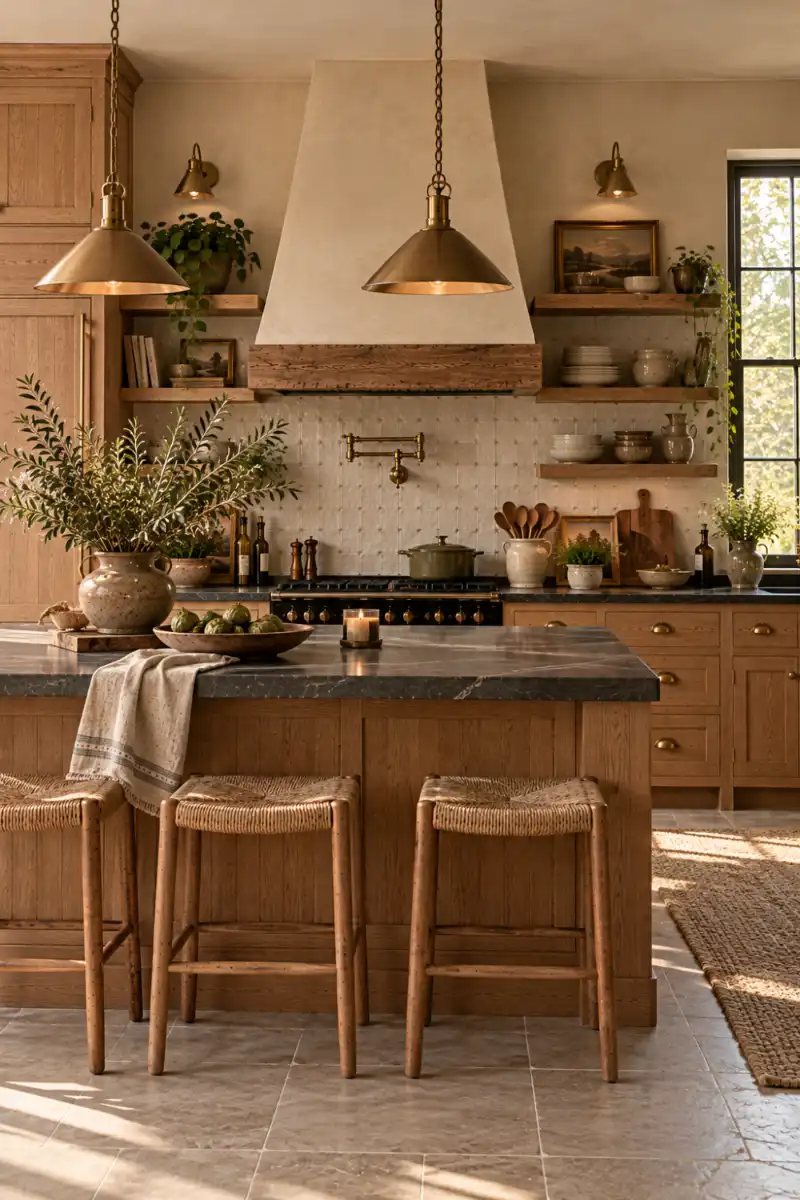
Cost: Paint and textiles are the quickest low-cost starting point.
Skill Level: Beginner for a palette refresh, higher for fixed finishes.
Best For: Rooms that feel cool or visually scattered.
Result: A calmer backdrop for wood, metal, and pottery.
Build your neutral palette from warm white, mushroom, natural oak, charcoal, and one muted green. These tones have enough difference to create depth without breaking the room into separate color moments. A restrained palette lets the natural materials do the talking.
Iron Hardware
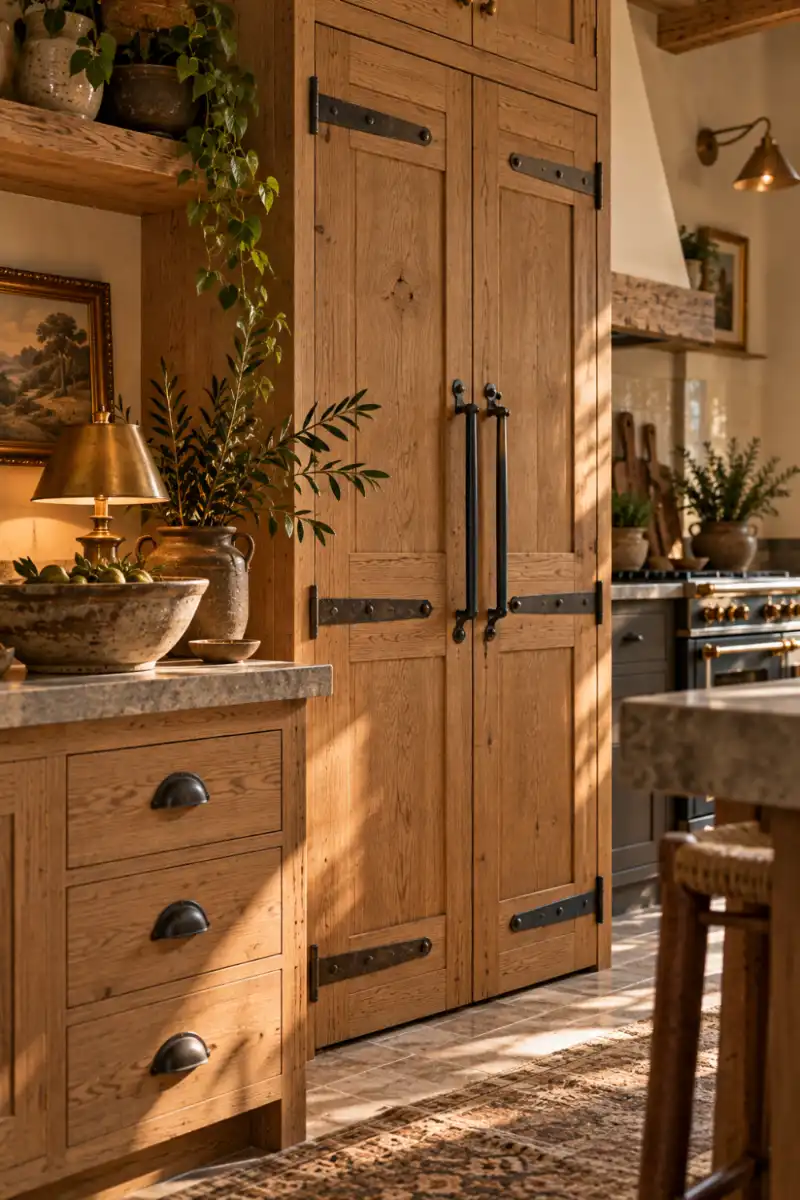
Blackened iron gives pale cabinets a crisp outline and brings a slightly utilitarian note to the room. Use it on pantry pulls, latches, or a single standout cabinet. Its dark finish creates a useful pause among creamy walls and warm timber.
Choose hardware with a simple, honest shape. Overly ornate pieces can turn a clean kitchen into a costume set. I have seen a few substantial pulls do more for character than dozens of decorative accessories.
Collected Wall Art
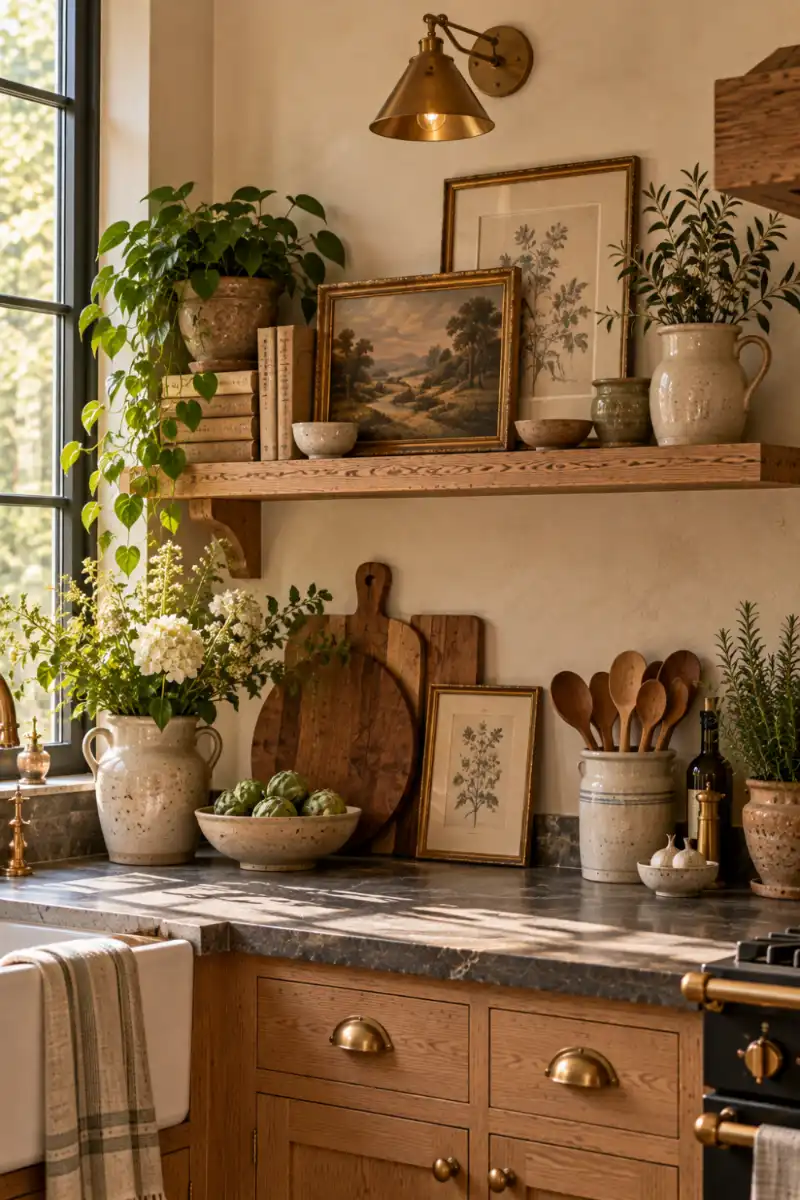
- Choose a small landscape, still life, or botanical print.
- Lean art on a shelf away from direct splash zones.
- Use wood or thin antique-brass frames for quiet continuity.
- Limit the display to two or three pieces.
Art makes a kitchen feel like part of the home instead of a utility room. A little visual history beside stoneware and books works beautifully. If you like a softer, thrifted version of this approach, these cottage living room ideas offer easy inspiration.
Deep Farmhouse Sink
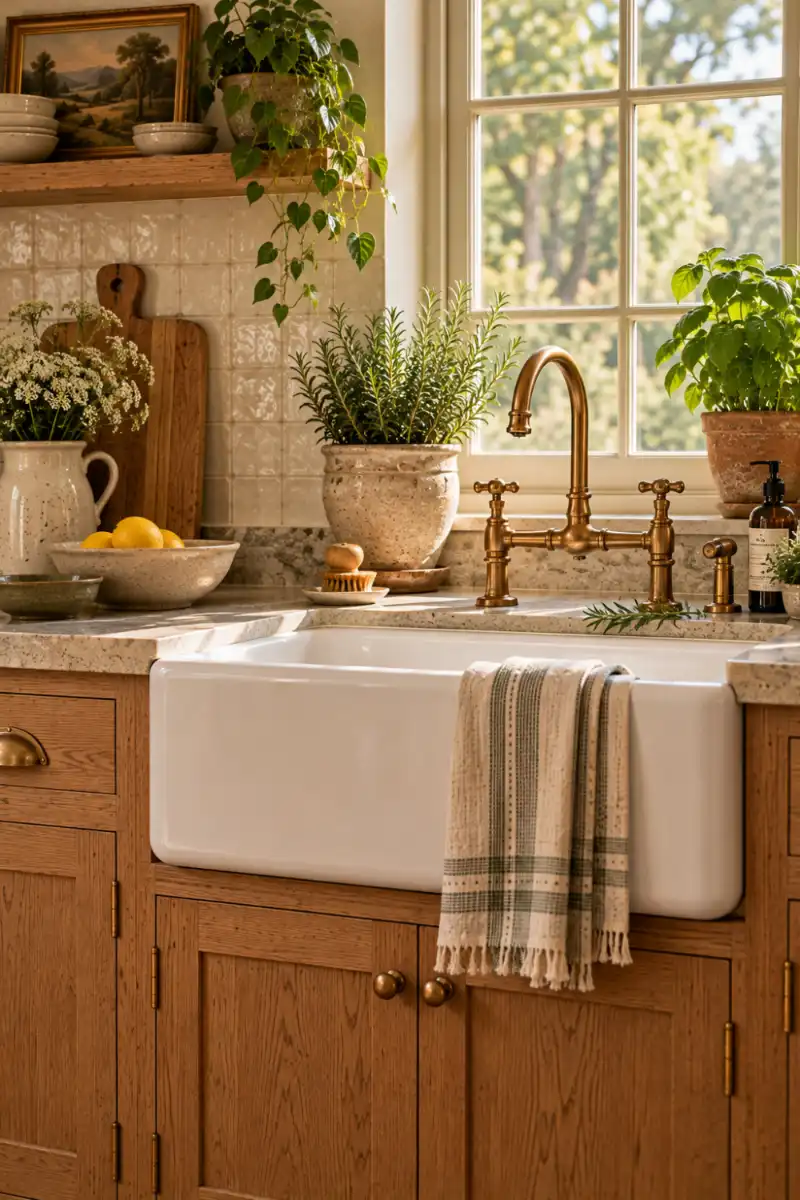
Quick Tip:
Check cabinet depth and faucet reach before committing to an apron-front sink. The proportions matter as much as the style. A wide single bowl suits big cookware, while a divided bowl helps with daily cleanup.
Fireclay and stoneware-toned sinks add a handmade note among streamlined cabinet lines. Pair one with an uncomplicated bridge faucet and a folded linen towel. The result feels traditional in spirit but still clean enough for a current renovation.
Reclaimed Wood Beams
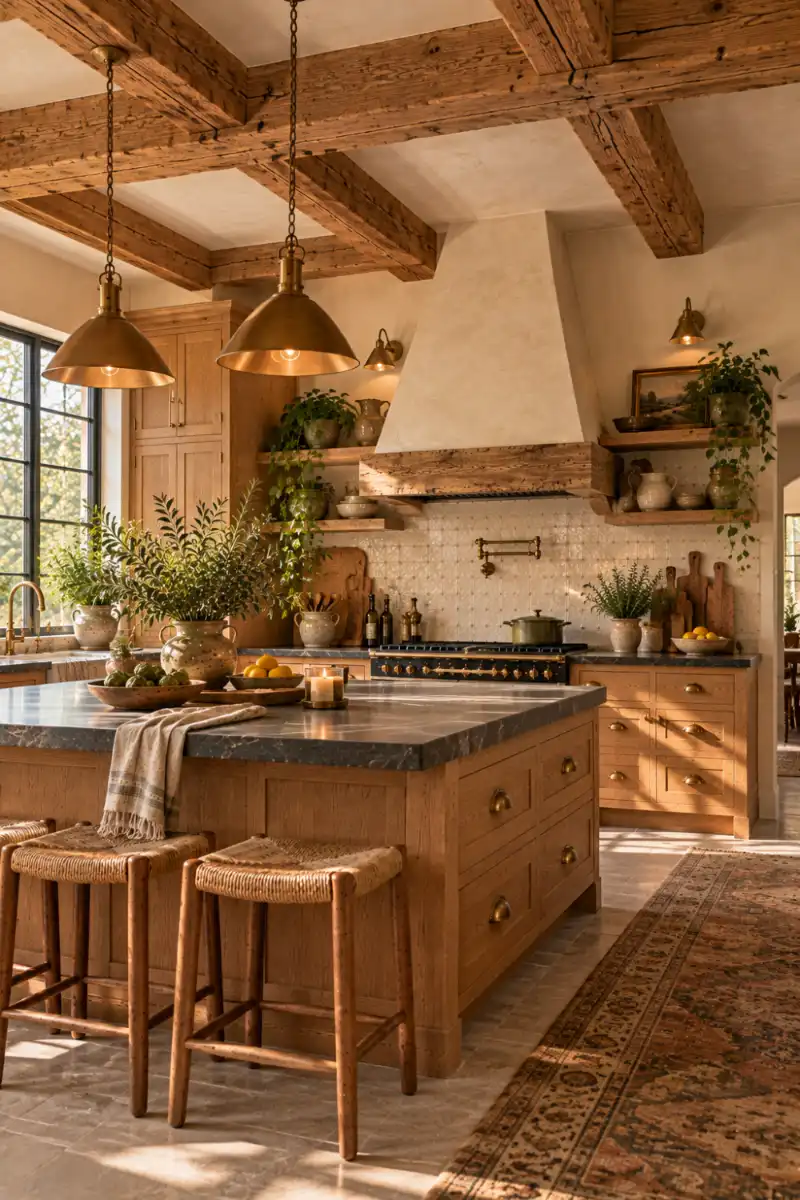
BEFORE
A pale ceiling can make a large kitchen feel a little untethered, especially with tall walls and a broad island. The room has plenty of light but not much upward warmth.
AFTER
Reclaimed beams pull the eye upward and bring grain, age, and scale to the architecture. They are especially handsome above simple cabinets and a plaster hood.
Use genuine old timber only when it suits the structure and budget. For existing historic wood, the National Park Service preservation resources are a useful starting point for thoughtful care. Beams give modern rustic kitchens their strongest architectural note, so keep the surrounding ceiling plain.
Mixed Wood Stools
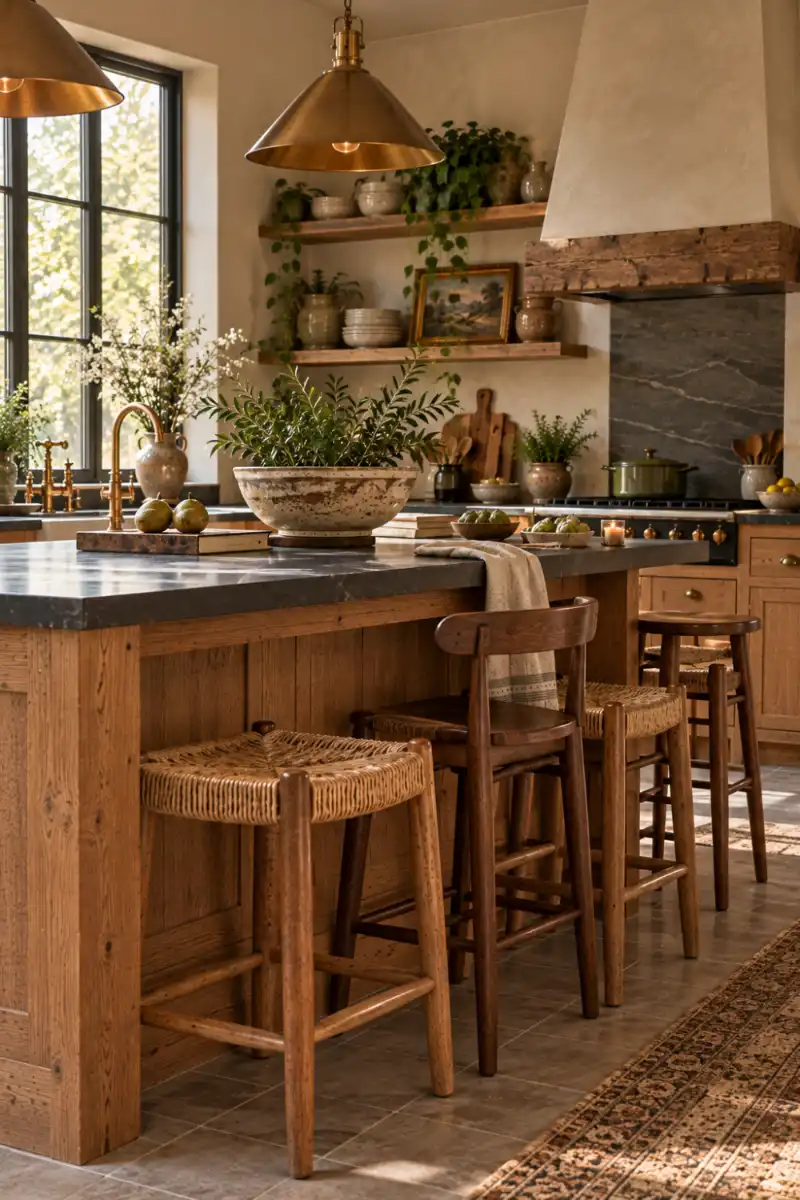
- Choose stools with one shared element, such as seat height or silhouette.
- Mix two wood tones rather than several.
- Check that each stool tucks fully beneath the counter.
- Add a woven seat only if it will suit your cleanup routine.
Matching stools can look crisp, but a subtle mix of oak and walnut feels more collected. The trick is restraint. Let the shapes relate, then allow the wood tones to vary like furniture gathered over time.
Glazed Ceramic Accents
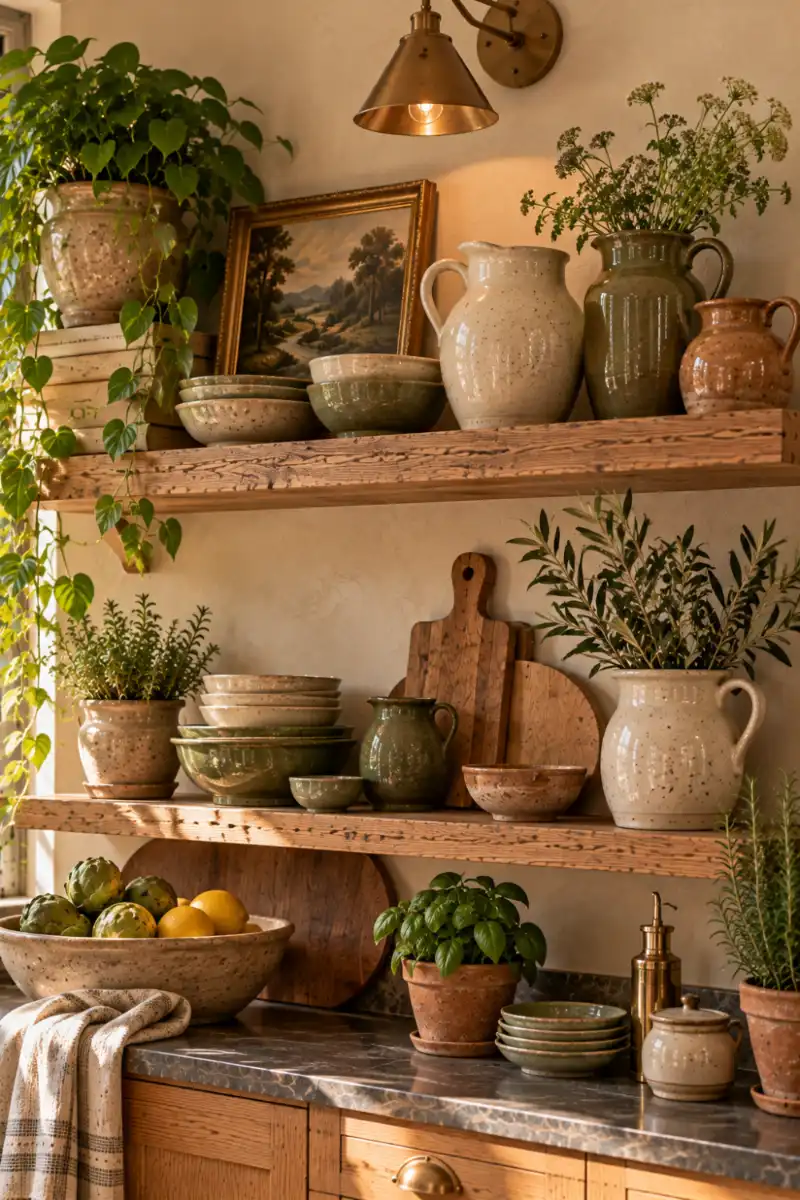
| Piece | Useful Placement | Color Direction |
|---|---|---|
| Pitcher | Open shelf | Cream or moss |
| Fruit bowl | Island | Soft terracotta |
| Utensil crock | Range side | Warm ivory |
Ceramics bring gentle shine and hand-finished texture to matte plaster, stone, and wood. Keep the colors close to the room palette, then choose pieces with different heights and shapes. A useful bowl or pitcher earns its place more naturally than decor that only sits there.
Seasonal Branches
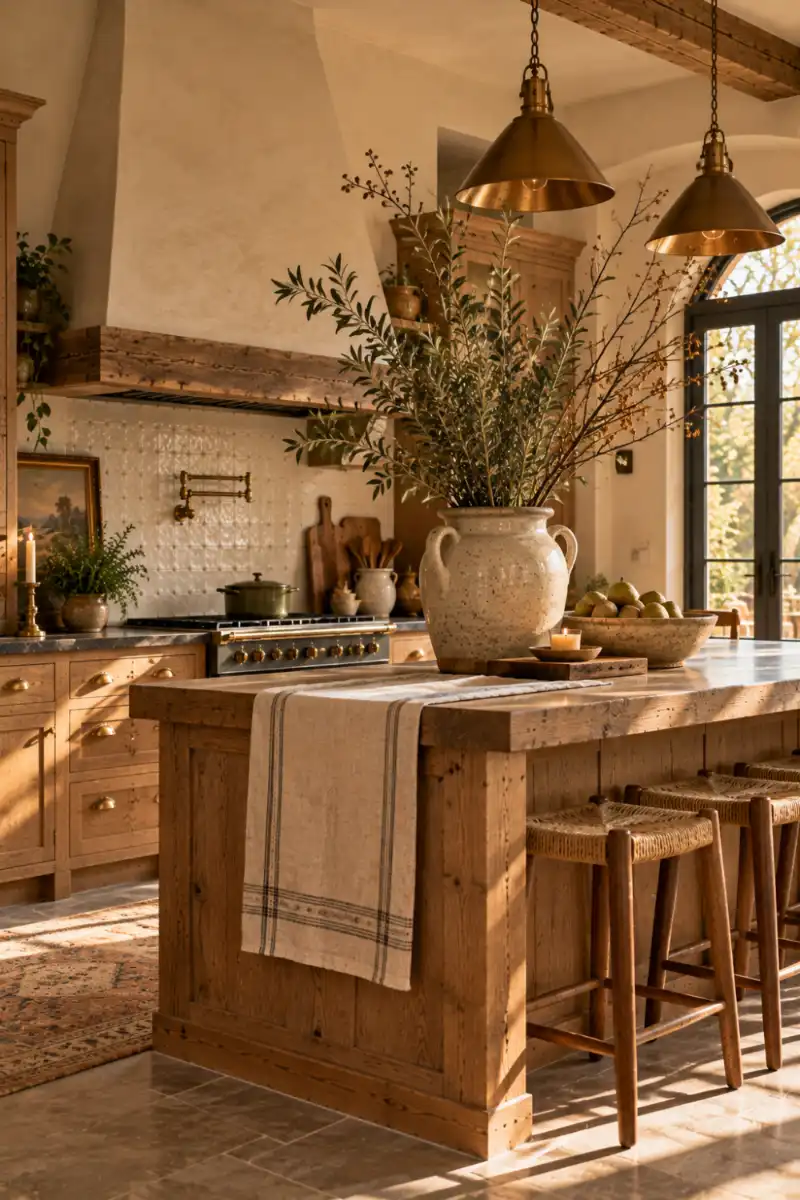
DO
- Use one generous branch arrangement in a weighty crock.
- Choose olive, eucalyptus, or bare branches for a natural shape.
- Place it where it will not interrupt prep space.
DON’T
- Scatter several tiny faux arrangements around the room.
- Use flowers so tall they block conversation across the island.
- Pair branches with lots of small countertop clutter.
One seasonal branch arrangement gives the kitchen a finished, lived-in feeling without adding fuss. It is an easy way to shift the room through the year. Save a little counter space around the crock so the arrangement reads as one generous, useful-looking gesture.
Modern rustic kitchens do not need a full renovation or a room full of antiques to feel memorable. Start with the surface or detail you use most, whether that is a warmer bulb, a better stool, a handmade bowl, or an oak shelf. I have found that one well-chosen natural material often sets the direction for everything else. Save this list on Pinterest for your next kitchen refresh, then try one idea at a time and share it with someone who is building a home that feels collected, useful, and warmly personal. Small, steady layers create the best kind of character.