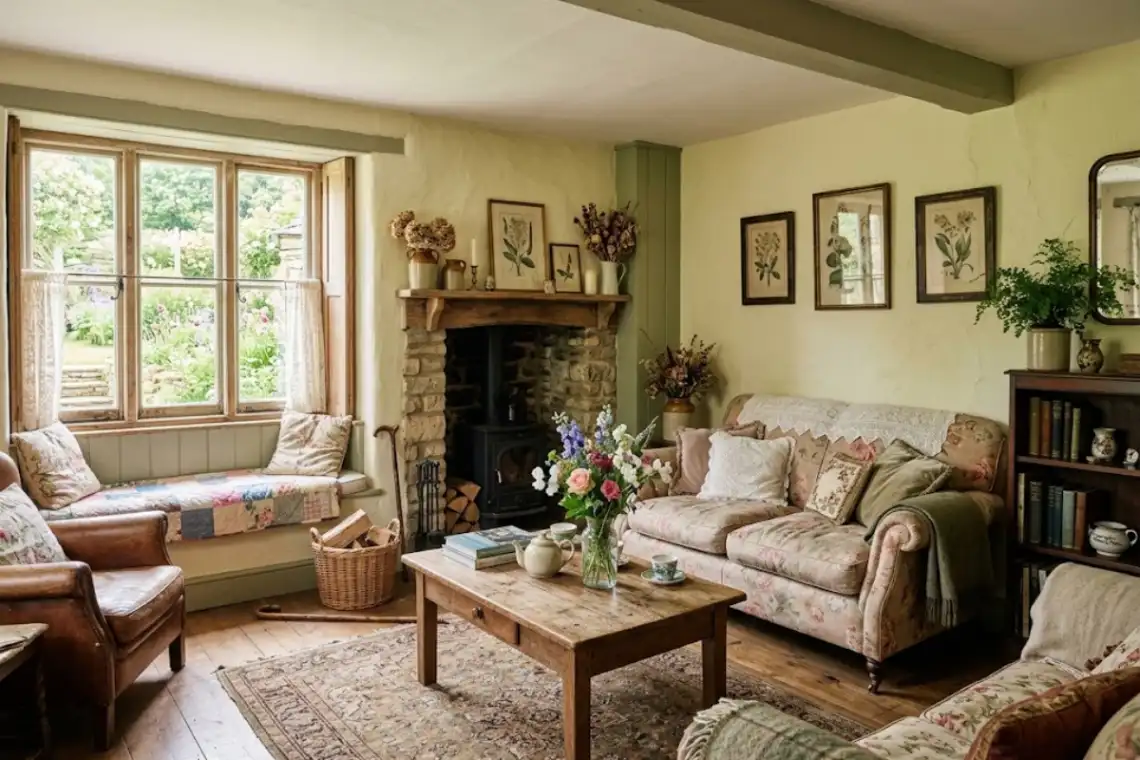
A cottagecore living room brings together vintage furniture, soft fabrics,
natural materials, and the comfortable feeling of a home that has grown
beautiful over time. You can create this look with secondhand finds, simple
DIY projects, and a few thoughtful details without making your space feel
crowded.
The secret is to choose pieces that feel collected rather than matching
everything perfectly. Whether you have a spacious living room or a small
apartment, these cottage living room ideas can help you create a cozy space
that works for everyday life, including movie nights, reading, and
entertaining guests.
Cottagecore Living Room Basics: Colors, Materials, and Mood
A cottagecore living room draws inspiration from country cottages, vintage
interiors, gardens, and slower everyday routines. It feels welcoming rather
than polished, with natural textures and furniture that looks as though it has
a story to tell.
Start with a gentle color palette
Soft cream, warm white, sage green, dusty rose, muted blue, and earthy brown
are excellent starting points. Use a neutral shade for the walls and larger
furniture, then introduce color through cushions, curtains, artwork, and
flowers.
Practical tip: Choose three main colors and repeat them
throughout the room. This creates a connected look even when your furniture
comes from different places.
Mix natural materials
Wood, linen, cotton, wool, wicker, and ceramic pieces help create a relaxed
atmosphere. A wooden coffee table beside a linen sofa or a wicker basket
beneath a vintage side table adds texture without requiring elaborate
decoration.
Practical tip: Combine two or three different textures in
each area instead of adding every natural material you find.
Let the room feel lived in
The best cottagecore interiors are comfortable enough for daily use. A
slightly worn wooden table, a favorite reading chair, or a stack of well-loved
books can feel more authentic than a room filled with brand-new decorative
objects.
For more inspiration, explore these
cottagecore interior design ideas
and adapt the details that suit your home.
Practical tip: Before buying anything, identify what your
room needs most: better seating, warmer lighting, storage, or softer textiles.
20 Cottagecore Living Room Ideas
1. Choose a vintage-inspired sofa
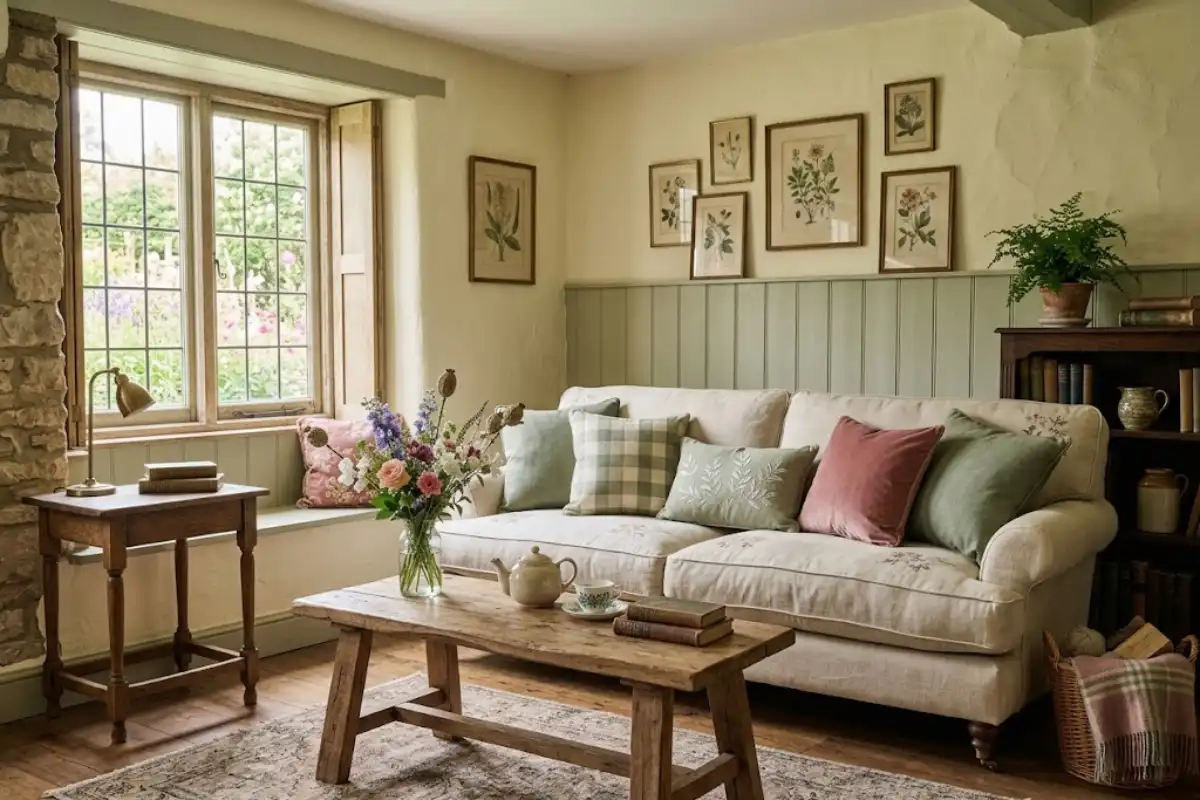
A cream, beige, muted green, or floral sofa can become the foundation of a
cottagecore living room. You do not need an antique sofa; a simple modern
design can work beautifully when paired with vintage accessories and natural
fabrics.
Practical tip: When shopping secondhand, check the frame,
cushions, seams, and any signs of moisture or pests before bringing
upholstered furniture home.
2. Find a floral armchair

A floral armchair adds pattern and personality without requiring you to
redecorate the entire room. Look for small-scale botanical prints, faded
roses, or muted green leaves that complement your existing colors.
Practical tip: If the upholstery is too bold, choose a plain
vintage chair and add a removable floral cushion instead.
3. Create a cozy reading corner
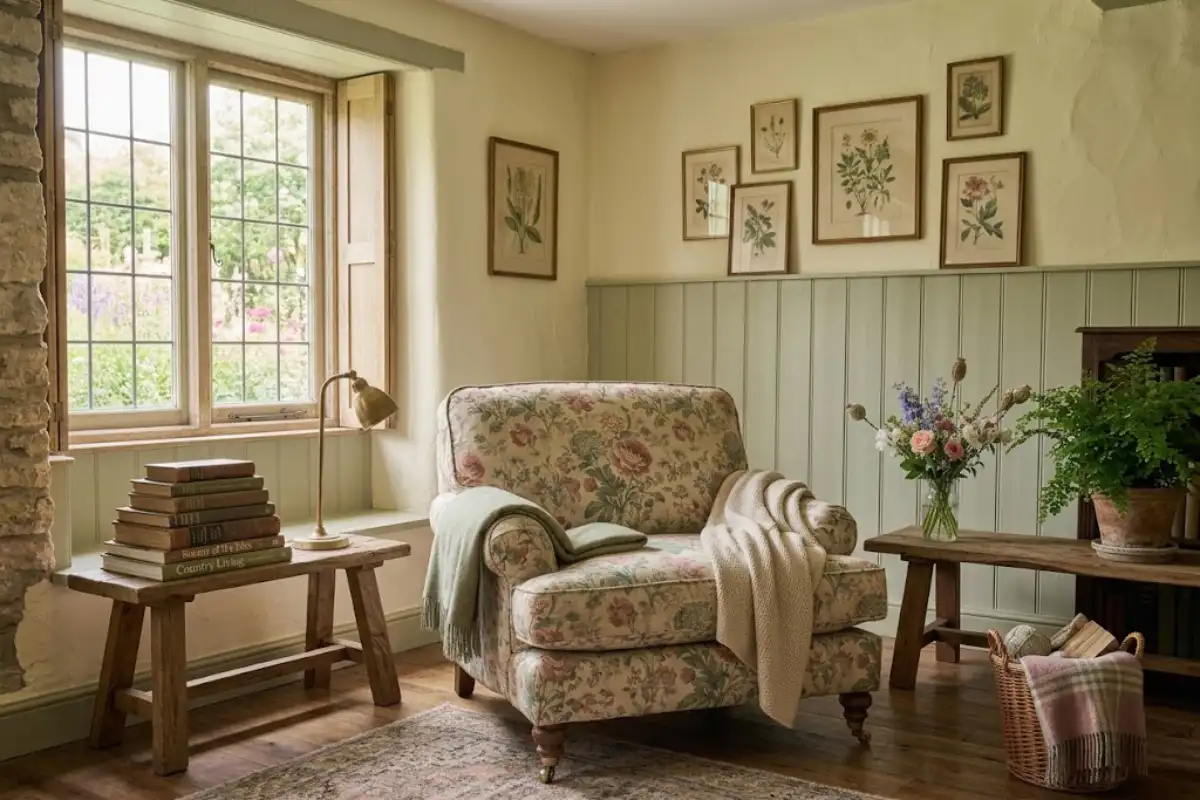
Turn an unused corner into a quiet place to read, knit, or enjoy a cup of tea.
A comfortable chair, a small table, and a lamp are enough to make the space
feel intentional.
Practical tip: Keep a basket beside the chair for books,
blankets, or your current craft project so the corner stays inviting rather
than untidy.
4. Use a daybed for flexible seating
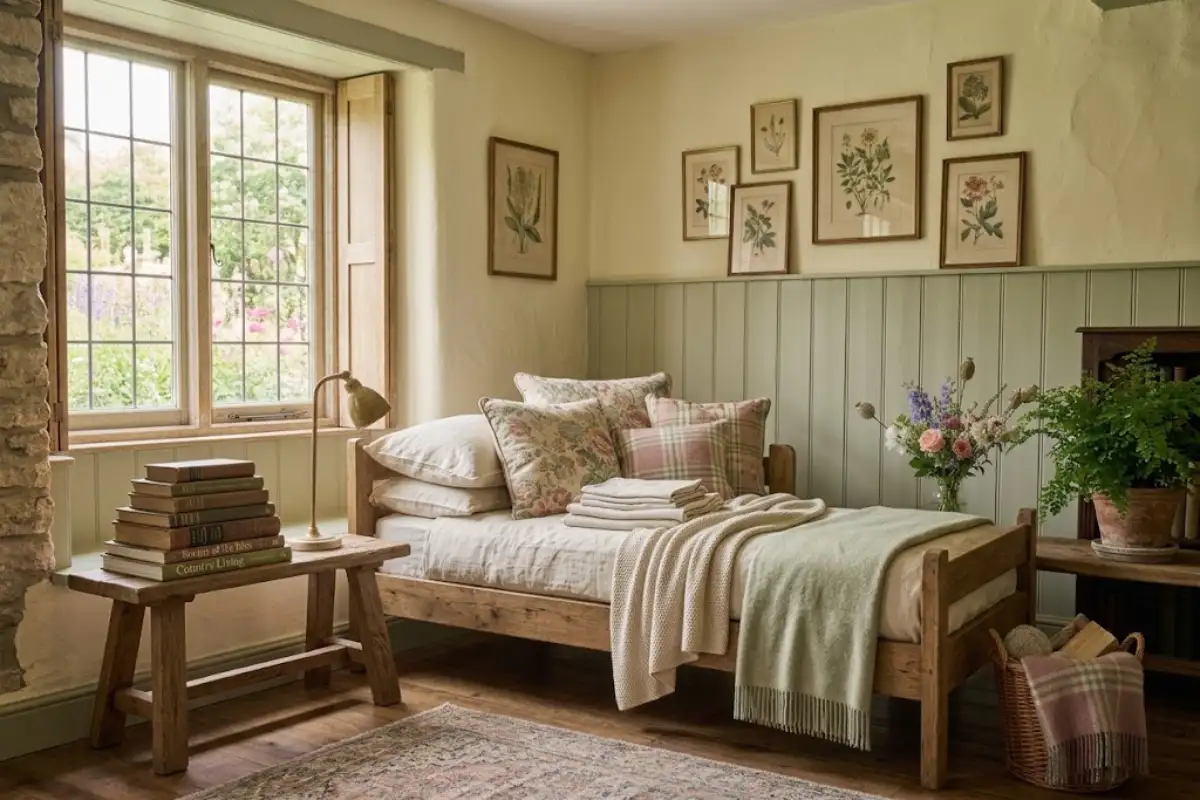
A daybed gives you extra seating during the day and a comfortable place to
stretch out in the evening. It works particularly well in longer rooms, near a
window, or in a home where the living room doubles as a guest space.
Practical tip: Measure the daybed when fully assembled and
check that it will not obstruct doorways or the main walking route.
5. Mix old and new seating
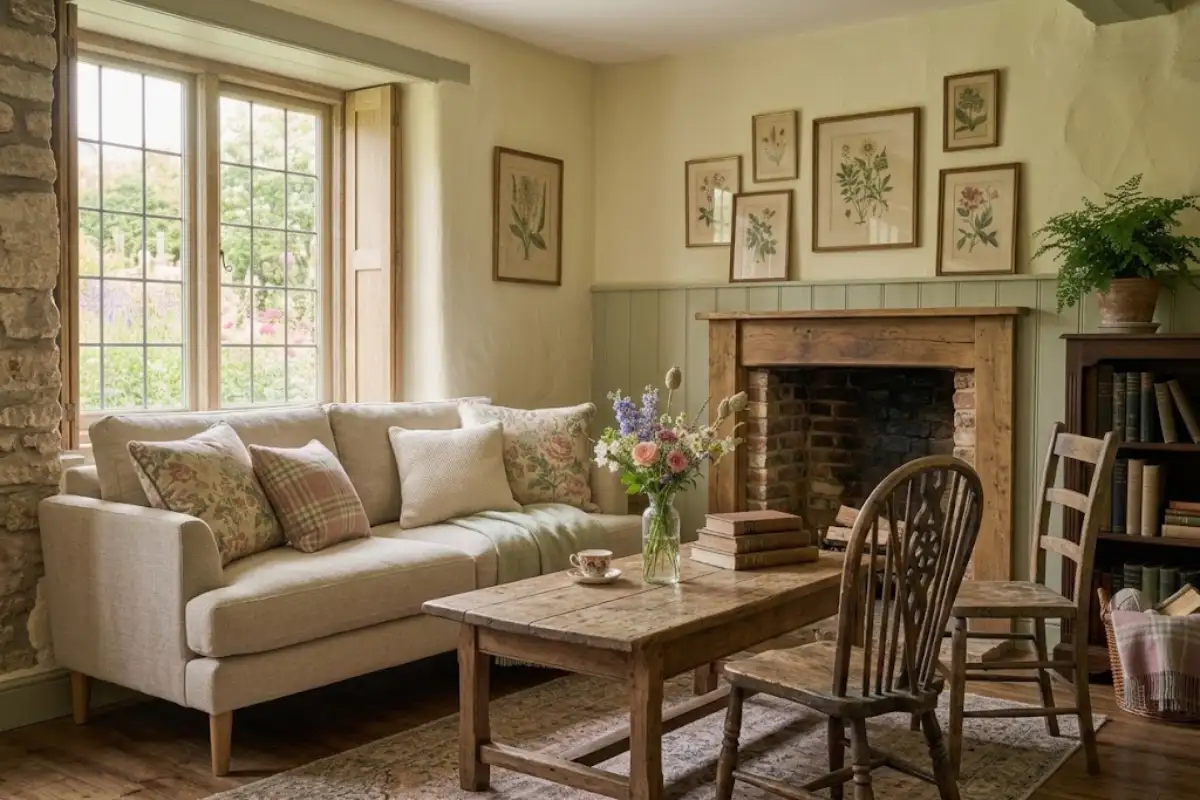
A cottage-style living room does not need a matching furniture set. Combining
a modern sofa with an older wooden chair or a thrifted upholstered seat gives
the room a more personal, collected appearance.
Practical tip: Connect mismatched furniture through a shared
color, similar wood tone, or repeated fabric pattern.
6. Add a weathered wooden coffee table
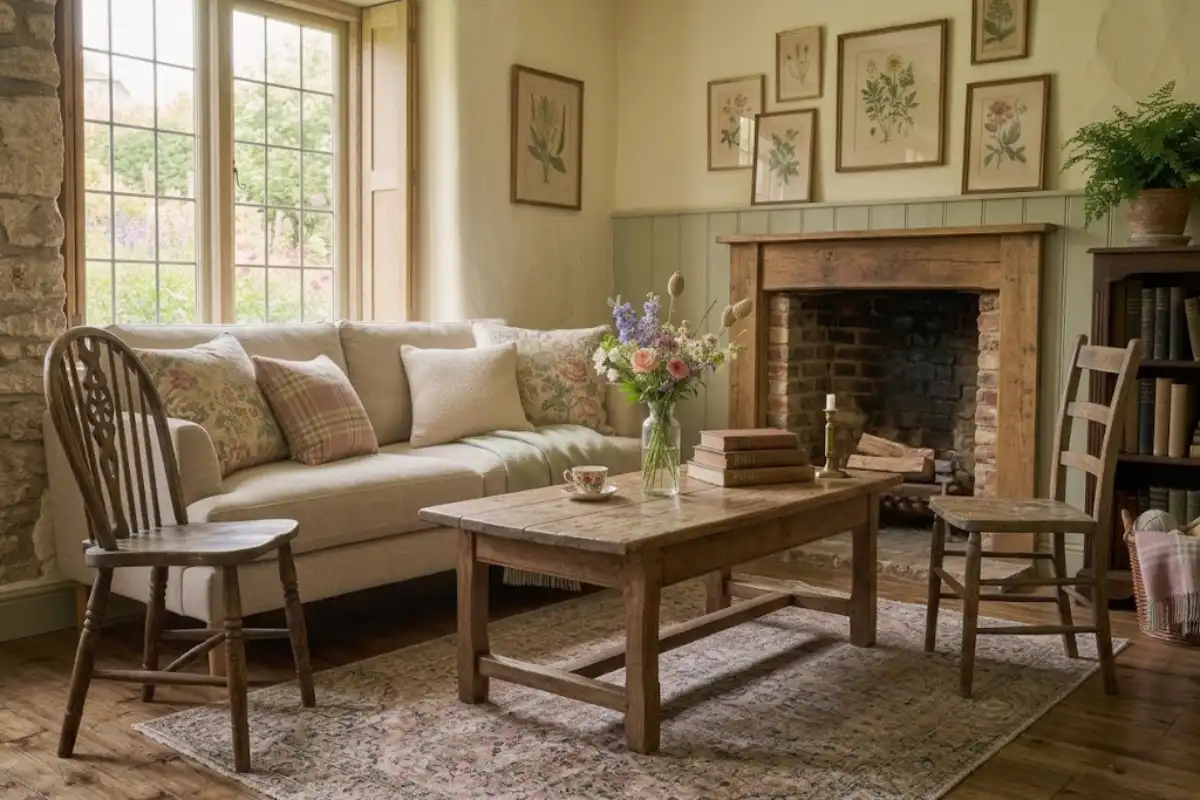
A wooden coffee table adds warmth and gives the seating area a natural focal
point. A secondhand table with gentle wear can fit the cottage aesthetic
without looking overly decorated.
Practical tip: Check that the table is stable, the surface is
safe to use, and any old finish is suitable for your intended use.
7. Repurpose a vintage trunk
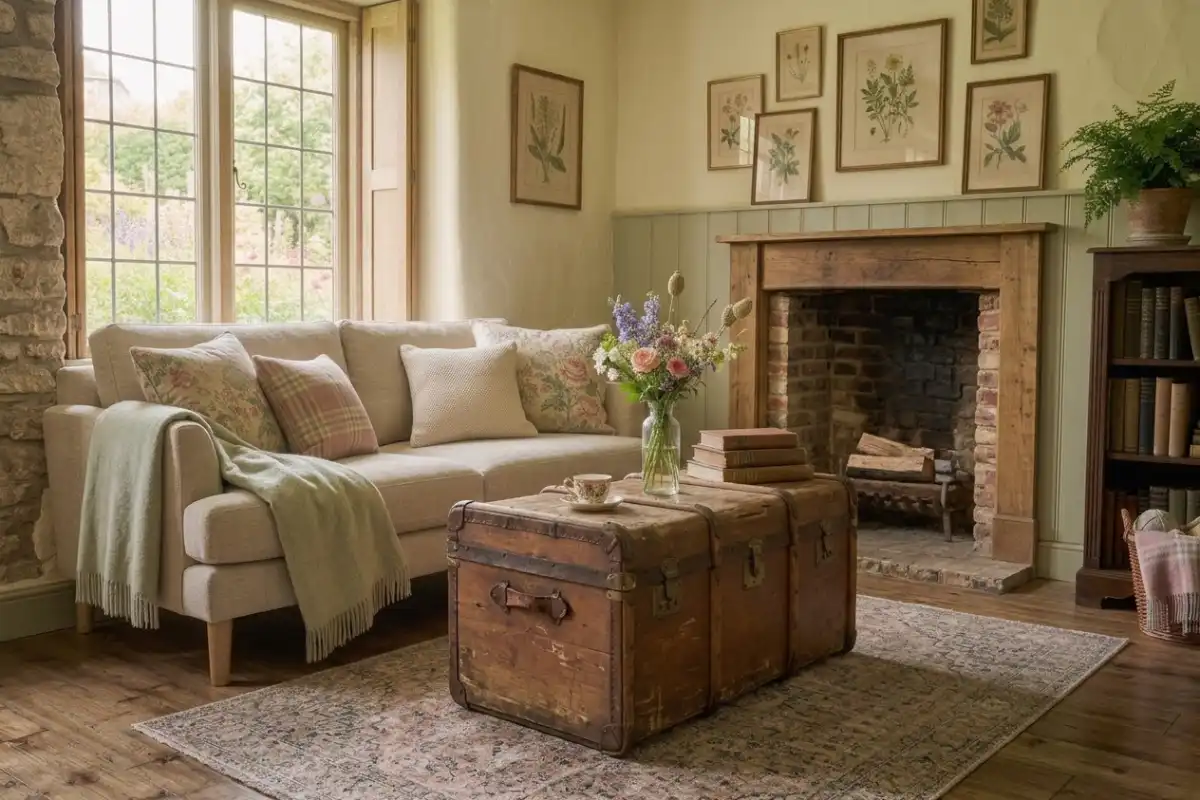
An old trunk can provide both character and hidden storage for spare cushions,
board games, or seasonal blankets. It is especially useful when you want
vintage charm without filling the room with extra furniture.
Practical tip: Inspect the hinges, interior, and base for
damage, musty odors, and signs of pests. Avoid using a heavy trunk as seating
unless it is designed to support people.
8. Style a small wooden side table
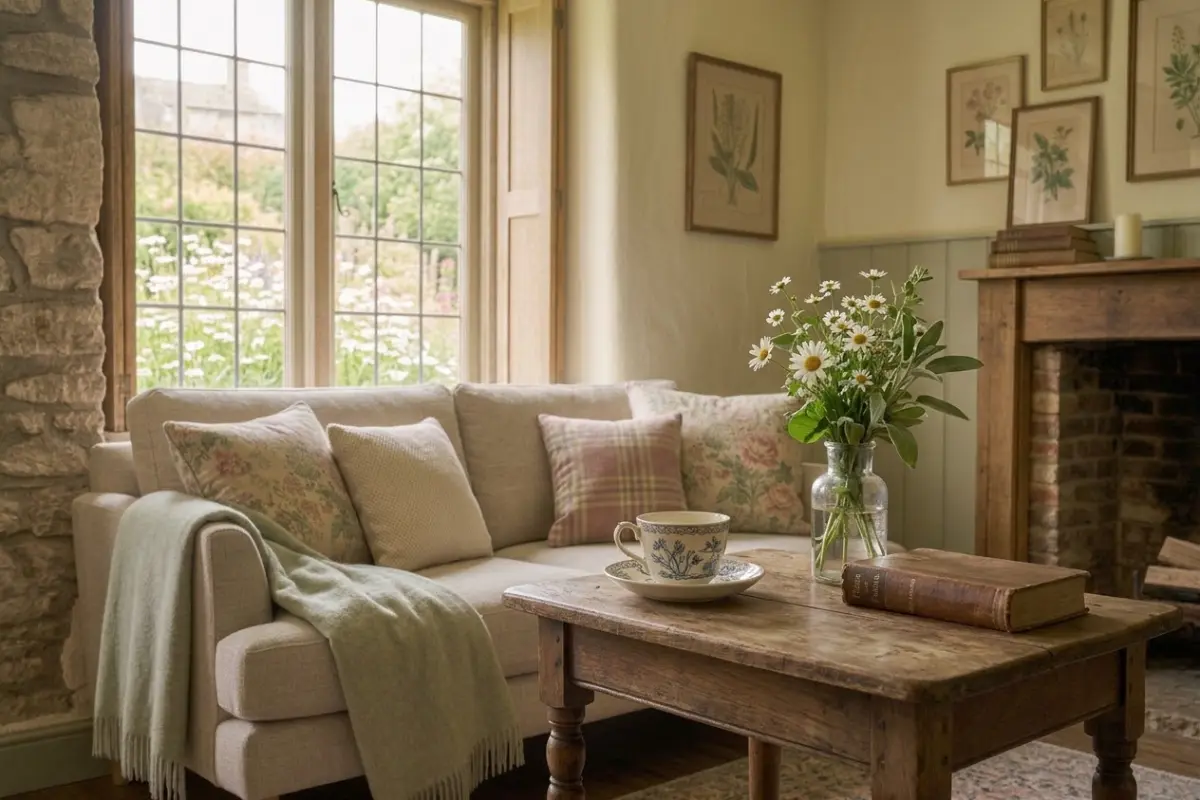
A small side table keeps everyday essentials close while adding a little
vintage character. Look for simple wooden designs with turned legs, a drawer,
or a softly worn finish.
Practical tip: Give the tabletop one useful object and one
decorative accent, leaving enough room for a drink or book.
9. Bring in a vintage bookcase
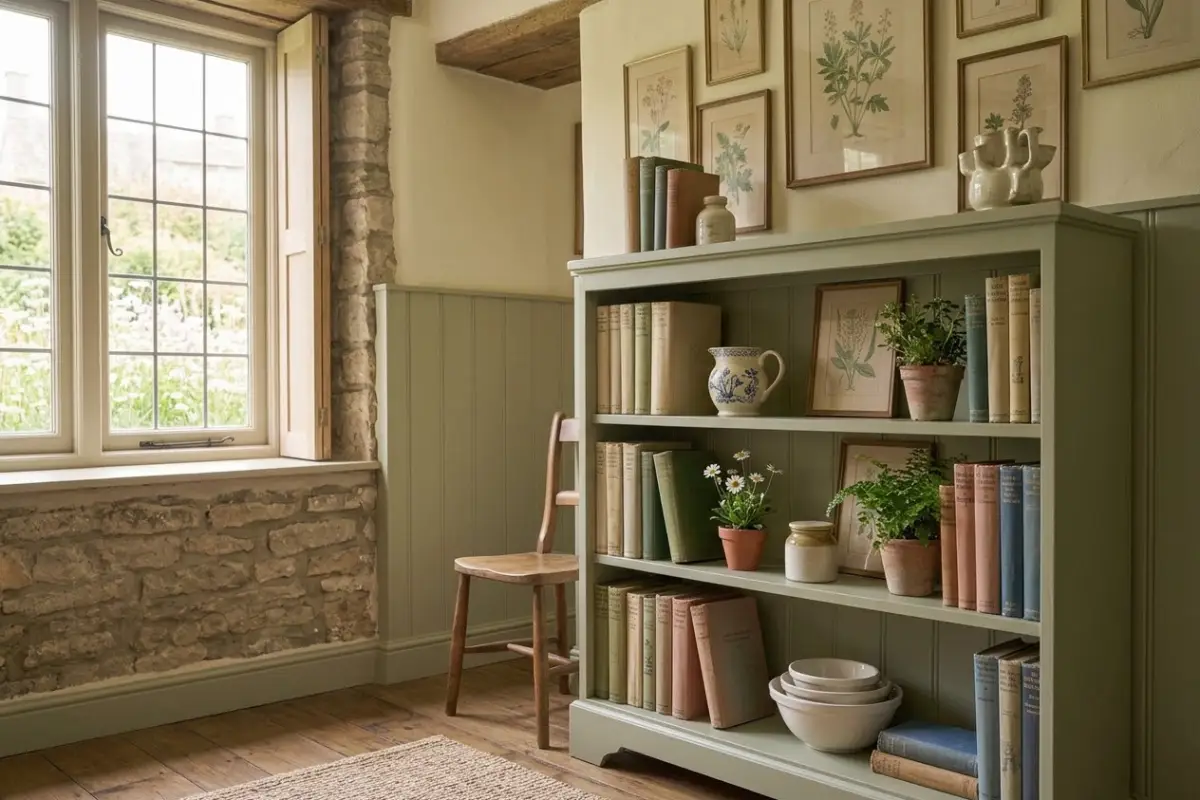
An older bookcase can hold books, small collections, and practical storage
while creating a charming backdrop. A natural wood finish works well in rustic
rooms, while faded green or cream paint adds a softer country feel.
Practical tip: Check for sturdy shelves, secure joints, and
signs of wood damage. Anchor tall bookcases according to the manufacturer’s
instructions, particularly in homes with children or pets.
10. Layer floral and plain cushions
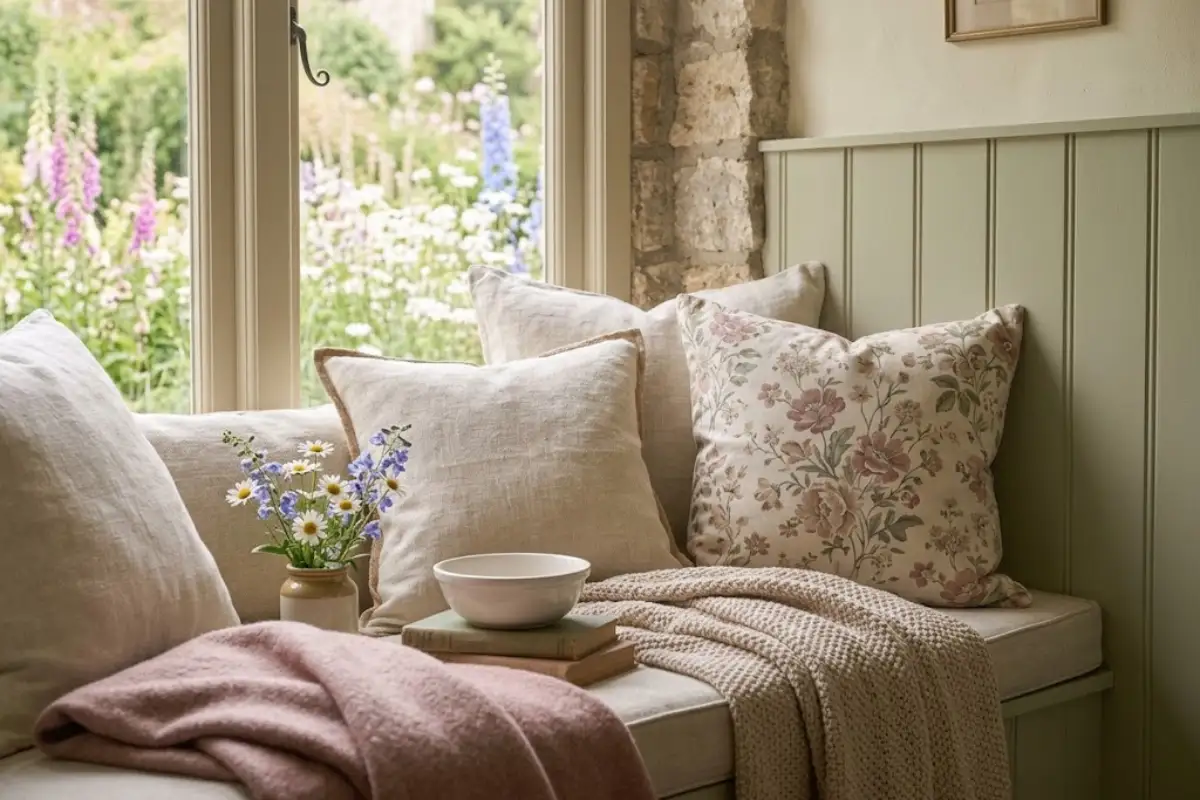
Cushions are an easy way to introduce cottage florals, checks, stripes, and
soft natural colors. Pairing patterned cushions with plain ones keeps the
arrangement from becoming visually overwhelming.
Practical tip: Repeat one color across different cushions,
then add a single contrasting pattern for interest.
11. Add a soft, vintage-style rug
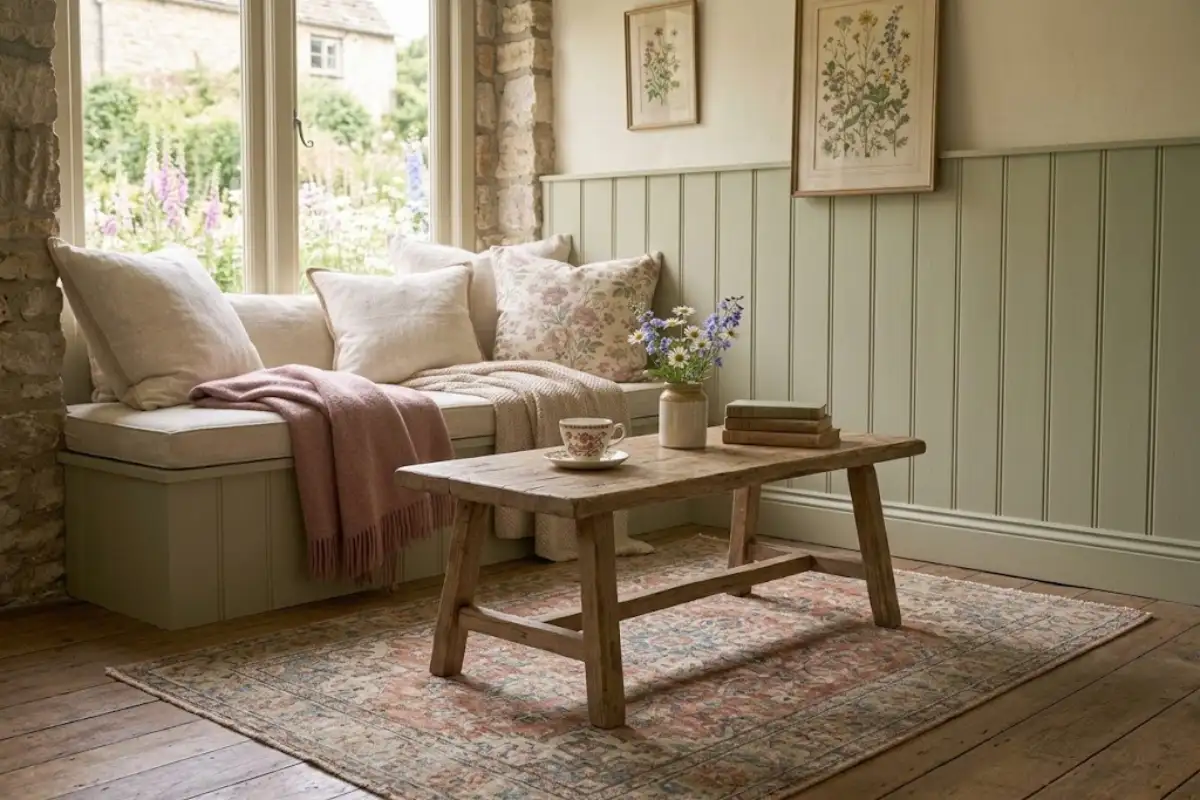
A rug helps define the seating area and softens a room filled with wood or
other hard surfaces. Faded floral designs, subtle traditional patterns, and
textured neutral rugs all work well.
Practical tip: Choose a rug large enough for at least the
front legs of the main seating pieces to rest on it, where the room layout
allows.
12. Hang lightweight linen curtains
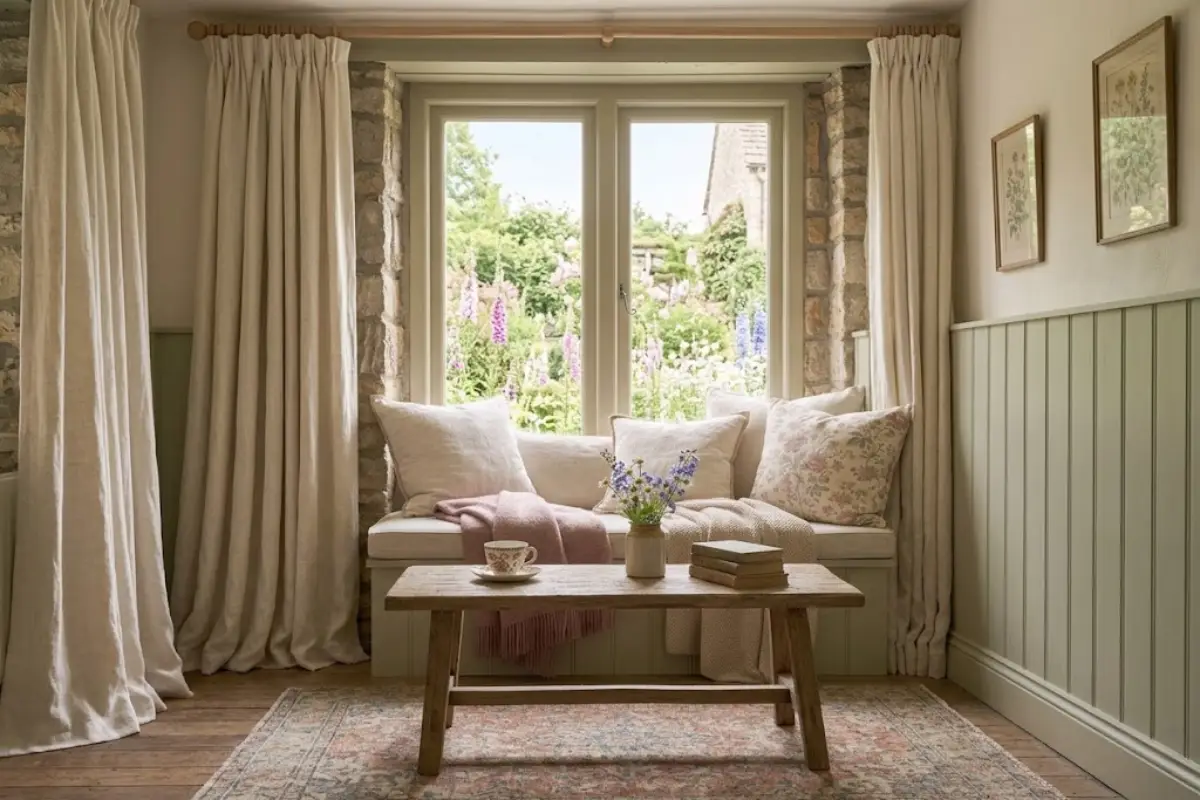
Linen-look curtains create a relaxed, airy atmosphere while softening the
edges of windows. Cream, oatmeal, and muted sage are versatile choices that
work with both vintage furniture and modern sofas.
Practical tip: Measure the window and curtain drop carefully,
and choose appropriate light-filtering or lined curtains for your privacy and
sunlight needs.
13. Drape a knitted throw over the sofa
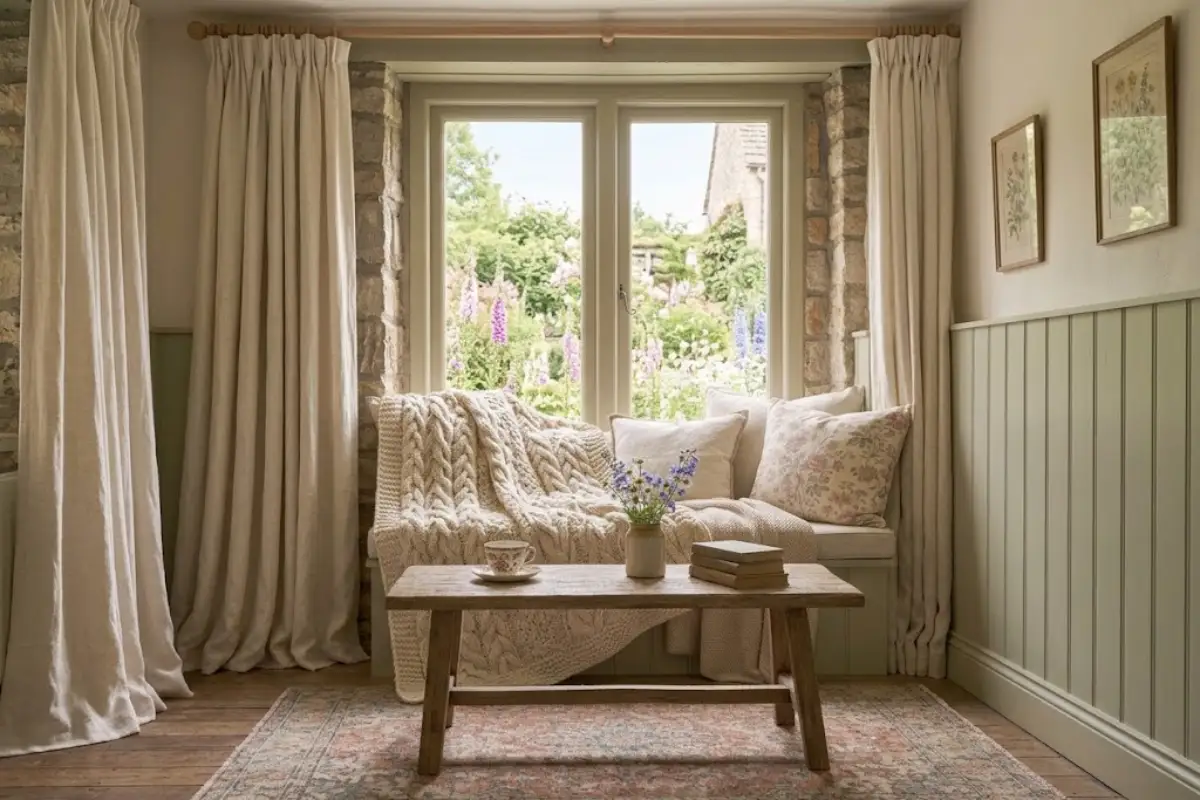
A knitted throw introduces warmth and makes the sofa look ready for a quiet
evening. Choose wool, cotton, or another comfortable fabric in a color already
used elsewhere in the room.
Practical tip: Fold the throw neatly over one arm or the back
of the sofa instead of spreading several blankets across every seat.
14. Use a vintage table lamp
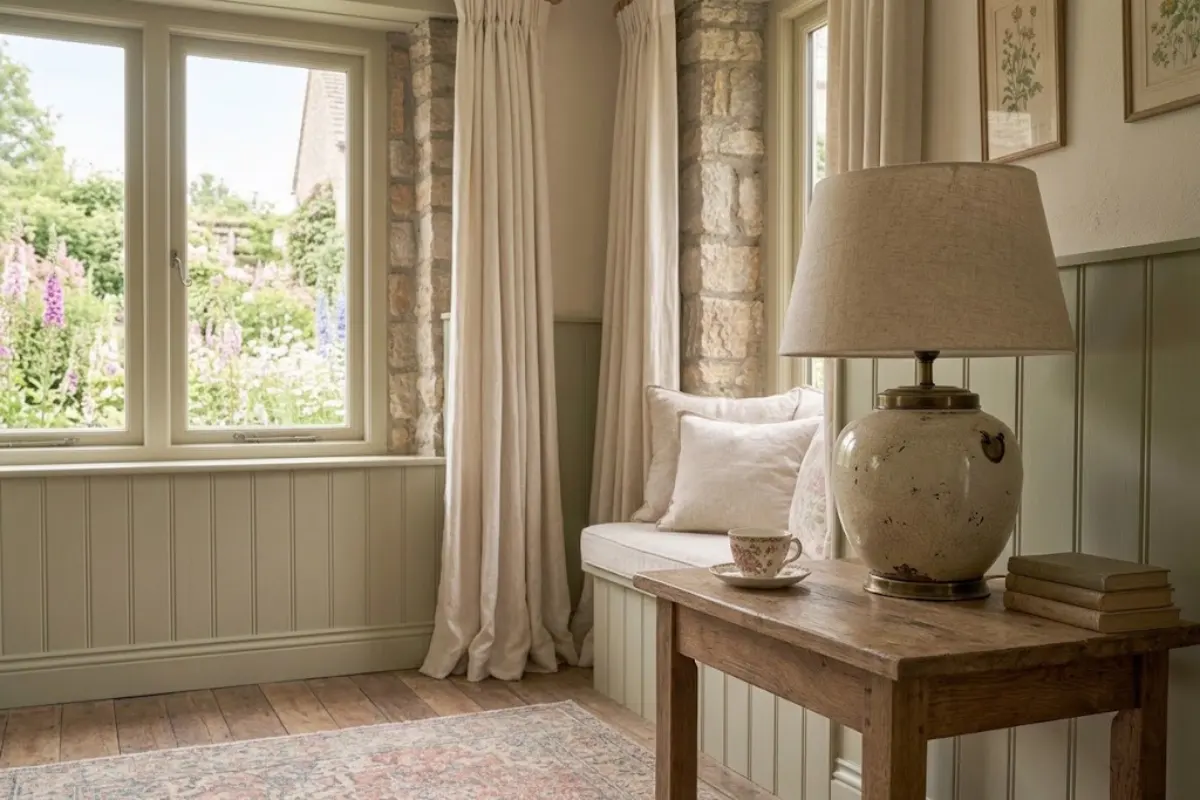
A table lamp creates a softer atmosphere than relying entirely on overhead
lighting. Ceramic bases, traditional silhouettes, and simple fabric shades
suit cottagecore interiors particularly well.
Practical tip: Inspect secondhand lamps for damaged cords,
loose fittings, and other electrical problems. Have questionable items checked
by a qualified professional before use.
15. Add a floor lamp beside the armchair
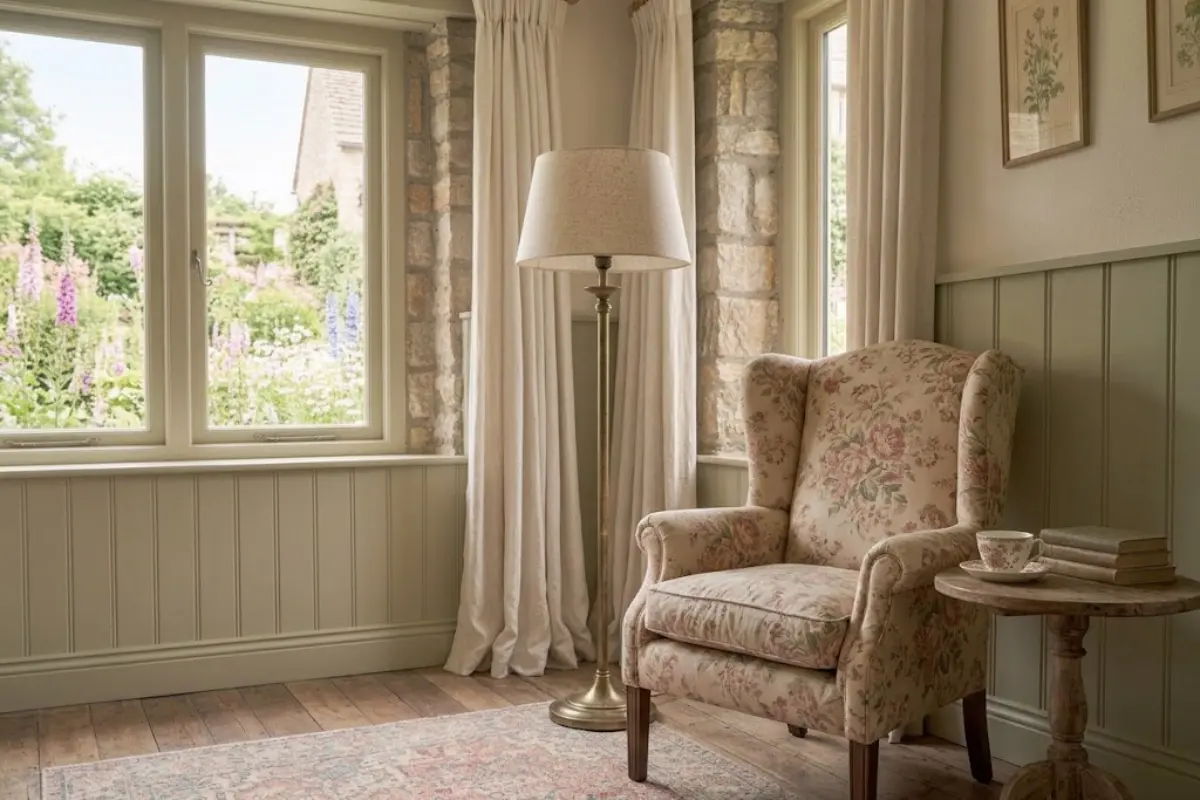
A floor lamp makes a reading corner more functional while adding height to the
room. Choose a design that complements the chair rather than competing with
its pattern or shape.
Practical tip: Position the lamp where it provides useful
reading light without creating a trip hazard or blocking the walkway.
16. Bring in candlelight safely
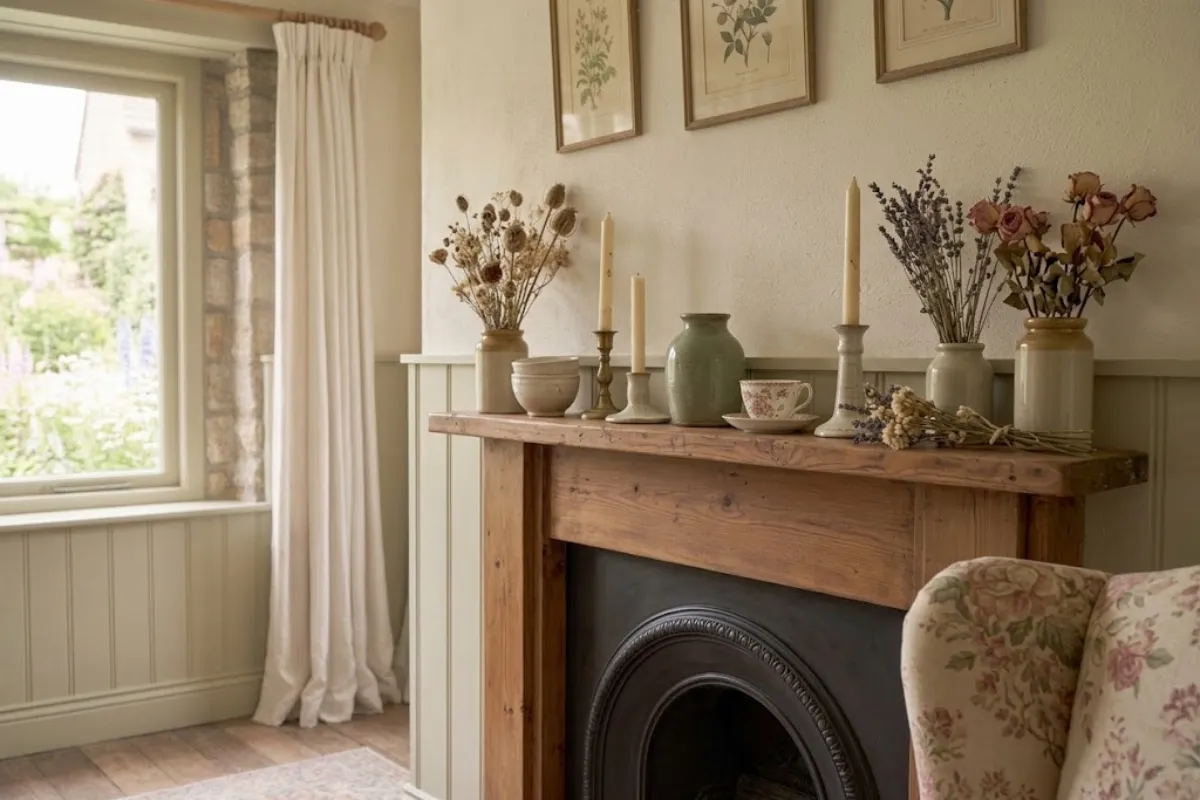
Candle holders can add an old-fashioned finishing touch to a mantel or
sideboard. For everyday ambiance without an open flame, realistic
battery-operated candles are a practical alternative.
Practical tip: Never leave burning candles unattended, and
keep them away from curtains, dried flowers, books, and other combustible
materials. See the U.S. Fire Administration’s candle-safety guidance (candle fire safety</a >; find the relevant candle page).
17. Display framed botanical prints
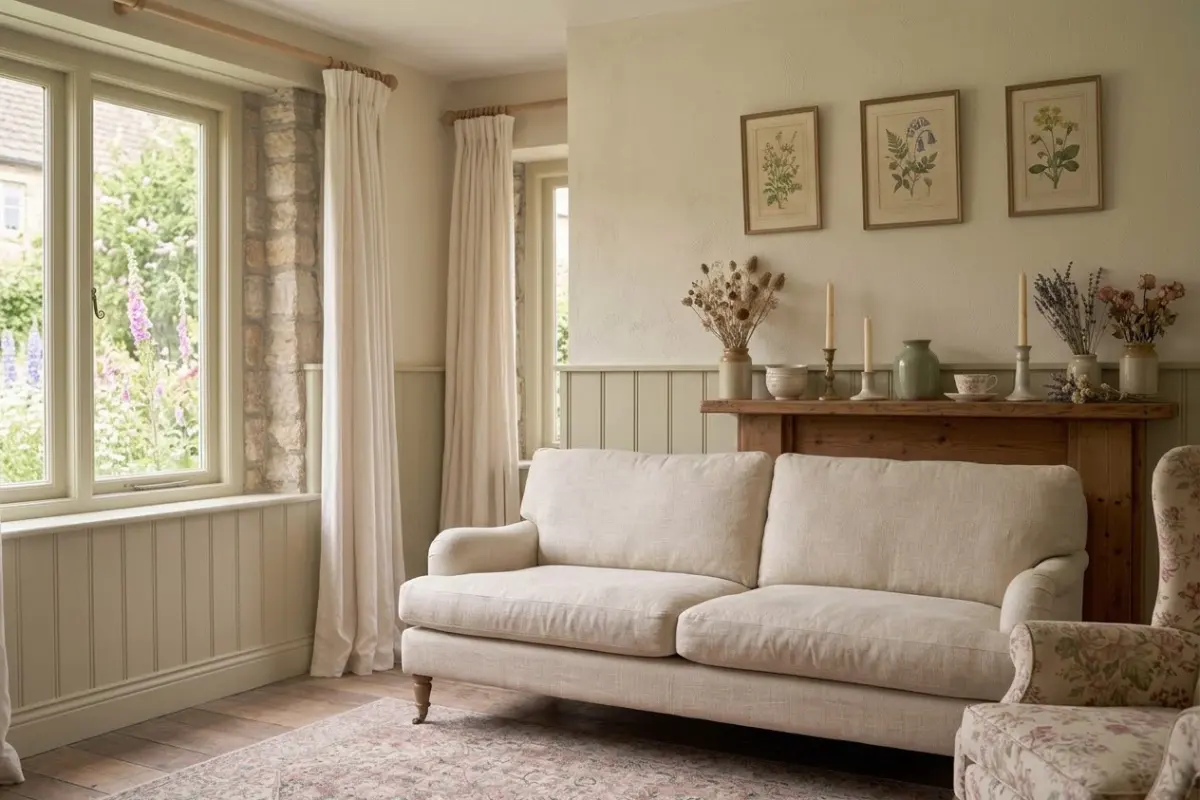
Botanical illustrations, pressed-flower artwork, and vintage landscape prints
bring a garden-inspired feeling indoors. A small group of related prints can
look more thoughtful than filling every available wall.
Practical tip: Use frames with a shared color or finish to
make different artwork feel connected.
18. Arrange a few favorite books
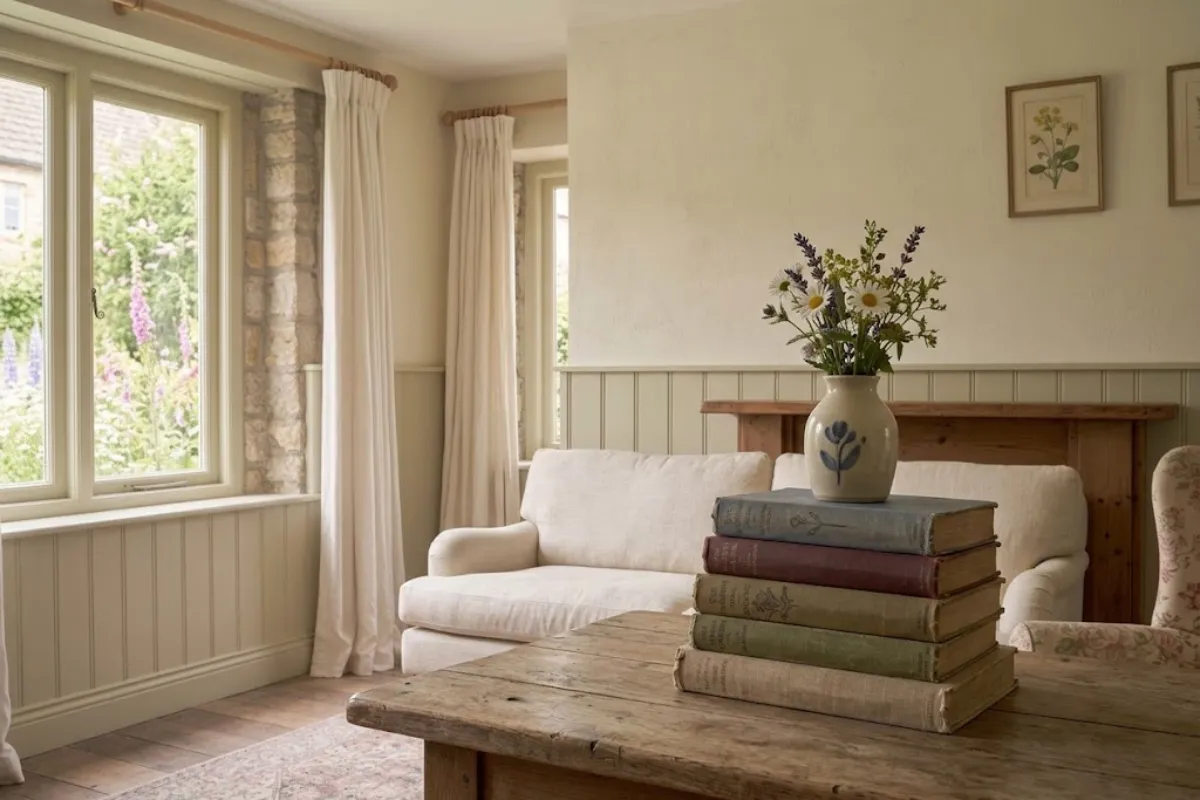
Books add color, texture, and a sense of everyday life to a cottage-style
living room. Display titles you genuinely enjoy instead of buying books solely
for their appearance.
Practical tip: Stack two or three books horizontally and
leave some empty space around them so the arrangement remains easy to use.
19. Add leafy houseplants
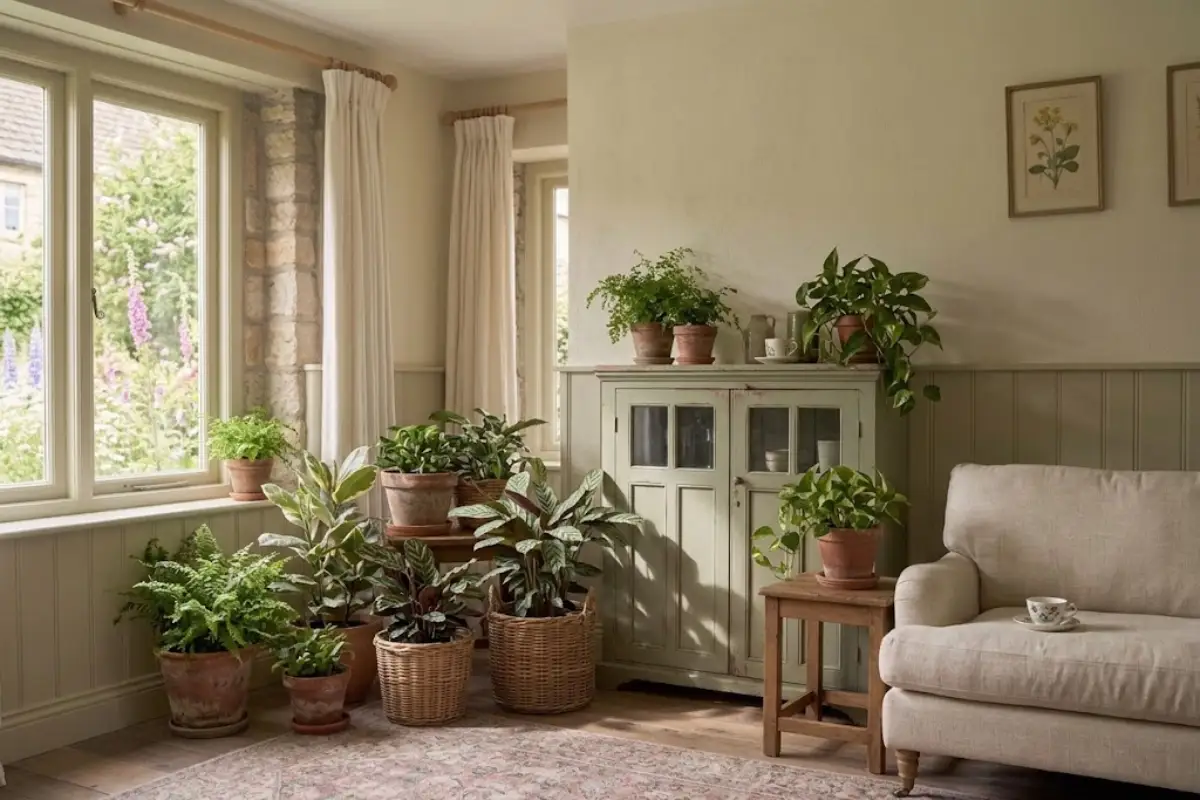
Houseplants soften furniture edges and introduce natural color without
requiring additional patterns. Choose plants suited to your available light,
room temperature, and care routine.
Practical tip: Check each plant’s safety around pets and
children, and use pots with suitable drainage to protect wooden floors and
furniture. For pet households, consult the
ASPCA plant safety list</a >.
20. Display seasonal garden flowers
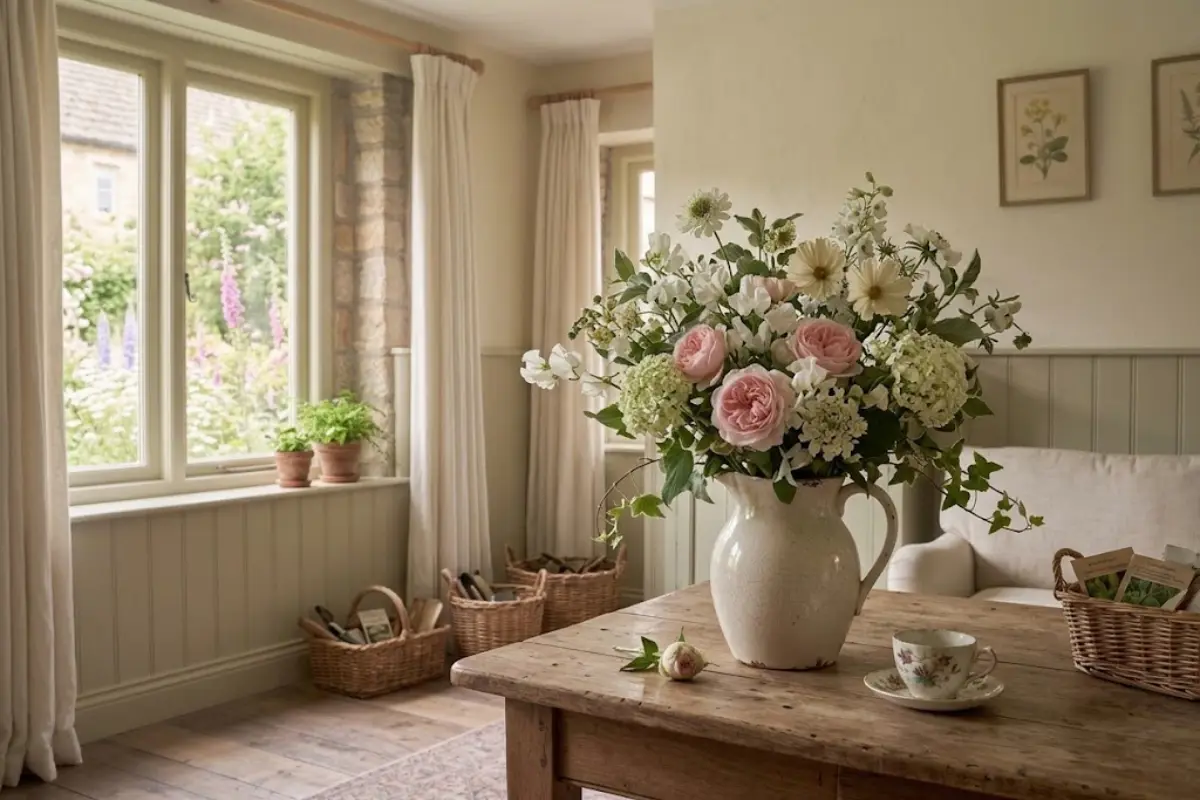
Fresh or dried flowers add a gentle finishing touch that changes naturally
with the seasons. A small arrangement in a ceramic jug often feels more
relaxed than an elaborate centerpiece.
Practical tip: Keep arrangements proportional to the surface,
and place fresh flowers away from direct heat and delicate vintage materials.
For more ways to blend natural finishes and aged wood, browse these
rustic home decor ideas.
Where Does the TV Go in a Cottagecore Living Room?
A television can fit into a cottagecore living room without becoming the main
feature. The goal is to make it feel like one part of the room rather than the
only thing your eyes notice.
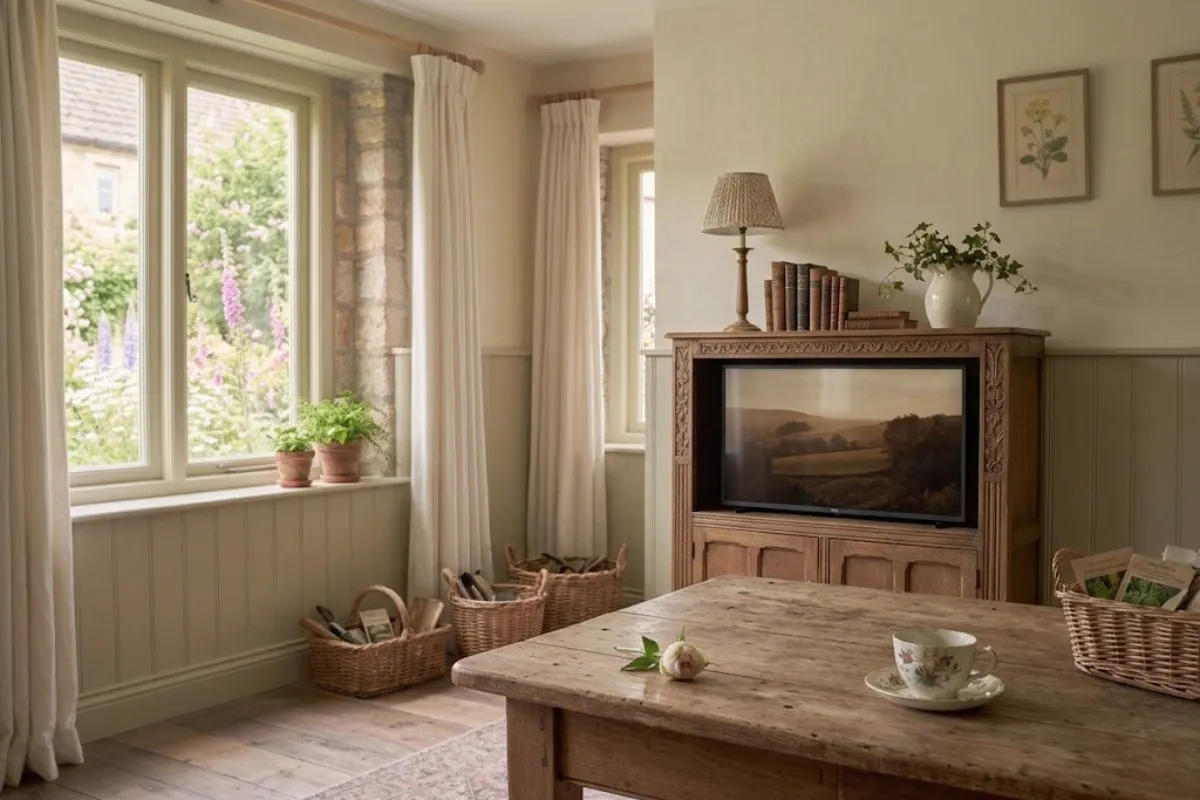
Hide the TV inside a cabinet
A vintage-style cabinet can conceal a television when it is not in use. Look
for a piece with enough interior space, suitable ventilation, and openings for
cables and equipment.
Practical tip: Measure the television and its stand before
buying a cabinet. Check the manufacturer’s ventilation and installation
requirements, and never operate equipment inside an enclosed cabinet unless
the setup is designed for it.
Frame the TV with artwork
If your television is wall-mounted, surround it with a carefully arranged
collection of botanical prints, small landscapes, or vintage-inspired frames.
This creates a gallery-wall effect that helps the screen blend into the room.
Practical tip: Lay out the frames on the floor first, leaving
enough space around the screen for a balanced arrangement.
Place the TV on a wooden console
A simple wooden console is often the easiest solution, especially if you rent
your home or prefer not to mount anything on the wall. Natural wood, muted
paint, and traditional hardware can complement the rest of your furniture.
Practical tip: Keep the console top relatively simple,
conceal loose cables with suitable cable-management products, and secure the
television according to its installation instructions.
Use a subtle wall color
A TV can look less prominent when the wall behind it is a muted shade such as
sage, warm gray, or deep olive. The color can also connect the screen to
nearby furniture and artwork.
Practical tip: Test paint samples in daylight and evening
light before committing to a color.
Furniture to Hunt for Secondhand
Secondhand furniture is a natural fit for cottagecore because it lets you mix
different periods, finishes, and shapes. The best finds are not necessarily
the oldest or most ornate; they are the pieces that suit your room and can be
used safely.
Look for a comfortable armchair
A vintage armchair can become the room’s most inviting seat. Prioritize
comfort, a sound frame, and a size that works with your existing sofa.
Practical tip: Sit in the chair if possible, test its
stability, and inspect upholstered areas for moisture damage, unusual odors,
and signs of pests before purchasing.
Search for a wooden daybed
A daybed can provide flexible seating and occasional guest sleeping space.
Simple wooden frames are particularly versatile because you can change their
appearance with cushions and throws.
Practical tip: Check the frame, joints, mattress dimensions,
and support system. Confirm that the daybed will fit through your doorways
before arranging collection.
Find a useful side table
Side tables are often easier to source than large furniture and can add
vintage character without dominating the room. A small table with a drawer is
especially useful for keeping everyday items out of sight.
Practical tip: Inspect the legs, drawer runners, and tabletop
for instability or damage, and measure the height against your sofa’s arm.
Choose a practical bookcase
A secondhand bookcase can display books, plants, and ceramics while providing
useful storage. Painted wood works well in softer cottage interiors, while
darker timber creates a more traditional atmosphere.
Practical tip: Check every shelf for sagging and the back
panel for damage. Make sure the unit can be securely anchored to a suitable
wall.
Consider a vintage coffee table
Look for a sturdy wooden table with a useful surface and proportions that suit
your seating arrangement. Small imperfections can add character, but serious
structural damage is not worth overlooking.
Practical tip: Examine the underside, joints, and finish. Be
cautious with unknown old coatings, and use appropriate safety precautions if
you plan to sand or refinish the piece.
Curated, Not Cluttered: A Simple Rule
Cottagecore celebrates meaningful objects, but too many decorative pieces can
make a living room feel crowded. You do not need to fill every shelf, cover
every surface, or display every item you own.
Give each shelf some breathing room
Arrange books, ceramics, and small keepsakes in groups with visible space
between them. Leave a few sections empty rather than treating every gap as a
place to add another object.
Practical tip: Start by removing everything from one shelf.
Return only the pieces you use, love, or genuinely want to display.
Repeat colors across the room
A cream cushion, a cream lampshade, and a cream ceramic vase can connect
furniture from different sources. Repeating sage green, warm wood, or muted
floral colors creates harmony without making everything match.
Practical tip: Before buying a decorative item, ask whether
its color or texture connects to something already in your room.
Mix different heights and textures
A stack of books, a medium-sized vase, and a small framed picture create more
visual interest than three identical objects lined up together. Varying their
height makes a display feel natural while keeping it organized.
Practical tip: Choose one main piece for each surface, then
add one or two supporting objects if space allows.
Keep everyday storage attractive
Baskets, lidded boxes, and drawers help hide chargers, toys, magazines, and
other practical items. They preserve the relaxed look of a cottage interior
without requiring you to put everything away in another room.
Practical tip: Give frequently used belongings a dedicated
home so tidying takes only a few minutes. For more inspiration, explore these
vintage-inspired decorating ideas</a >.
Small Cottagecore Living Room Ideas
A small living room can feel just as charming as a large country cottage. The
key is to prioritize useful furniture, maintain clear walking routes, and
create atmosphere through a few well-chosen details.
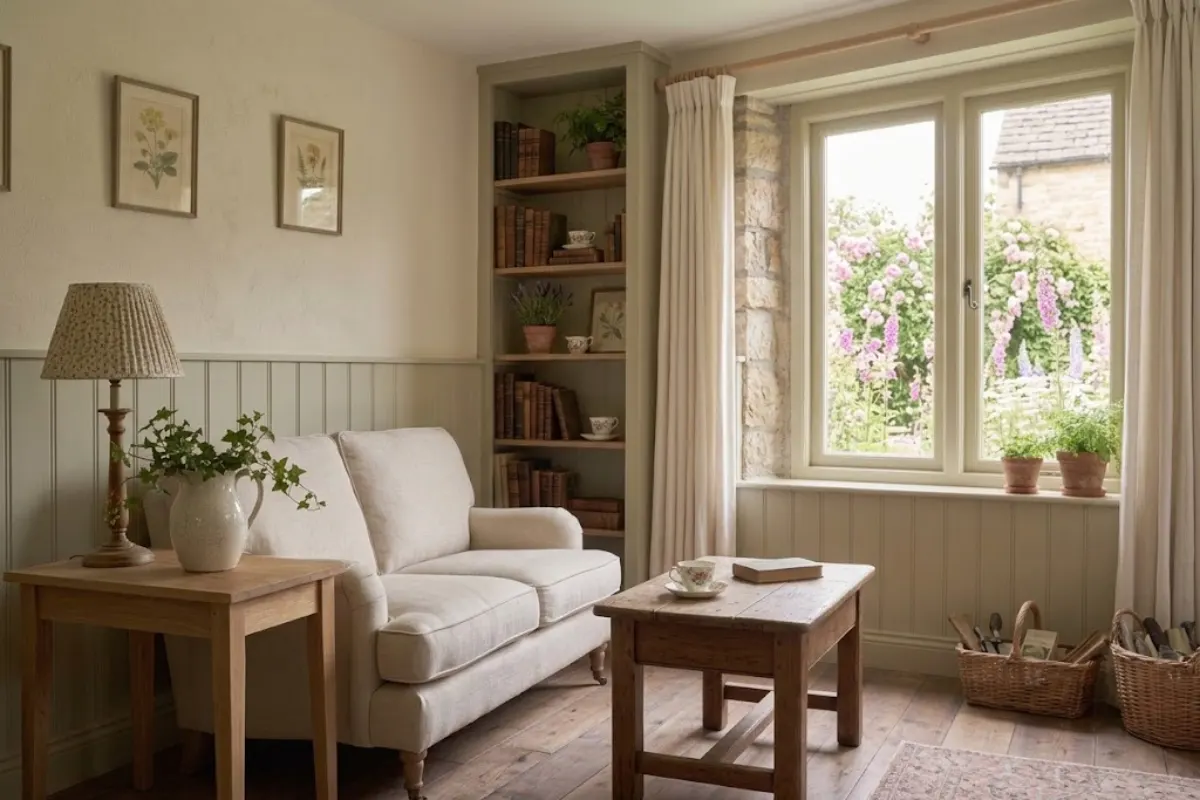
Choose furniture that fits the room
A compact sofa, one comfortable accent chair, and a small side table may serve
you better than several oversized vintage pieces.
Practical tip: Measure your room and mark out furniture
dimensions before shopping. Leave enough room to move comfortably between the
seating, doorway, and other frequently used areas.
Use vertical space
Wall shelves, framed botanical prints, and taller bookcases make use of the
room’s height without taking up as much floor space. They also provide
opportunities to display a few favorite collections.
Practical tip: Keep heavier items on lower shelves, secure
tall furniture properly, and avoid filling every section of the wall.
Choose a light base with gentle contrast
Warm white walls, natural wood, and soft green or floral accents can help a
small room feel cohesive. You can still use darker vintage furniture; balance
it with lighter textiles and open space.
Practical tip: Repeat two or three colors instead of
introducing a new palette for every corner.
Make every decorative piece useful or meaningful
In a compact space, a basket that stores blankets, a lamp that improves
reading light, or a framed print that you love can do more than several
unrelated accessories.
Practical tip: Before adding something new, consider whether
it improves comfort, storage, or the room’s overall appearance.
Let natural light do some of the work
Lightweight curtains, clean windows, and furniture arranged to avoid blocking
the main source of daylight can make a small room feel more open. Mirrors may
also help reflect available light when positioned thoughtfully.
Practical tip: Observe how sunlight moves through your room
before placing plants, seating, or reflective objects.
If you are developing a wider decorating scheme, these
cottagecore style home ideas can help
you carry the same atmosphere into connected rooms.
FAQ
Can I do cottagecore with a modern sofa?
Yes. A simple modern sofa can work beautifully with vintage wooden furniture,
floral cushions, natural textiles, and botanical artwork. Choose a sofa color
that connects with the rest of the room.
What colors work best for a cottagecore living room?
Warm white, cream, sage green, dusty pink, muted blue, and earthy brown are
all good choices. Use a small, repeating palette to keep the room feeling
connected rather than busy.
How do I stop a cottagecore living room from looking messy?
Limit the number of objects on each surface, repeat a few colors, and leave
visible empty space on shelves. Use baskets and drawers to store everyday
belongings that you do not want on display.
Is a cottagecore living room expensive to create?
It does not have to be. Secondhand furniture, existing textiles, simple
artwork, and inexpensive natural accents can help create the look gradually.
Set a budget, inspect used items carefully, and prioritize essential furniture
before buying decorative extras.

One Response