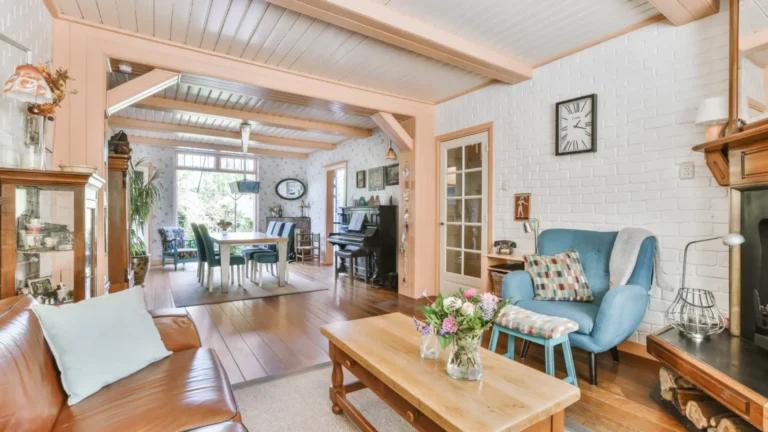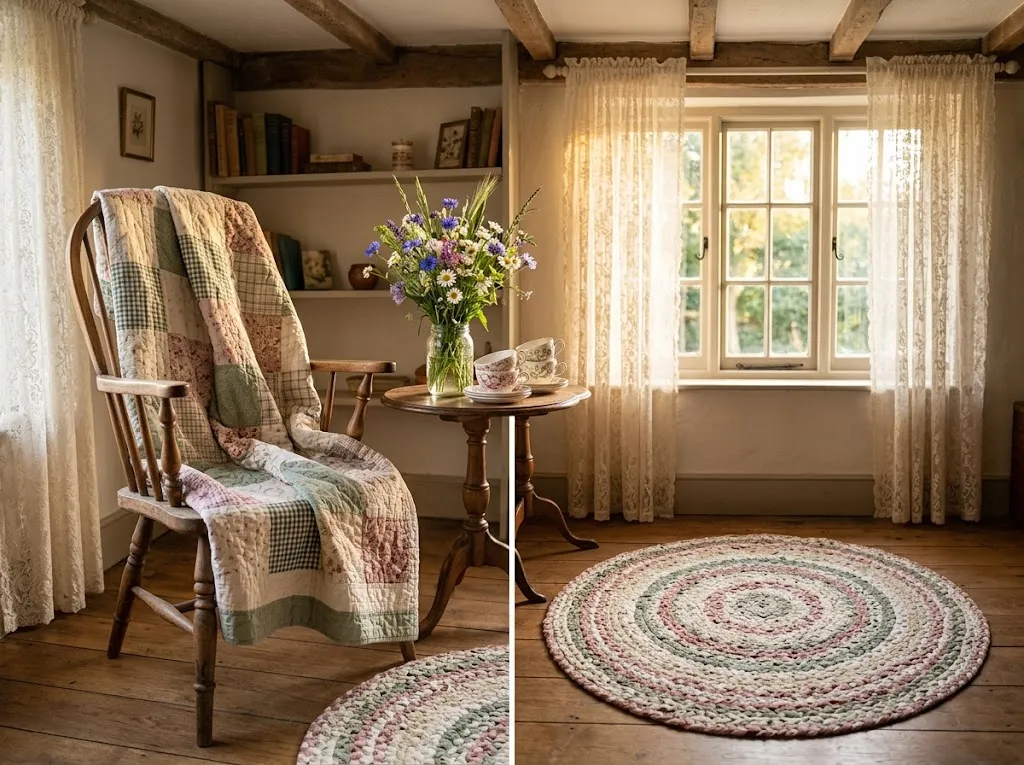
Some rooms make you exhale the second you walk in. Cottagecore home decor is how you build that feeling on purpose, with soft linen, worn wood, and a jar of wildflowers on the table. If your space feels cold, cluttered, or a little too modern, this list is for you.
I’ve tried many of these ideas in my own home, and I’ve noticed that small changes often work best. A braided rug, a pair of lace curtains, or a thrifted teacup can shift the mood in a single afternoon. Nothing here needs a big budget or special skills.
Below you’ll find 22 cozy, beginner-friendly ideas, from kitchen shelves to bedroom quilts. Save your favorites as you scroll.
Lace Café Curtains
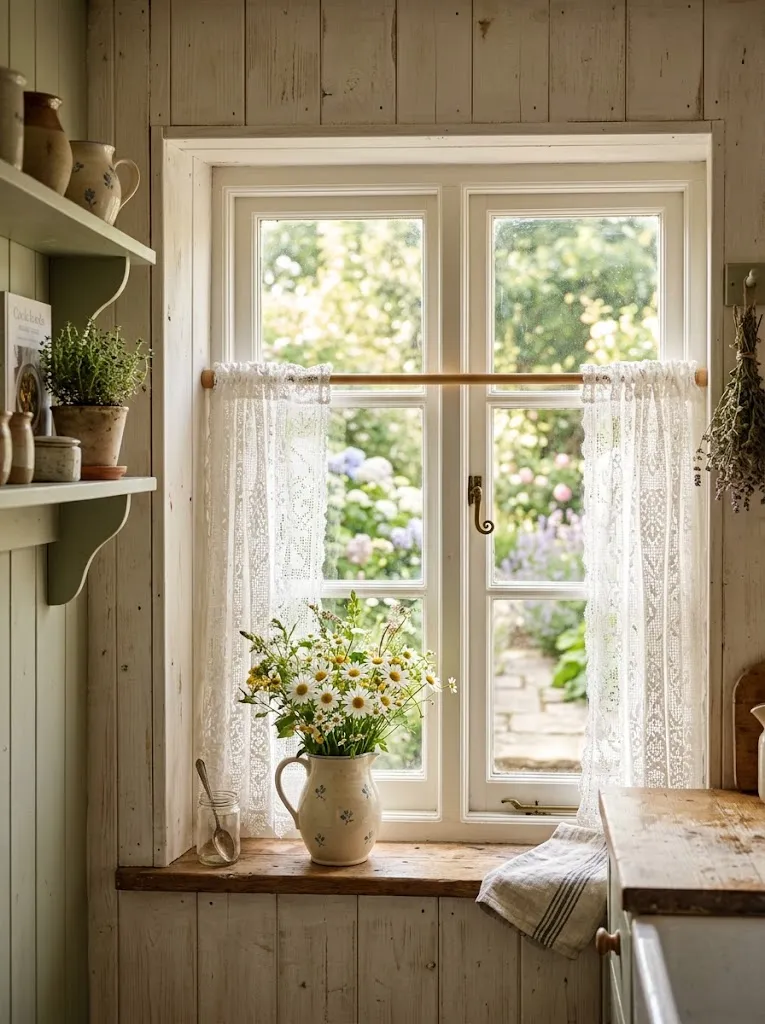
Lace curtains do the quiet work in a cottage room. They soften harsh daylight into a gentle glow without hiding the view. Hang café style panels on a simple wooden rod across the lower half of the window, and the room feels lived in and warm.
In my experience, cotton lace washes better than polyester and keeps its soft drape for years. Look for vintage panels at thrift shops or estate sales, where they often cost only a few dollars. Ivory and cream shades feel more authentic than bright white in most cottagecore home decor.
Open Kitchen Shelves
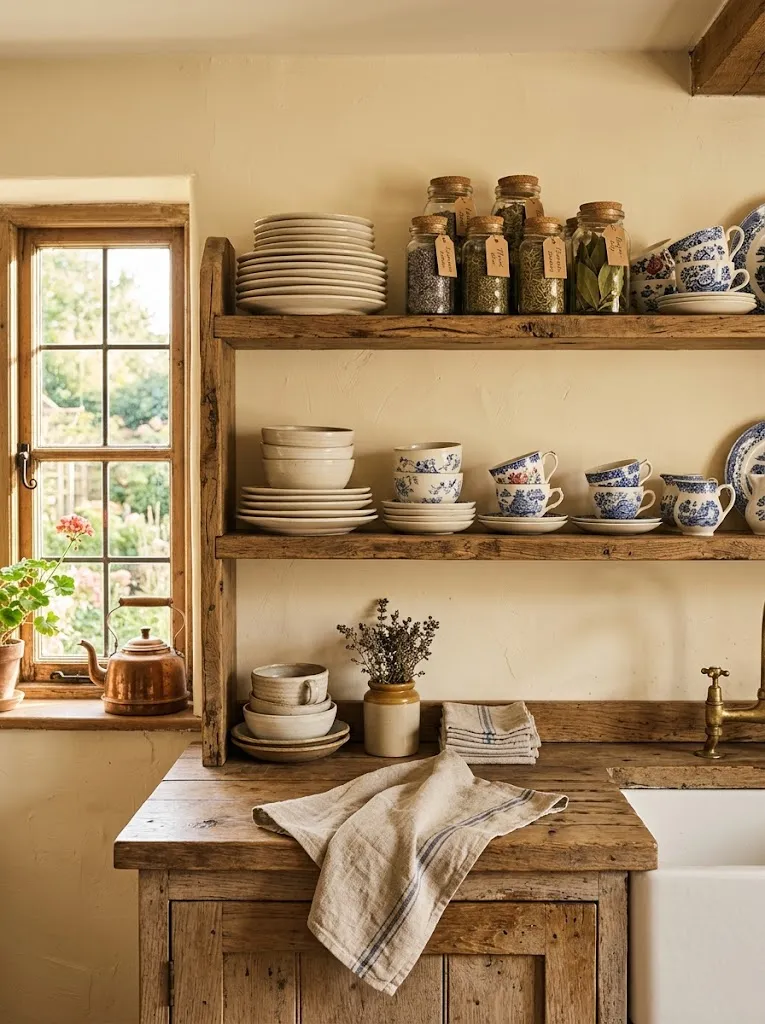
- Your everyday dishes become the decoration. Stack plates in short piles of four so they stay easy to grab.
- Keep the palette tight. Cream stoneware, blue and white china, and natural wood look calm together.
- Group jars of oats, dried herbs, and pasta at one end for a working pantry feel.
- Leave about a third of each shelf empty. Gaps let the pieces breathe, while crowded shelves look messy.
- Drape a linen towel over the shelf edge for a soft, practical finishing touch.
I’ve noticed that open shelves stay tidy when everything on them gets used weekly. Dust settles fast on pieces that sit untouched, so rotate a few items in and out. The payoff is a kitchen that feels welcoming, personal, and a little like your grandmother’s, in the best way.
Wildflower Jar Bouquets
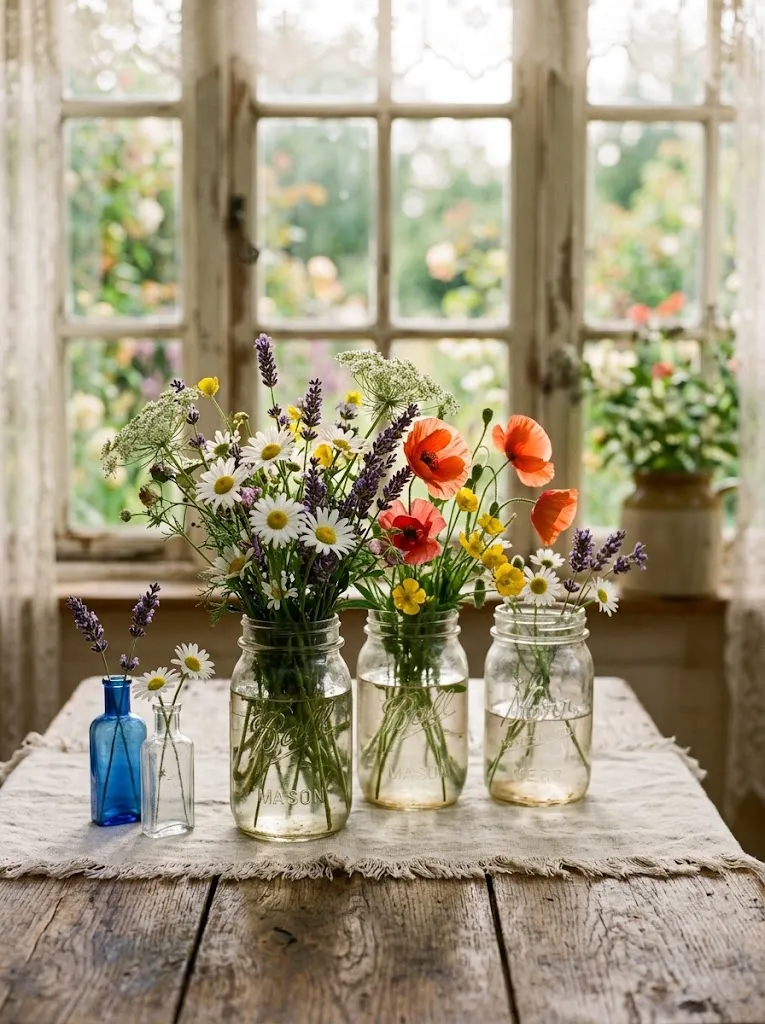
Quick Tip:
Cut stems at an angle and change the water every two days so blooms last closer to a week. Keep the flowers loose and slightly uneven rather than arranged in a tight dome. Grocery store stems work well when you mix in a few branches from your own yard.
Wildflowers cost almost nothing, yet they change how a room feels. Place one jar on the kitchen table, one on the bathroom sink, and one beside the bed. Mismatched glass looks more collected than a matching set. Dried bunches hang on for months once the fresh ones fade.
Patchwork Quilt Bedding
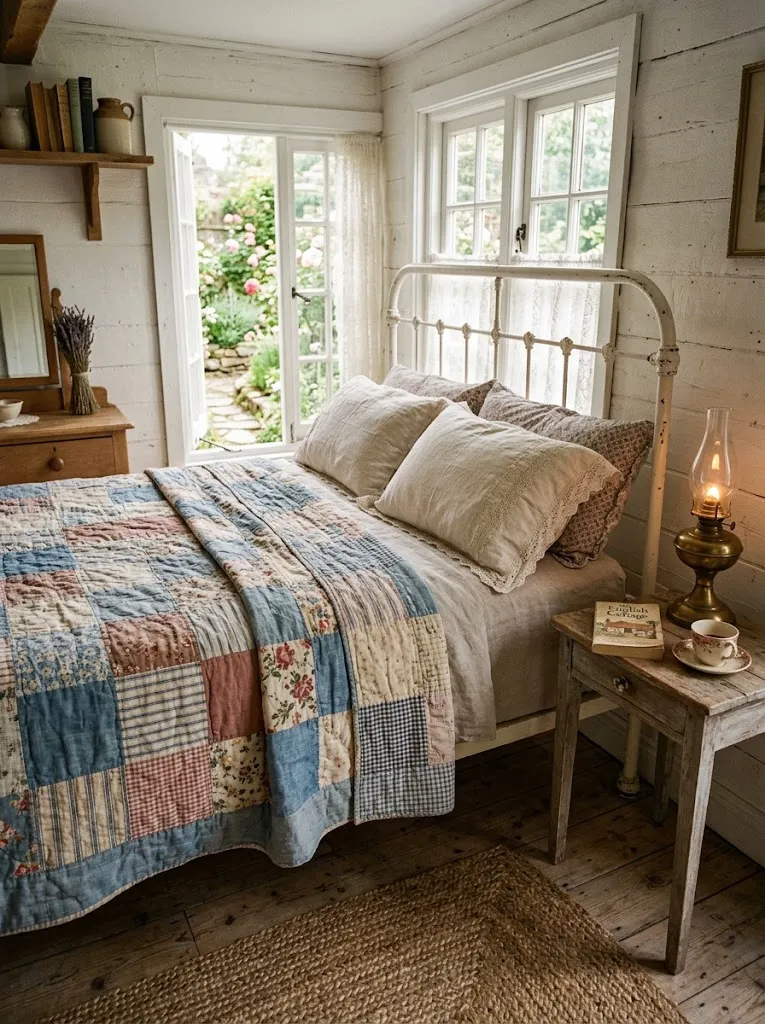
Before: The bed looks flat and plain. A solid white duvet hides the warmth that makes a cottage bedroom feel lived in.
After: A patchwork quilt in faded blues, creams, and dusty roses adds pattern and history at once. The bed becomes the focal point without any extra furniture. Even a quilt folded at the foot of the bed works.
Old quilts often turn up at flea markets and church sales for a fraction of boutique prices. Slightly worn ones often look even better because the soft fabric drapes so easily. Check for strong seams, skip any musty smell, and wash gently on a cool cycle before using.
Floral Wallpaper Accent Wall
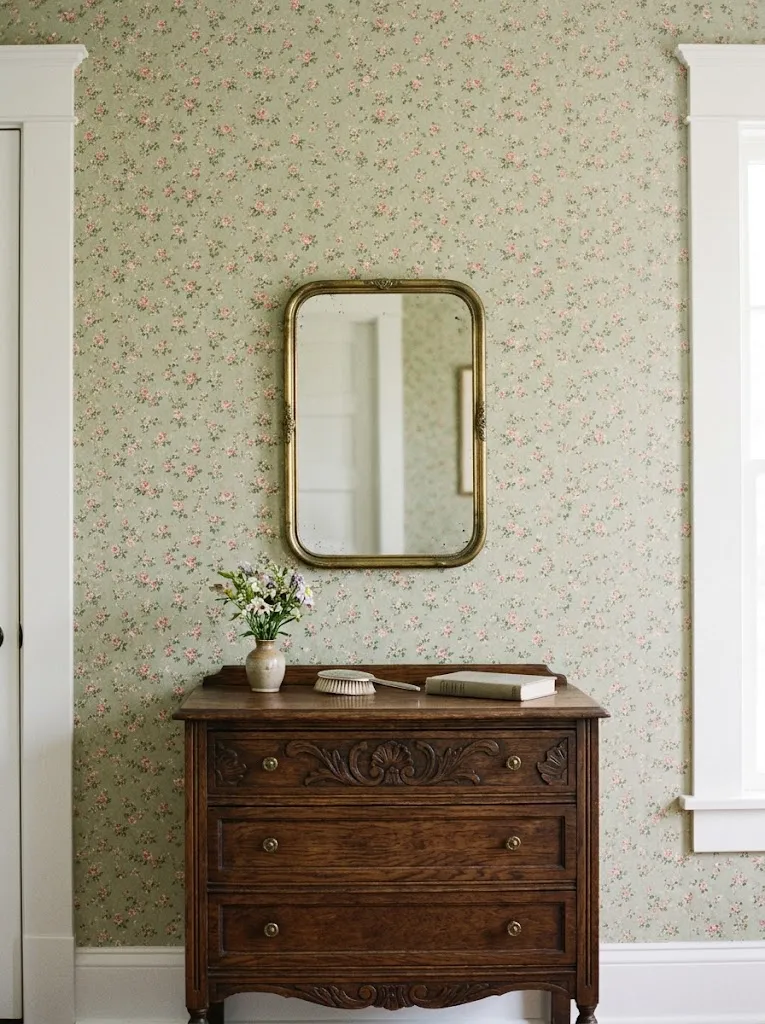
- Start with one wall, never all four. Choose the wall behind the bed or beside a reading chair so the pattern gets noticed without overwhelming the room.
- Pick a small scale print, such as tiny roses or ditsy sprigs, in muted sage, cream, or dusty pink. Big bold blooms feel modern, not cottage.
- Prime the wall and smooth any bumps before hanging the first strip. Draw a level line first so the pattern stays straight.
- Repaint the trim and ceiling edge in warm white to frame the paper neatly.
Peel and stick paper suits renters well, and it usually comes off cleanly from painted drywall when removed slowly. Test a small piece first in a hidden corner. Paste-the-wall paper needs more skill but lasts longer. Small prints hide seams better than large ones, so beginners usually get tidier results.
Thrifted Wooden Furniture
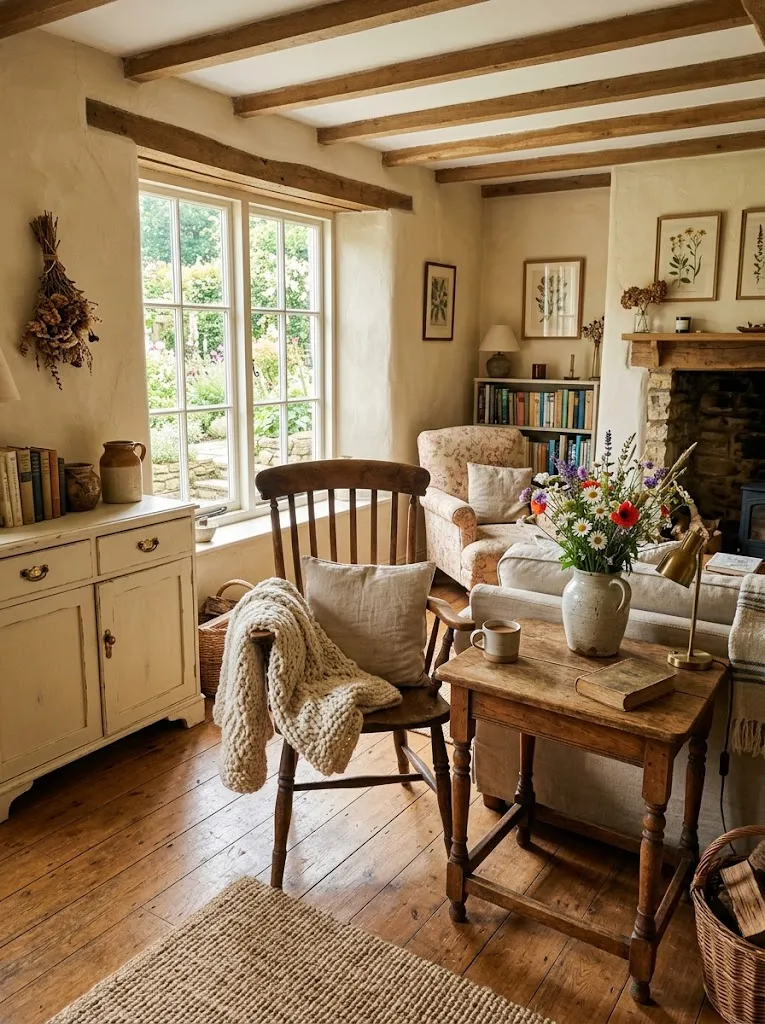
| Thrifted Wood | New Flat-Pack | |
|---|---|---|
| Character | Worn grain and one-of-a-kind shapes | Uniform finish, identical to thousands of others |
| Durability | Solid wood often lasts for decades | Often particleboard that sags over time |
| Repair | Sand, wax, or repaint it yourself | Hard to fix once the surface chips |
| Cost | Often $20 to $150 at thrift shops | Usually more for the same size |
Solid wood pieces carry the soft, worn look that defines cottagecore home decor. Check drawers for smooth sliding, press on joints for wobble, and sniff for damp. Scratches are fine. Woodworm holes and mold are not. A coat of beeswax polish brings back warmth in an afternoon.
Vintage Teacup Display
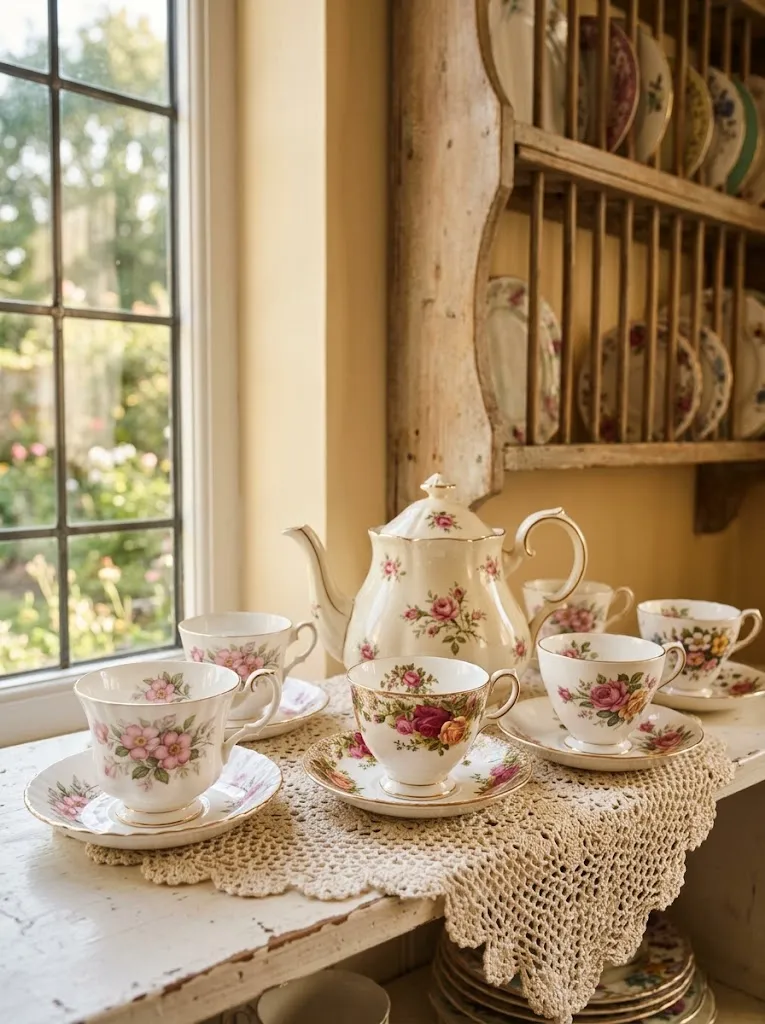
Do:
- Hang cups from small brass hooks under a shelf to free up counter space.
- Mix patterns, but keep one shared color like pink or blue.
- Use the cups daily so the collection stays part of real life.
- Stand saucers upright on a small plate stand.
Don’t:
- Don’t buy new cups made to look old.
- Don’t stack cups more than two high, since rims chip easily.
- Don’t place them near a stove, where grease will coat the china.
- Don’t put gold-rimmed pieces in the dishwasher or microwave.
Single cups often sell for one or two dollars at charity shops, and odd pairings look more charming than matched sets. Start with five or six that share a color, then let the shelf grow slowly over months.
Herb Windowsill Garden
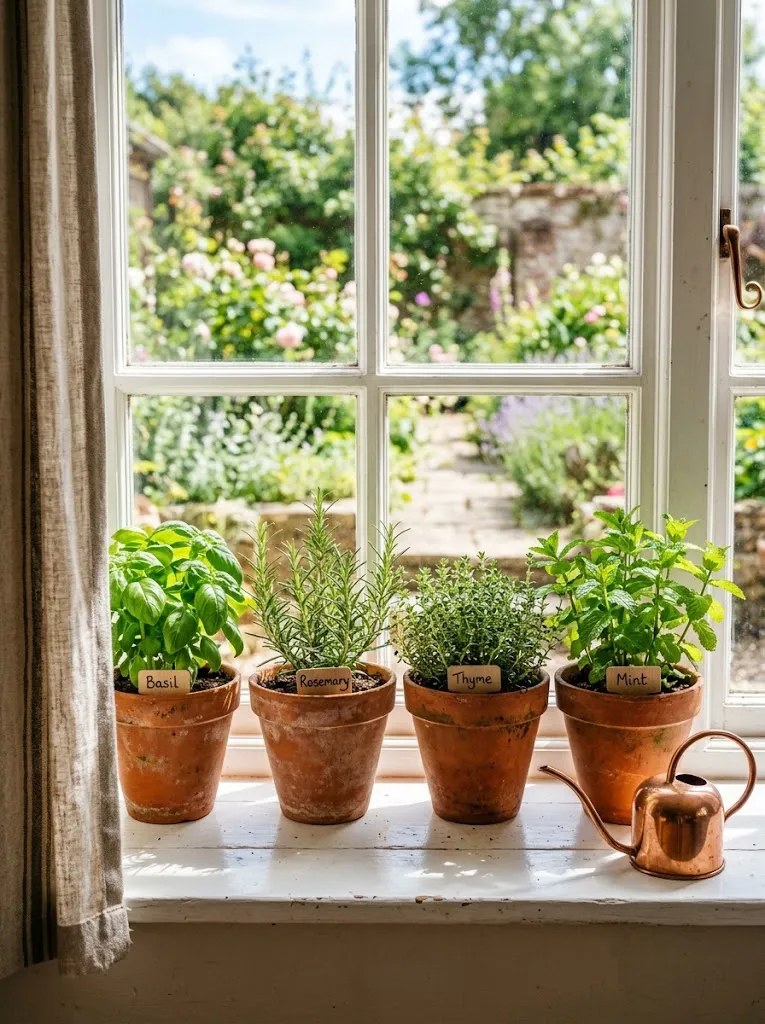
Cost: Low, about $15 to $25 for pots and starter plants
Time: One hour to set up
Skill Level: Beginner
Best For: Kitchens with a south or west facing window
Fresh herbs earn their place twice, once as decoration and again in your cooking. I’ve seen basil struggle in dim rooms, so pick the brightest sill you have. Terracotta pots let roots breathe, and a saucer under each one protects the wood. Snip often, since regular cutting keeps plants full.
Woven Basket Storage
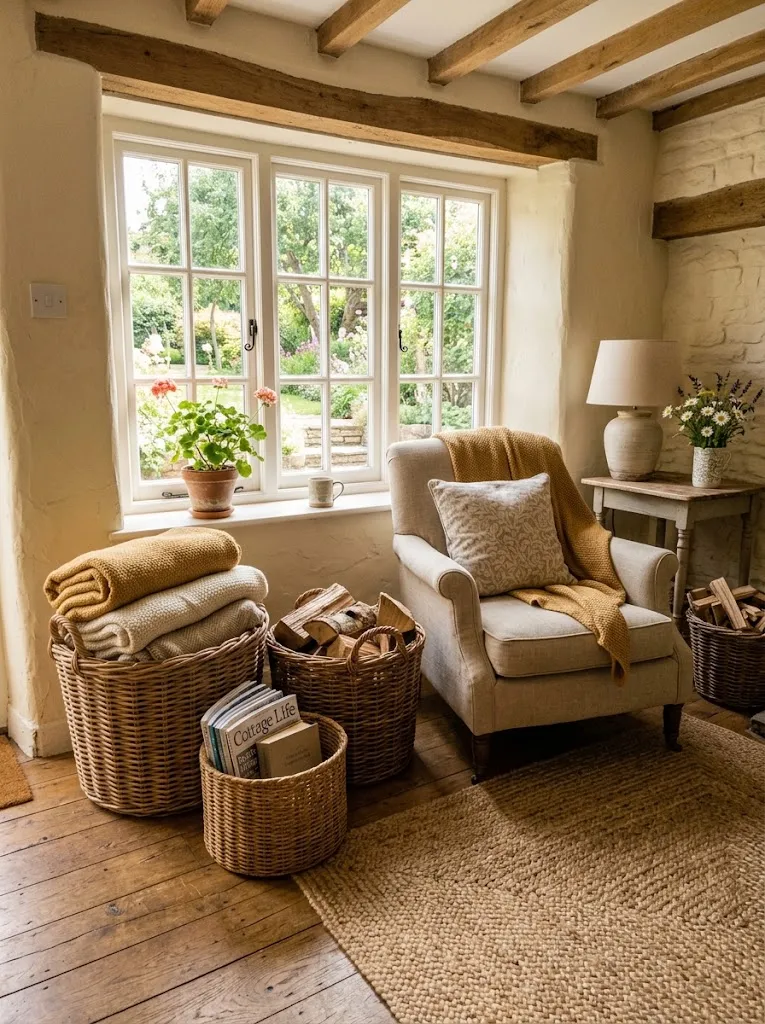
Clutter ruins a cozy room faster than anything else. Baskets solve it while adding texture. Place a large lidded wicker basket beside the sofa for blankets, a shallow one on the entry floor for shoes, and a small one on the kitchen counter for bread or fruit.
Stick to natural fibers like willow, seagrass, or rattan so the materials match. Line open baskets with a piece of linen to keep small items from slipping through. Odd sizes look better grouped in threes, and a single oversized basket by the fireplace holds logs or magazines with ease.
Cast Iron Cookware Display
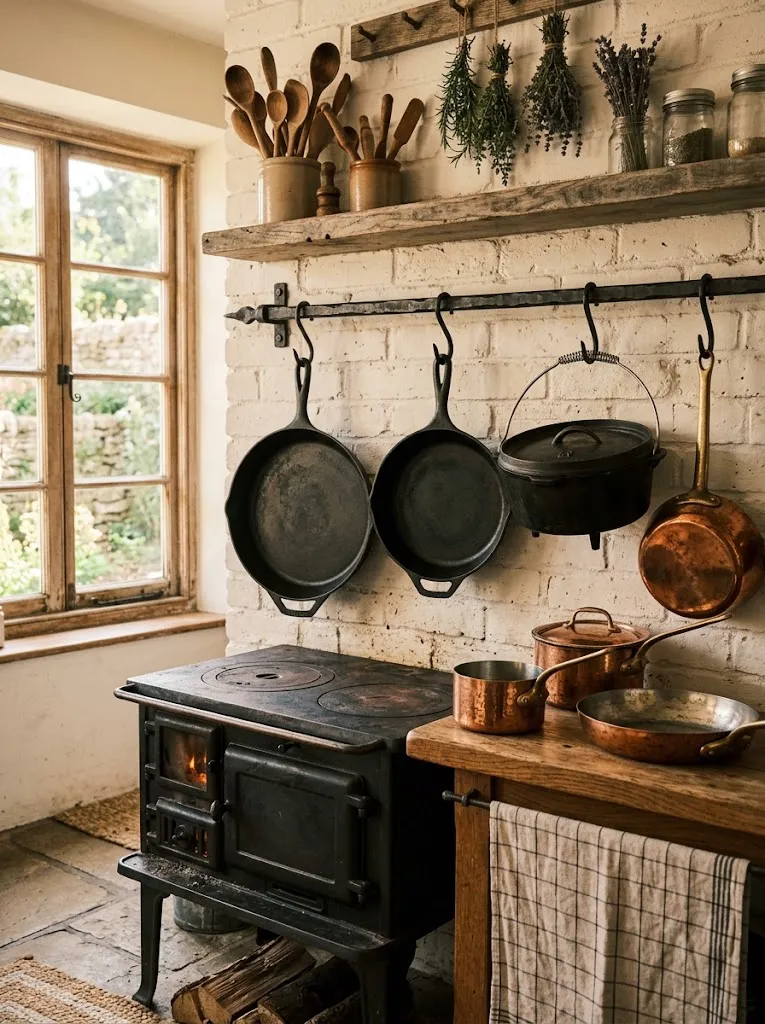
- Cast iron looks better hanging than hidden. Mount an iron rail or sturdy hooks above the stove, with the largest skillet on the left.
- Leave a Dutch oven on the back burner. Its deep color anchors the whole kitchen.
- Keep wooden spoons in a stoneware crock beside the stove. Worn handles look better than new ones.
- Add one copper pot or kettle for a warm contrast against the black iron.
- Screw hooks into a wall stud, since cast iron is heavy and drywall alone will not hold it.
I’ve noticed that cookware on display gets used more, which keeps the iron seasoned and glossy. Wipe each piece with a thin coat of oil after washing. Flea markets often sell old skillets cheaply, and a good scrub restores them. Hang only what you cook with weekly.
Candlelit Dining Table
Quick Tip:
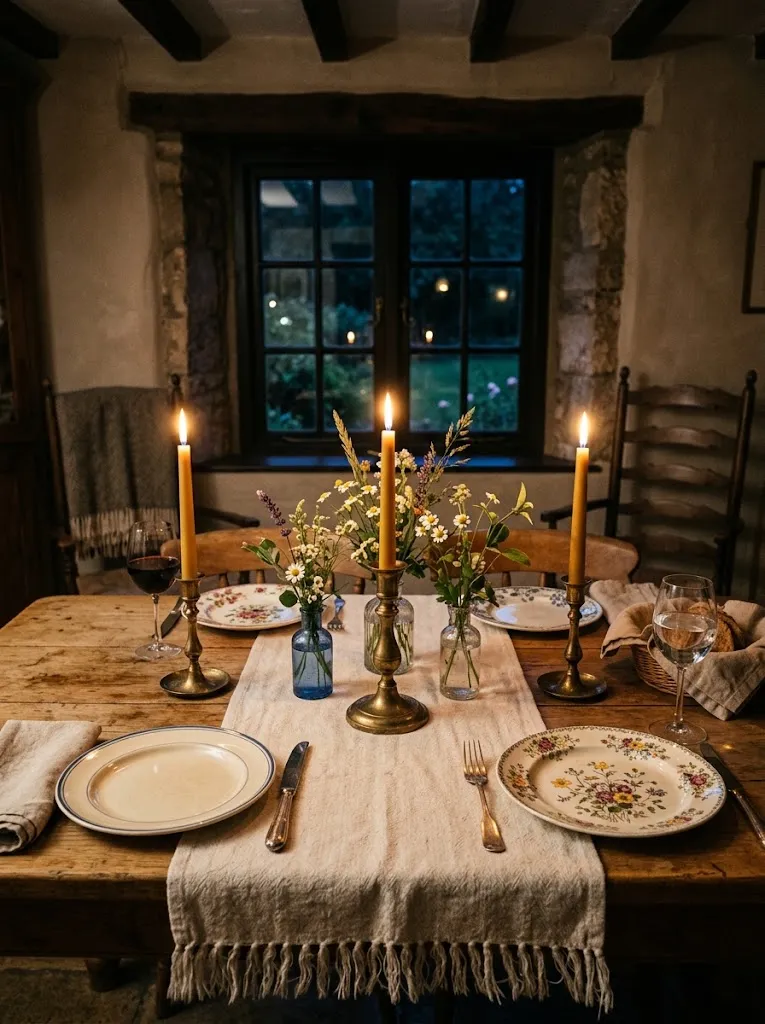
Chill taper candles in the freezer for an hour before lighting, and they burn slower and drip less. Trim the wick to a quarter inch each time. Keep flames away from curtains and never leave them unattended.
Dinner tastes better by candlelight, even on a Tuesday. Set three to five tapers down the center in mismatched brass or ceramic holders, and switch off the overhead light. A bowl of pasta feels like a special occasion this way. Choose unscented candles so food aromas stay clear.
Whitewashed Brick Fireplace
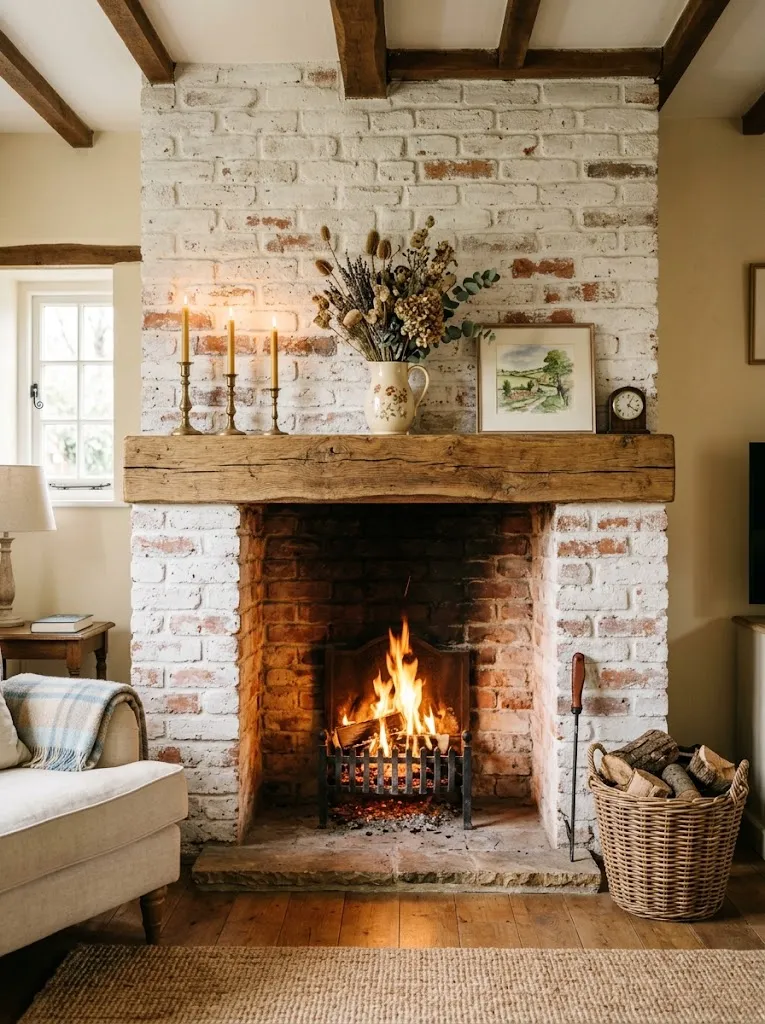
Before: Dark, dated red brick swallows the light and makes the living room feel heavy. The fireplace looks like a wall of orange blocks instead of a warm focal point. Even a lit fire barely brightens it.
After: A thin whitewash lets the brick texture show through in soft cream tones. The fireplace now bounces daylight around the room and gives the mantel a calm backdrop. Brass candlesticks and dried lavender finish the look.
Mix one part white latex paint with one part water, brush it on, and wipe back with a damp rag for a soft, uneven finish. Test a hidden patch first. Two thin coats look more natural than one thick coat. Never paint inside the firebox.
Dried Flower Garland
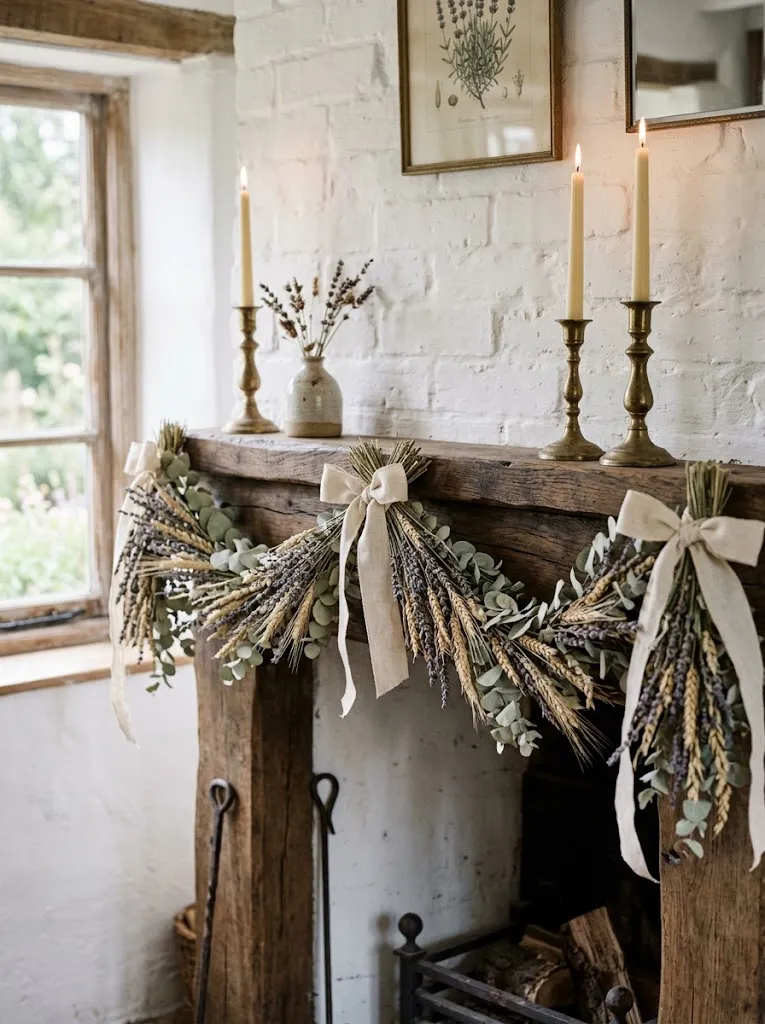
- Start with dried lavender, wheat stalks, and eucalyptus from a craft store, or air dry your own by hanging stems upside down for two weeks.
- Cut a length of jute twine about a foot longer than your mantel on each side.
- Wire small bunches to the twine with floral wire. Overlap each bunch so the stems stay hidden.
- Tie linen ribbon bows at both ends and hang the garland from small nails or removable hooks.
I’ve made these for years, and the first one always looks sparse. Use more bunches than you think you need. Lavender sheds a little, so shake each bundle outdoors first. Keep the garland away from candle flames and direct sun, which fades the color. A well made one lasts a full season.
Braided Rag Rugs
| Braided Rag Rug | Synthetic Printed Rug | |
|---|---|---|
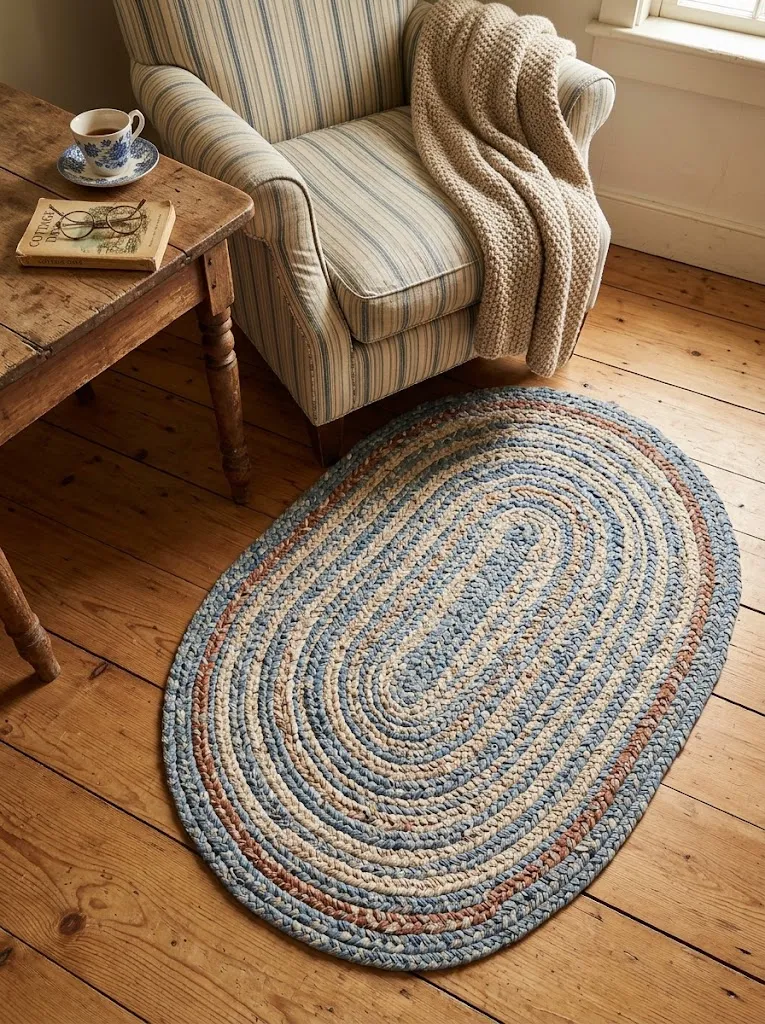
| Look | Handmade texture in layered, faded colors | Flat printed pattern that repeats |
| Underfoot | Thick, soft, and cushioned | Thin and often slippery |
| Care | Many cotton ones can be machine washed on gentle | Usually spot clean only |
| Lifespan | Wears in gracefully for decades | Flattens or frays within a few years |
Hard floors feel colder than they look, especially on winter mornings. A braided rug fixes that at the bedside, by the sink, or in front of the stove. Round or oval shapes soften square rooms. Put a non-slip pad underneath, since rugs on wood tend to slide, and check that the edges lie flat.
Botanical Print Gallery Wall
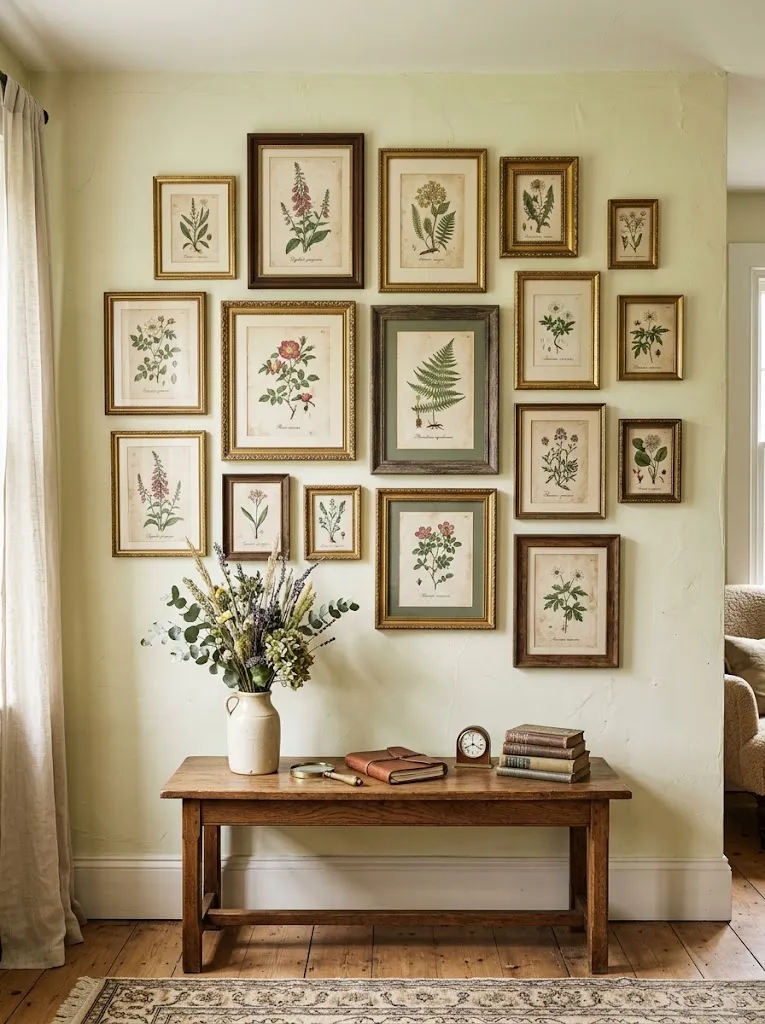
Do:
- Lay every frame on the floor first and shuffle the layout before you hammer a single nail.
- Leave two to three inches between frames so the group reads as one piece.
- Stick to one theme, like ferns, wildflowers, or songbirds.
- Hang the center of the group at eye level, about 57 inches from the floor.
Don’t:
- Don’t buy every frame in the same finish.
- Don’t hang paper prints in direct sun, since the ink fades.
- Don’t let the arrangement stretch wider than the furniture beneath it.
- Don’t skip a paper template, because measuring by eye leads to crooked rows.
Museum archives offer free botanical illustrations in the public domain. Print them on matte paper at a local print shop for a few dollars each. In my experience, mixed frame finishes hide how cheap the prints were, and the wall looks collected over years. Start with six frames.
Cozy Reading Nook
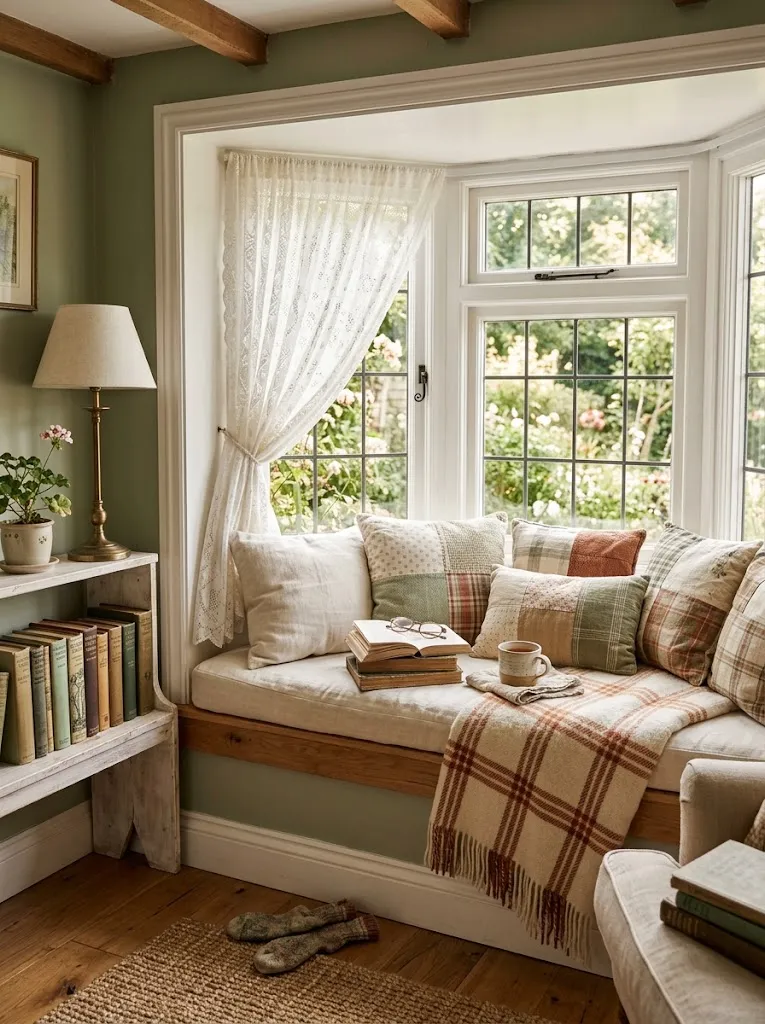
Cost: Low to medium, about $40 to $120 for cushions and a throw
Time: One afternoon
Skill Level: Beginner
Best For: Bay windows, stair landings, and spare corners
A good nook needs three things: something soft to sit on, light to read by, and a surface for your tea. I’ve noticed people use a corner far more when a small lamp and a side table are already there. Keep books within arm’s reach, and add a wool throw for chilly evenings.
Vintage Milk Glass
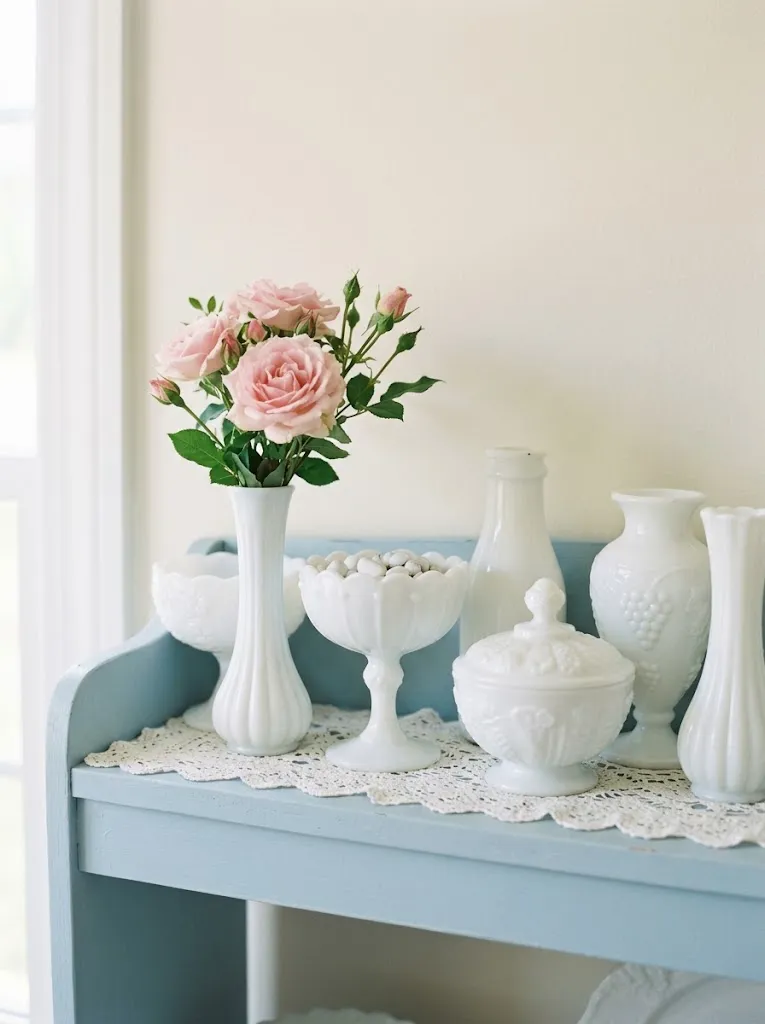
Milk glass glows even on gray days. Its opaque white finish catches window light and bounces it back into the room. Group a few vases, a footed compote, and a lidded dish on one shelf, and the whole corner looks brighter. Stay with creamy white so the shapes do the talking.
Real vintage pieces have a slightly milky, warm tone and often show a faint seam line. Prices at antique malls run about $5 to $25 for small items. I’ve found the best deals in mixed boxes at estate sales. Wash gently by hand, since dishwashers cloud the glass.
Enamelware Kitchen Accents
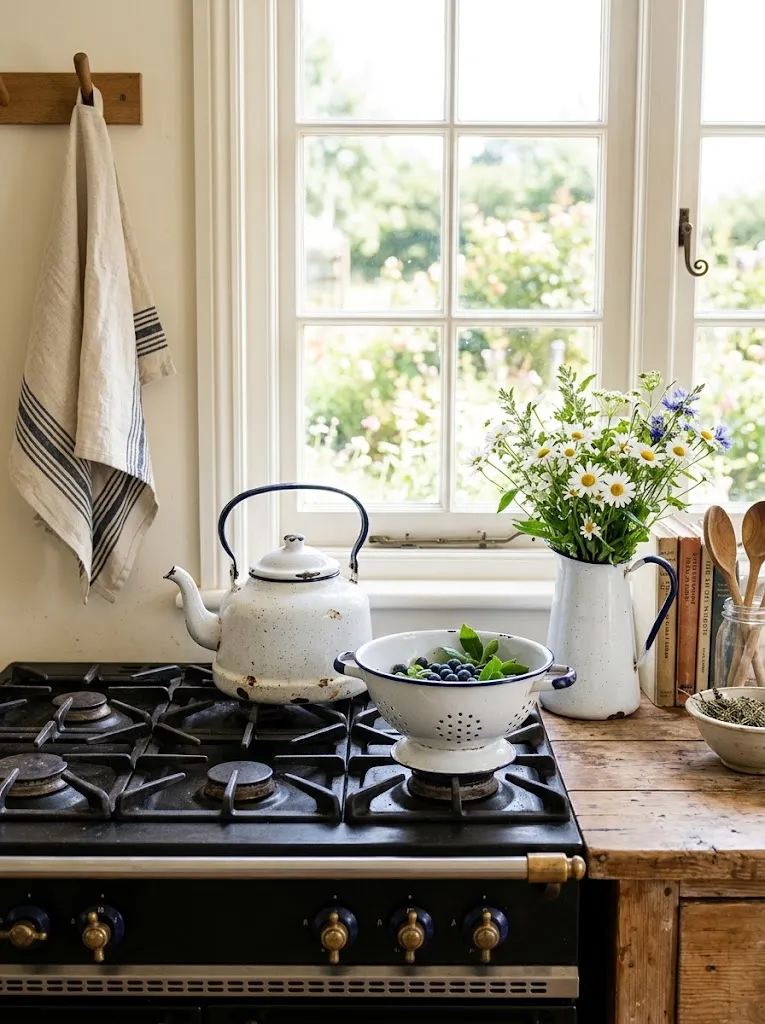
- Leave a kettle on the back burner. It decorates the stove and heats water for tea.
- Fill a large enamel pitcher with flowers. The narrow neck holds stems upright.
- Hang a colander from a wall hook and fill it with lemons or eggs.
- Choose white with a navy or red rim for the classic cottage look.
- Stack a few bowls on open shelving, and keep the small chips, since they show the pieces have been used.
Enamelware is light, tough, and cheap at flea markets, often $8 to $20 a piece. I’ve noticed that small chips add character, but rust spots that go through the metal mean it should not touch food. Check the inside before buying, and skip pieces with flaking interiors.
Vintage Oil Lamps
Quick Tip:
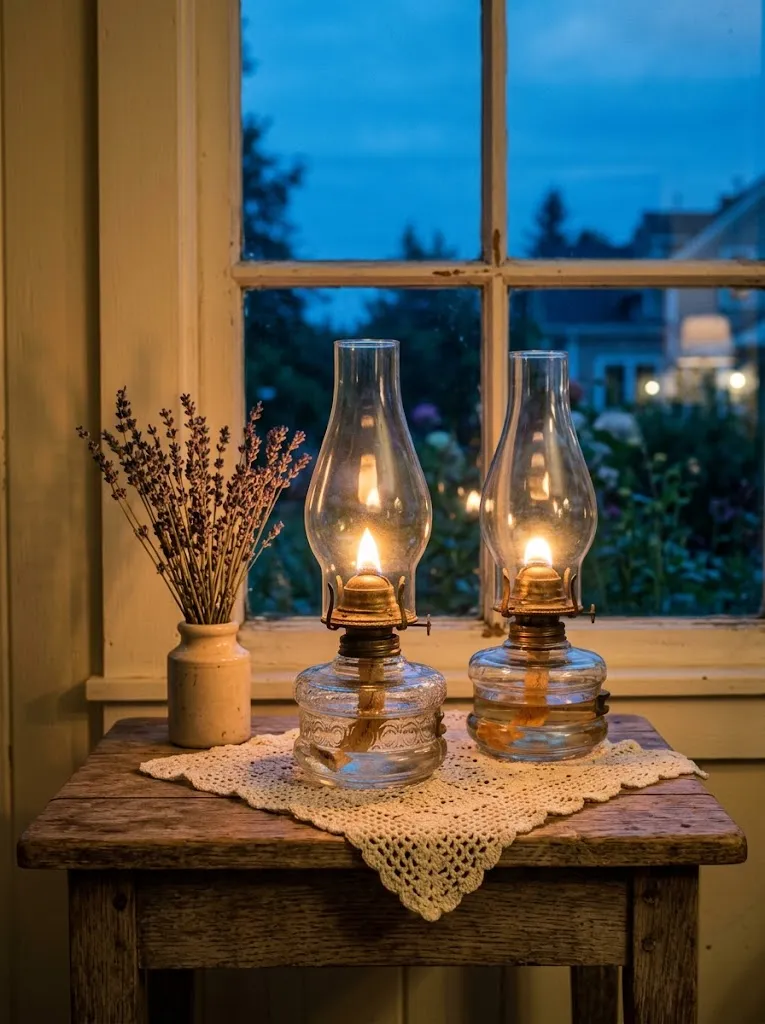
Use lamp oil made for indoor use, and trim the wick flat before every lighting. Keep the flame low so it does not smoke or blacken the glass. Set lamps on stable surfaces away from curtains and never leave them burning unattended.
Soft lamplight makes a room feel slower. Set one on the bedside table and another on a kitchen shelf, and the harsh ceiling glare fades. If you want the look without the flame, look for electric conversions with the same glass base. I’ve noticed guests always gravitate toward the lamp corner first.
Sage Green Cabinets
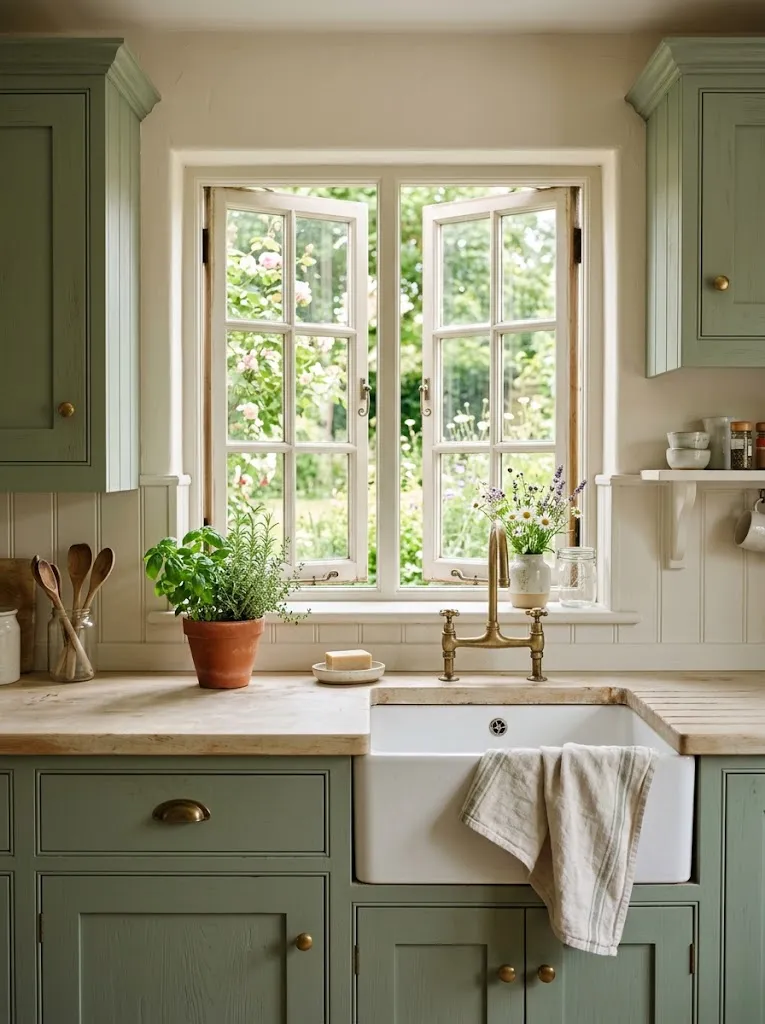
Before: Glossy honey oak cabinets sit under yellow lighting and make the kitchen feel dated. The dark grain swallows the daylight coming through the window. Chipped handles add to the tired look.
After: Matte sage green paint turns the same cabinets into a soft, leafy backdrop. Brass knobs and a cream counter make the room feel warm and pleasantly old. Light bounces around instead of disappearing.
Painting cabinets is a weekend job, not a renovation. Clean them with degreaser, sand lightly, and prime with a bonding primer, or the paint will peel within months. I’ve seen skipped priming ruin two coats of work. Use cabinet enamel, and let each coat dry a full day.
Pressed Flower Frames
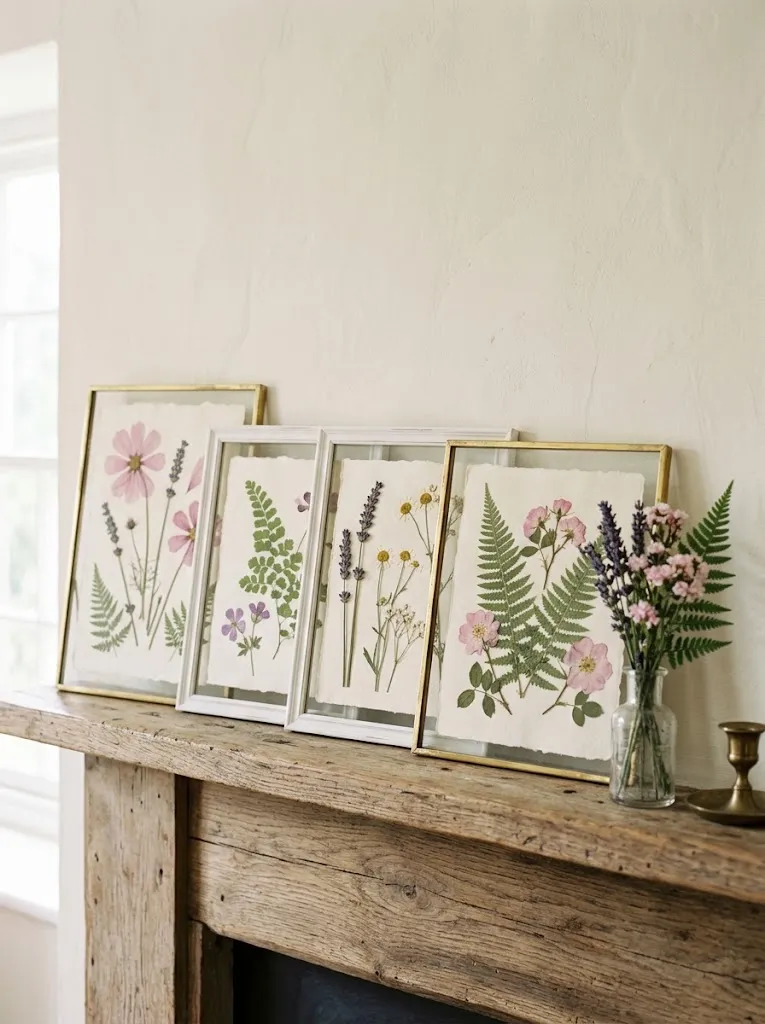
- Pick flat flowers like pansies, violas, ferns, and cosmos. Cut them in the morning once the dew has dried.
- Lay the stems between parchment sheets inside a heavy book, then stack more books on top. Wait two to three weeks.
- Place each stem on cream paper with a tiny dot of clear craft glue. Use tweezers to set delicate petals.
- Slide the paper into a frame with a mat. Hang it out of direct sun so the colors stay soft.
Small frames make the best display. Group three on a shelf or lean them along a mantel. Pressed pansies fade to soft, dusty shades over a year, which suits the cottage look. In my experience, thicker blooms like roses rot instead of drying flat, so leave those for hanging bunches.
Natural Linen Textiles
| Natural Linen | Polyester Blend | |
|---|---|---|
| Texture | Soft, slightly rumpled, and breathable | Smooth, shiny, and often clingy |
| Aging | Gets softer with every wash | Pills and loses its shape |
| Look | Muted, earthy tones that suit cottage rooms | Bright colors that can feel synthetic |
| Care | Machine wash cool, no ironing needed | Easy care, but traps odors and heat |
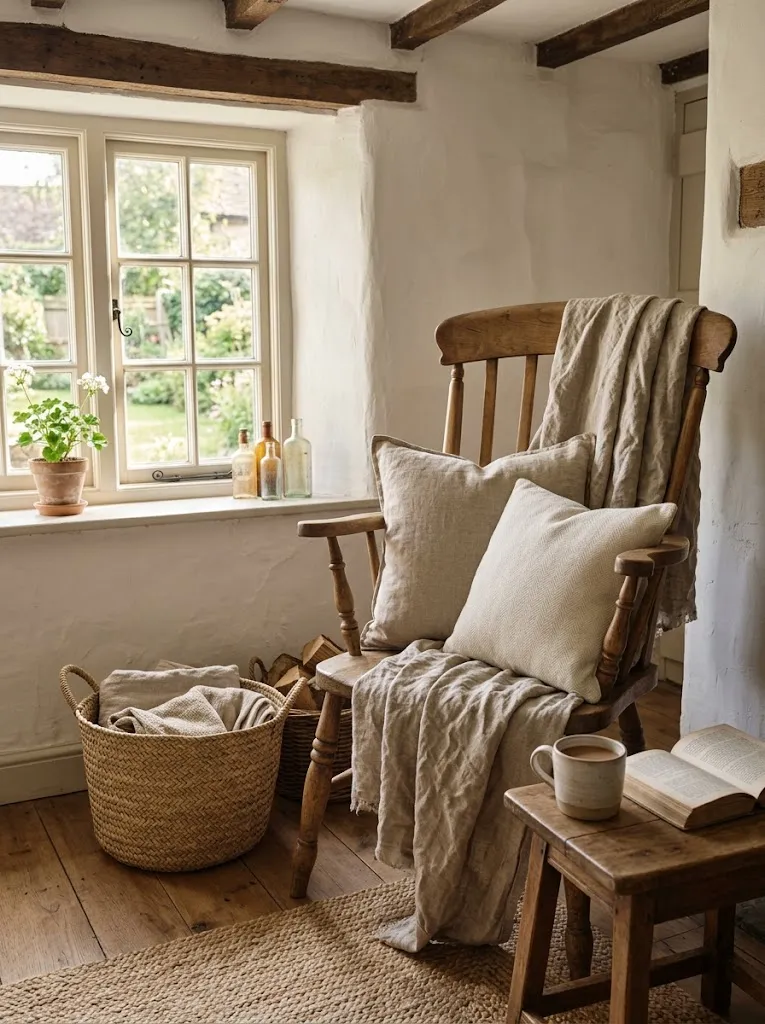
Linen ages the way cottage rooms should, softening with every wash. Start with two cushion covers and one throw in oatmeal or flax, then add table napkins later. In my experience, stonewashed linen skips the stiffness of new fabric. Wash cool, tumble dry low, and skip the iron, since wrinkles are part of the charm.
Conclusion
A cozy home does not come from one big purchase. It comes from small, thoughtful touches that make you want to stay in. Whether you start with a jar of wildflowers or a full cottagecore home decor refresh, each idea here can help your space feel softer and more like you. I’ve seen how small changes like these can completely shift the way a room feels. Pick one idea this weekend and try it. Save this post on Pinterest so you can come back to it, and share it with a friend who dreams of a cozy home.