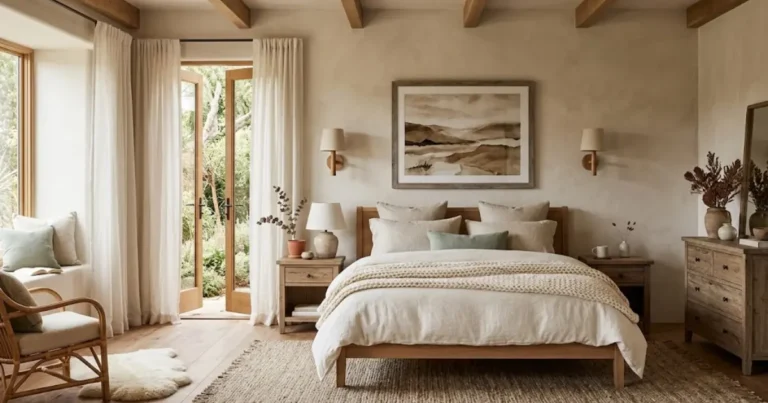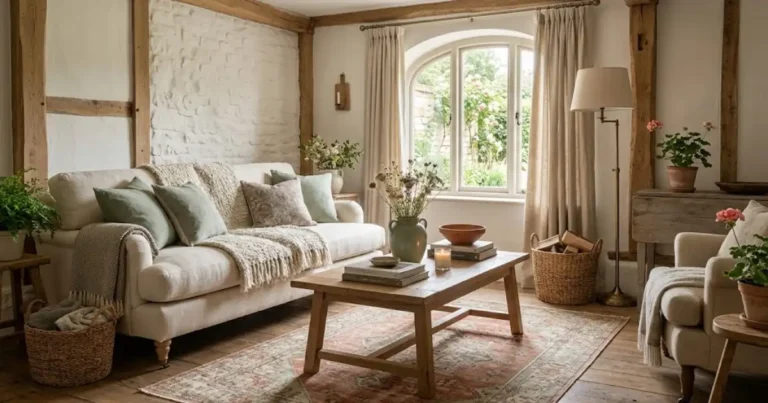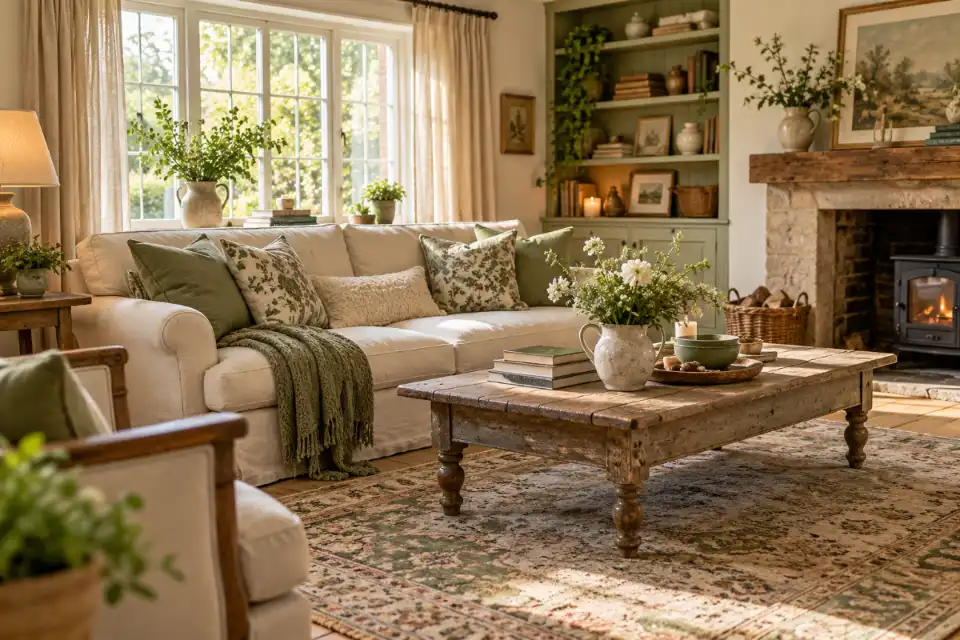
A cottagecore living room should feel as though it has grown around the people who live in it. A faded armchair, a stack of well-loved books, linen curtains, and a vase of garden flowers can create more warmth than a room filled with perfectly matching furniture.
The cottagecore look is not about recreating an old country house exactly. It is about bringing together natural materials, vintage character, comfortable seating, and little details that make an ordinary evening at home feel special.
The best part is that you do not need to replace everything you own. A modern sofa can sit comfortably beside an antique side table, and a television can share a wall with botanical prints. What matters is how the pieces work together.
Start with the Feeling, Not the Shopping List
Before searching thrift stores or browsing vintage furniture listings, decide how you want the room to feel. Perhaps you want a quiet reading corner, a welcoming space for family evenings, or a room filled with the colors and textures of a countryside cottage.
Let that feeling guide your choices.
Soft cream, warm white, sage green, dusty blue, and muted rose are natural starting points. They work beautifully with wood, wicker, linen, cotton, and handmade ceramics. You do not need every shade in one room. Choose a small palette and allow it to appear in different places.
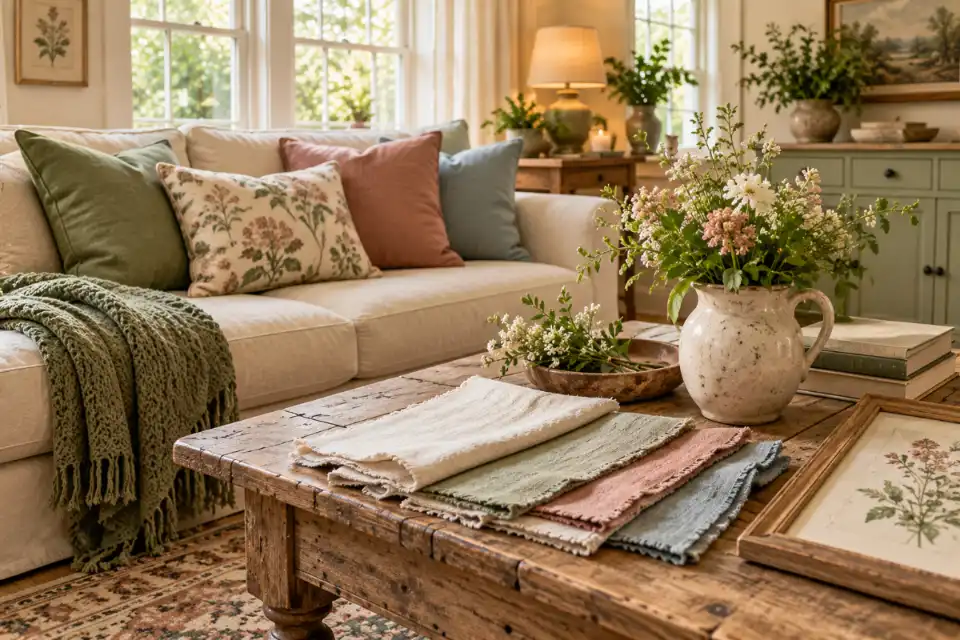
For example, a cream sofa might be paired with sage cushions, a faded floral rug, and a wooden coffee table. A small ceramic vase could repeat the green, while a framed botanical illustration introduces another subtle layer.
Texture matters just as much as color. A knitted blanket, a linen cushion, and an aged wooden surface create variety even when the colors are restrained.
If you want to carry this relaxed, collected feeling into other rooms, explore these cottage home decor ideas for inspiration beyond the living room.
Let One Lovely Piece Lead the Room
Vintage interiors become easier to arrange when one piece gives the room a starting point. It might be a floral armchair inherited from a relative, a wooden table found at a charity shop, or a rug whose colors you love.
Once you have that piece, build around it.
A Floral Armchair with a Little History
An upholstered armchair can bring the softness and personality that make cottage interiors so inviting. Look for faded botanical patterns, traditional wooden legs, or gently curved arms.
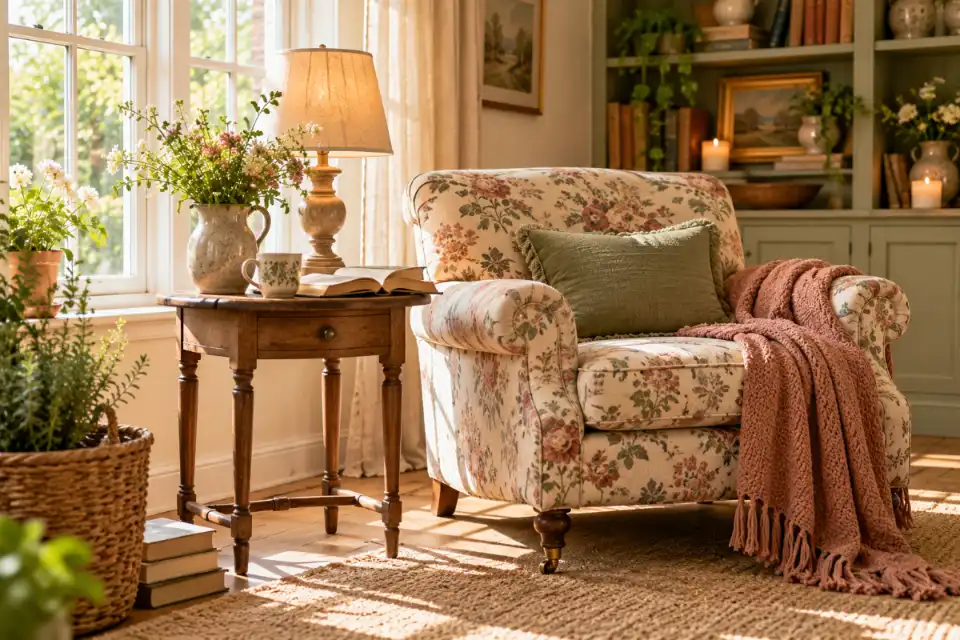
Secondhand furniture is particularly useful because you can discover shapes and details that are less common in contemporary collections. Inspect the frame, upholstery, and cushions carefully. Persistent musty smells, dampness, and signs of pests deserve attention before a chair enters your home.
Before bringing a used armchair or sofa indoors, follow the EPA’s advice on protecting your home from bed bugs.
If the upholstery is not quite right, consider whether the chair can be professionally re-covered or whether a washable throw would be a practical alternative.
A Sofa That Feels Comfortable Rather Than Precious
You do not need a vintage sofa to create a cottage style living room. A modern sofa in cream, beige, or another understated shade gives you a flexible foundation for layered textiles.
Add two or three cushions with complementary patterns rather than choosing an entire matching set. A floral cushion, a plain linen cushion, and a textured one can feel relaxed without making the sofa look busy.
If your sofa is dark, you can still achieve the look. Introduce lighter cushions, a warm throw, and natural materials nearby to balance its visual weight.
A Daybed for Slow Afternoons
A daybed can turn an awkward wall or spare corner into a comfortable place to read, nap, or sit with a cup of tea. Dress it with a quilt, a few cushions, and a small table within easy reach.
Before buying one secondhand, measure the room and check the frame, supports, and mattress dimensions. A daybed should make the room more useful, not leave so little space that moving around becomes difficult.
Give Old Furniture a Place to Belong
The charm of cottage decorating often comes from pieces that are slightly different from one another. A polished side table beside a weathered coffee table can look lovely when the surrounding colors and materials connect them.
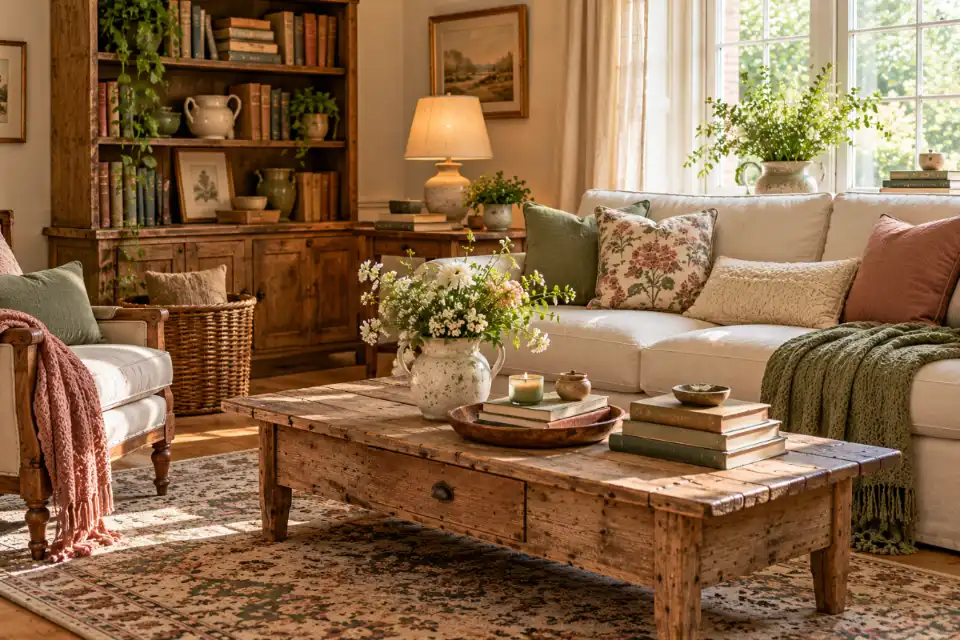
A wooden side table is one of the easiest places to begin. It offers a home for a lamp, a book, or a small vase without demanding much space. Look for stable legs, secure joints, and drawers that open smoothly.
A vintage trunk can provide a different kind of character. It may work as a coffee table or a place to store blankets, provided its surface is level and its lid can be used safely. Check for moisture damage, loose hardware, and persistent odors before bringing it home.
Bookcases are equally useful. An older wooden bookcase can hold novels, framed photographs, ceramics, and a few favorite keepsakes. If its finish does not suit the room, consider whether careful cleaning or an appropriate repaint would help.
If you plan to sand or disturb paint on an older piece, review the EPA’s guidance on lead-safe renovation, repair, and painting practices before starting. This is particularly important when working with painted surfaces in older homes.
For more ways to combine older pieces with modern furnishings, browse these vintage-inspired decorating ideas and adapt the details to your own space.
Layer the Room with Fabrics That Feel Good to Live With
Textiles soften the harder surfaces of furniture and help a room feel welcoming. They also offer a relatively simple way to change the atmosphere without buying large items.
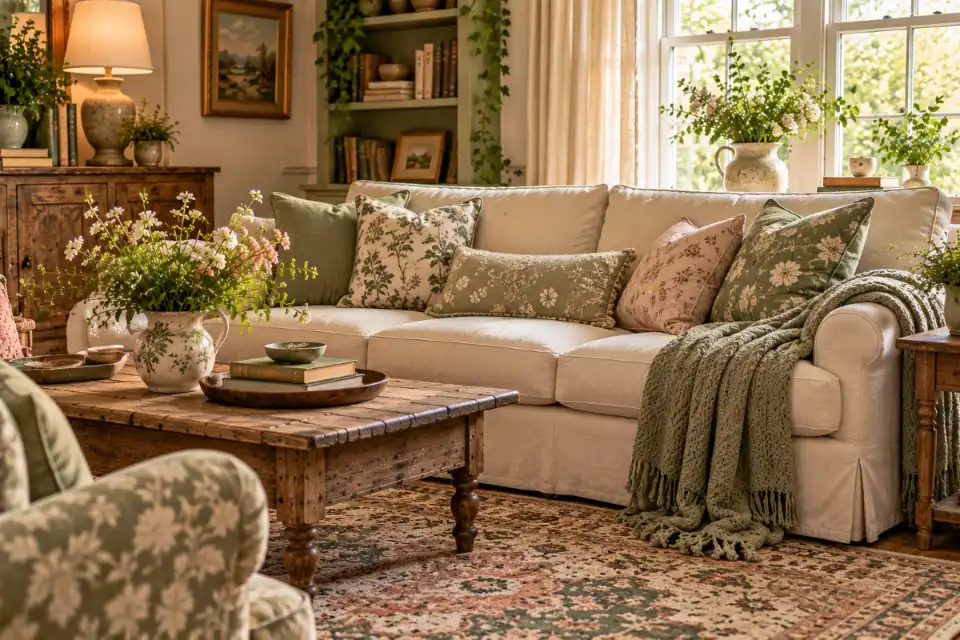
A traditional rug can anchor the seating area. Faded floral patterns, subtle borders, and earthy colors often work well with cottage interiors. Choose a size that connects the main seating pieces rather than leaving a tiny rug floating in the middle of the room.
Curtains can make an equally noticeable difference. Linen or linen-look fabric in cream, oatmeal, or a muted color gives the windows a gentle finish. Small floral prints are another option, especially if the rest of the room is relatively simple.
Cushions and throws should add variety, not compete for attention. Try combining one floral pattern with a smaller print and a plain fabric. Repeat a color from the rug or curtains to make the arrangement feel connected.
Floral cushion covers are an easy way to introduce garden-inspired color without replacing your sofa. These sage green botanical floral cushion covers may complement cream upholstery, wooden furniture, and other soft cottage-inspired textiles.
Vintage quilts can look especially beautiful over a sofa or daybed. If you find one secondhand, check its condition and follow appropriate cleaning instructions before using it.
If you love the combination of soft fabrics, faded florals, and secondhand finds, take a look at these cottagecore bedroom ideas for ways to bring the same feeling into another room.
Make the Lighting Feel Gentle After Sunset
A room that looks lovely in daylight can feel completely different in the evening. Instead of relying on one bright ceiling light, use several suitable light sources for different activities.
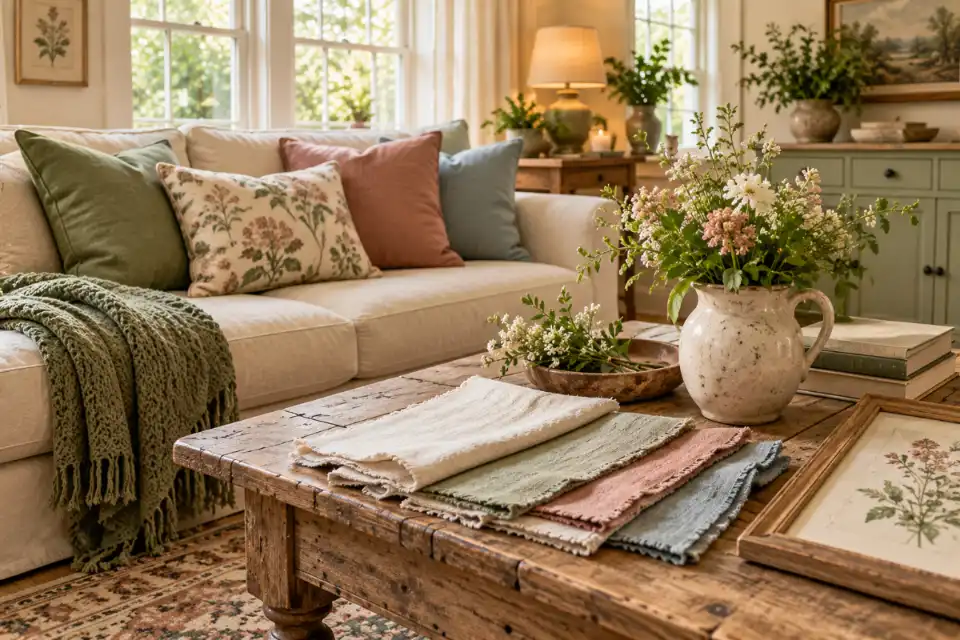
A table lamp with a fabric shade works well on a side table or bookcase. A floor lamp can provide reading light beside an armchair, while another small lamp can illuminate a darker corner.
Traditional shapes, ceramic bases, wooden details, and understated metal finishes suit the cottage aesthetic. You do not need every lamp to match; repeating a finish or color is usually enough to create a sense of connection.
A ceramic table lamp with a neutral fabric shade is one option to consider if you want to add a softer, vintage-inspired touch to your living room.
When buying secondhand lighting, inspect its condition carefully. Have questionable wiring checked by a qualified professional, and use bulbs appropriate for the fitting. Keep lights and hot components safely away from curtains and other fabrics.
The result should be practical as well as atmospheric: enough light to read comfortably, enough flexibility for everyday activities, and a softer mood when the day winds down.
Where Should the Television Go?
This is where real-life decorating matters more than a perfect inspiration photograph. Most households need their living room to work for watching television, spending time together, and relaxing without a screen.
Let a Wooden Cabinet Do the Work
A media cabinet with a traditional shape or warm wood finish can help the television feel less disconnected from the rest of the room. Choose one with enough space for the screen and equipment, as well as appropriate ventilation and cable access.
Some purpose-built cabinets allow a television to be concealed when it is not being used. Do not operate a television inside enclosed furniture unless the cabinet is specifically designed for that purpose.
Surround the Screen with Thoughtful Artwork
If the television needs to remain visible, consider placing botanical prints or framed artwork nearby. A balanced gallery wall can make the screen feel like part of the overall arrangement.
Keep the layout simple enough that the wall does not become visually overwhelming. Artwork should not obstruct the screen, and the television should remain at a comfortable viewing height.
Make the Television Part of the Furniture Arrangement
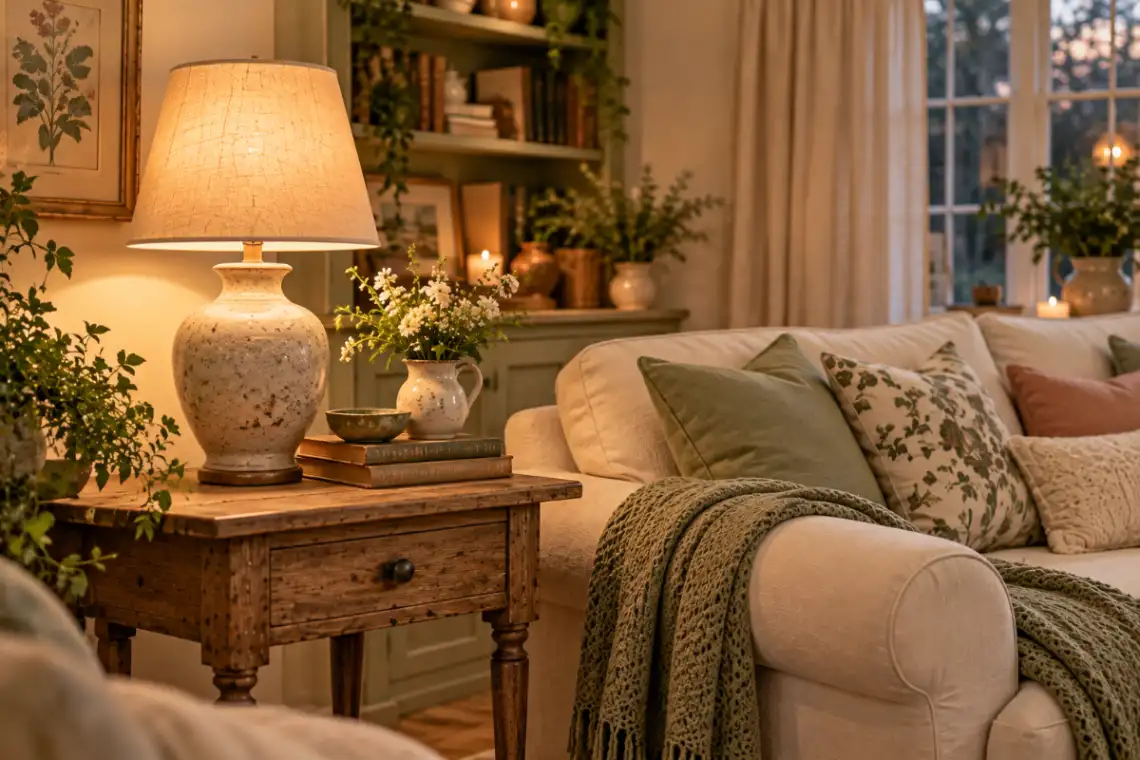
A simple wooden media unit, a small plant, and a ceramic accessory can soften the area around a screen. Leave enough room for ventilation, cables, and connected devices, and avoid placing decorations where they could fall onto equipment.
Most importantly, do not sacrifice comfortable viewing just to hide modern technology. A cottagecore house interior can include contemporary conveniences while still feeling warm, personal, and full of character.
The Difference Between Collected and Cluttered
Cottage interiors naturally welcome books, keepsakes, patterned fabrics, and decorative objects. But there is a difference between a room that feels personal and one where every surface is crowded.

A useful starting point is to give each shelf a clear visual focus. Arrange a small group of books, add a ceramic object or framed photograph, and leave some open space. Larger shelves may hold more, but not every gap needs to be filled.
Color repetition helps, too. If sage green appears on a cushion, echo it in a vase or a botanical print. If you have several different wood finishes, connect them with textiles and accessories that share a similar warmth.
Balance patterned surfaces with simpler ones. Floral curtains and a traditional rug can look beautiful together when the sofa and walls provide some visual rest.
Finally, make everyday storage part of the design. A basket can hold blankets, a tray can gather small objects, and a closed cabinet can keep less attractive essentials out of sight. Your room should be easy to live in, not a display that makes ordinary activities feel like a problem.
Making Cottagecore Work in a Small Living Room
A small room does not need to be filled with miniature versions of every cottage accessory. In fact, a more restrained approach often makes the style feel more convincing.
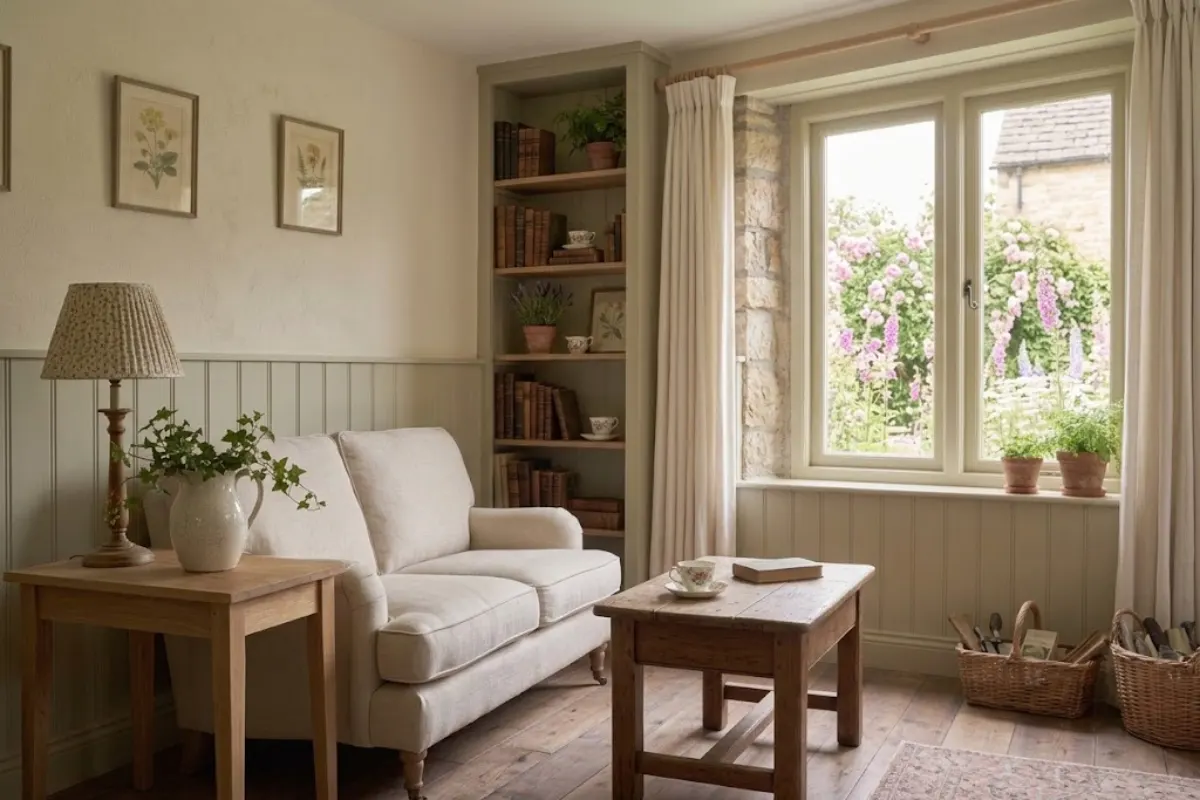
Start with the furniture you genuinely need. A compact sofa, one useful side table, and a comfortable reading chair may be enough. If you need additional seating occasionally, a lightweight stool can be easier to accommodate than another large armchair.
Use the walls thoughtfully. A narrow bookcase, a small gallery wall, or a single shelf can introduce vintage character without taking up much floor space. Secure wall-mounted furniture properly and avoid placing heavy objects where they could fall.
Choose a connected palette, then add personality through texture. A cream sofa, a floral cushion, a soft throw, and a wooden table can create the desired feeling without crowding the room with accessories.
Pay attention to walkways, too. A room feels more comfortable when doors open freely, seating is easy to reach, and people can move around without navigating obstacles.
If you have an unused corner, turn it into something useful. A small lamp and a chair near a window may create a better reading spot than several decorative objects spread across the room.
If you share your home with pets, check whether a houseplant is safe for pets before bringing it into your living room.
Frequently Asked Questions
Can I Create a Cottagecore Living Room with a Modern Sofa?
Yes. A modern sofa can be the practical foundation of the room. Add vintage furniture, botanical prints, natural textures, and carefully chosen cushions to introduce cottage character without replacing furniture that already works.
What Colors Work Best for a Cottagecore Living Room?
Cream, warm white, sage green, muted blue, dusty rose, and earthy brown are versatile choices. Select a few complementary shades and repeat them through textiles, artwork, and accessories.
How Do I Stop Cottagecore Decorating from Looking Messy?
Avoid filling every shelf and surface. Repeat a small group of colors, balance busy patterns with plain fabrics, and use baskets or closed storage for everyday belongings. Keep the objects you love and give them room to stand out.
Is Cottagecore Decorating Expensive?
It can be affordable if you build the room gradually. Thrifted furniture, existing books, secondhand textiles, handmade pieces, and seasonal flowers can all contribute to the look. Prioritize comfort and condition instead of buying everything at once.
A Home That Grows with You
A cottagecore living room does not need to be finished in a weekend. Its charm often comes from the gradual process of finding a chair you love, discovering a useful old table, or adding a textile that makes the room feel more like home.
Start with what you already have, make room for the pieces that matter, and choose new additions thoughtfully. A little vintage character, a comfortable place to sit, and a few natural details can go a long way toward creating a room that feels personal rather than staged.
That is the real beauty of cottagecore: not a perfect collection of decorations, but a welcoming home that reflects the life happening inside it.