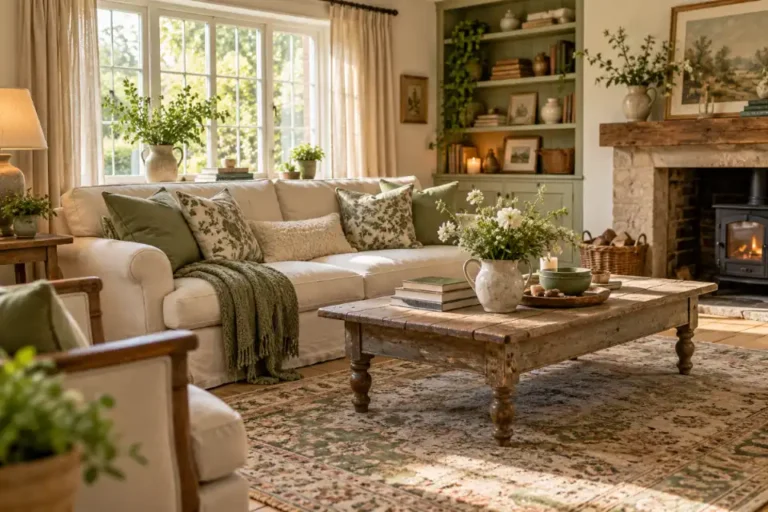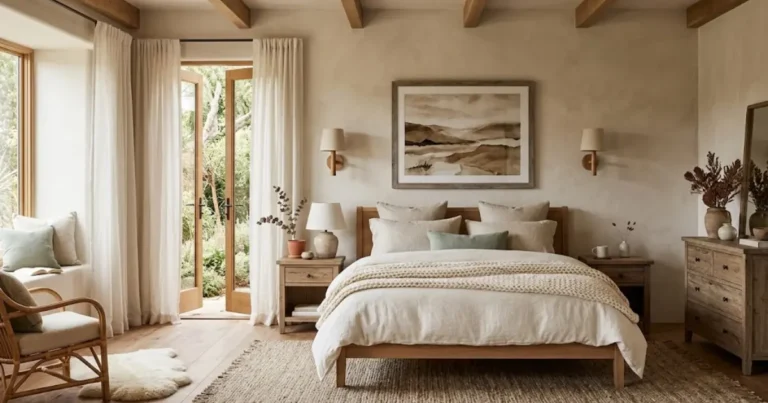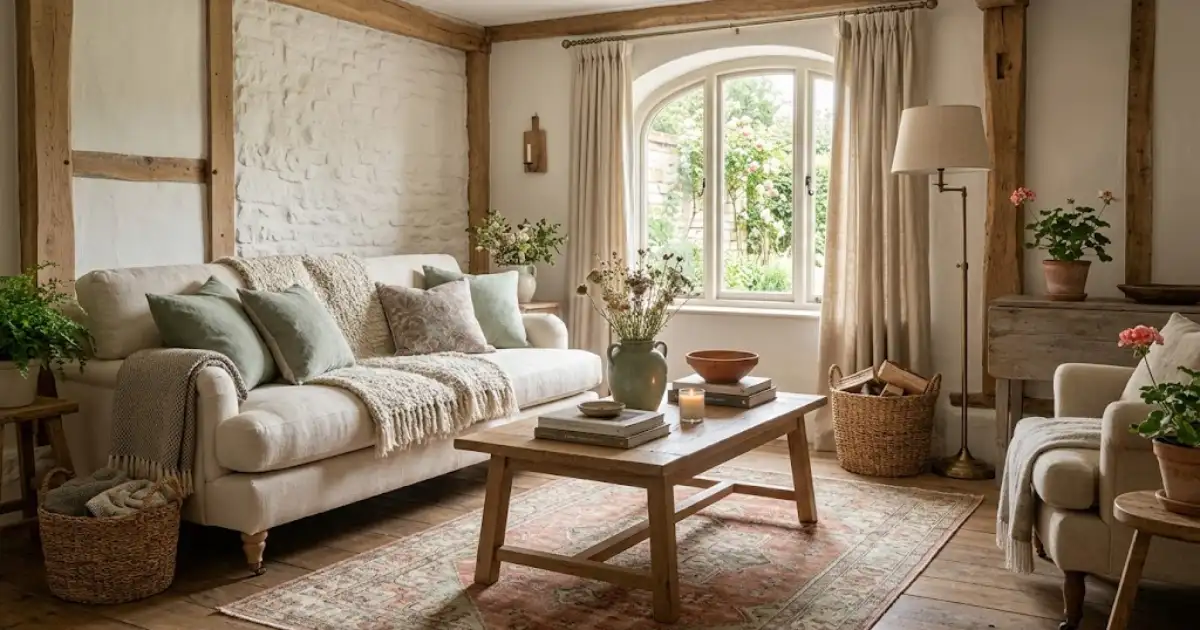
A cozy living room should feel like a warm hug, filled with natural textures, timeless details, and pieces that make you feel at home. The best rustic living room ideas combine vintage charm with everyday comfort, creating spaces that feel beautiful without looking overly styled.
Whether you love the simplicity of cottagecore interiors, the character of reclaimed wood, or the softness of linen sofas and faded floral patterns, small decorating changes can make your living room feel more inviting. You do not need an expensive renovation or brand-new furniture to achieve this look.
From weathered wooden coffee tables and antique brass lighting to layered rugs and cozy reading corners, these 24 ideas offer practical inspiration for different homes, budgets, and decorating styles. You will discover simple ways to bring warmth, personality, and a relaxed, lived-in feeling into your space. Save your favorite ideas on Pinterest and return to them whenever you need fresh inspiration.
Exposed Wooden Beams
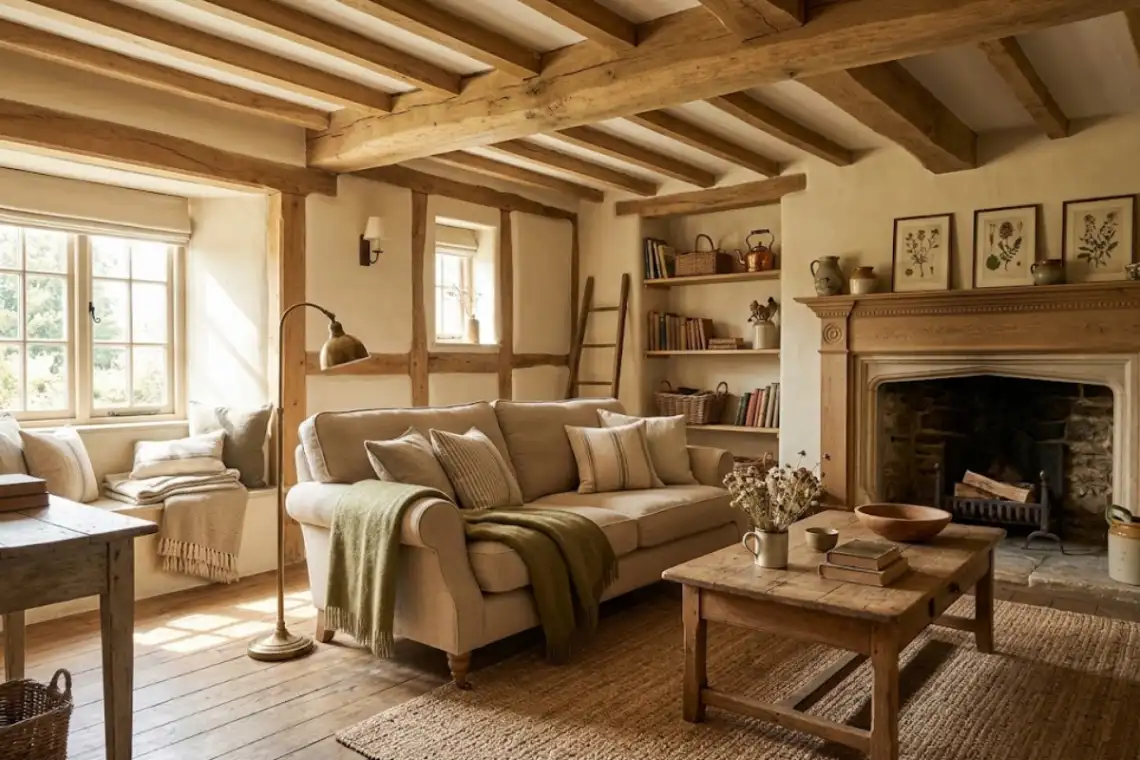
The charm of exposed wooden beams comes from their natural texture and timeless character. Whether your home has original ceiling beams or decorative timber additions, they create an architectural feature that makes the room feel grounded and welcoming. Pair them with creamy walls to keep the space bright.
For a balanced look, repeat the wood tone in a coffee table, picture frames, or shelving. If your ceiling is low, choose lighter timber and keep the surrounding décor simple. The result is a cozy, rustic interior that feels thoughtfully decorated rather than overcrowded.
For more ways to decorate with secondhand furniture and soft cottage-inspired details, explore our cottagecore living room ideas with thrifted finds.
Vintage Leather Sofas
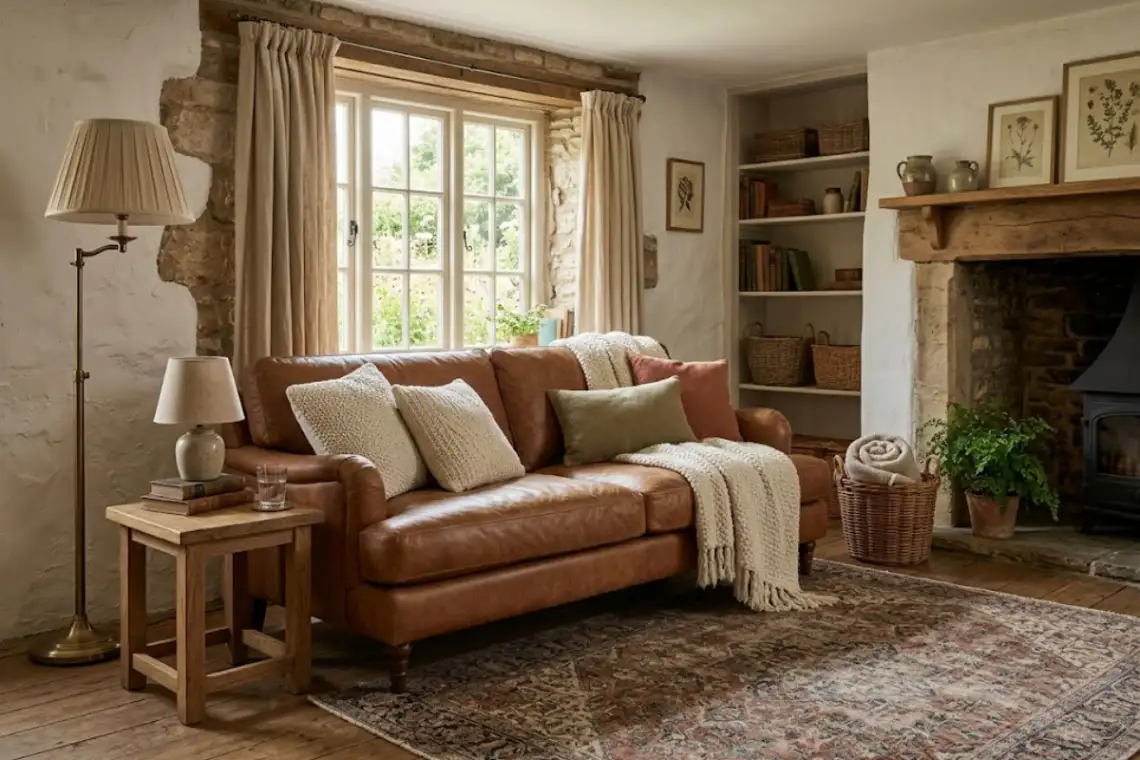
A well-loved leather sofa brings instant warmth and character to a rustic living room. Its rich brown color contrasts beautifully with pale walls, natural wood, and soft woven fabrics. Choose a design with rounded arms or a gently aged finish for a relaxed vintage appearance.
- Choose warm leather tones: Cognac, chestnut, and caramel work especially well with cream and olive.
- Layer soft textiles: Add linen cushions, wool throws, or a cotton blanket.
- Balance the texture: Combine smooth leather with a chunky knitted rug or woven basket.
- Keep accessories simple: An antique lamp or wooden side table adds enough detail without clutter.
Leather can develop a distinctive patina over time, making the sofa feel even more individual. For households with pets or children, check the manufacturer’s care guidance and consider how easily the specific finish scratches or stains before buying.
Stone Fireplace Surrounds
Quick Tip:
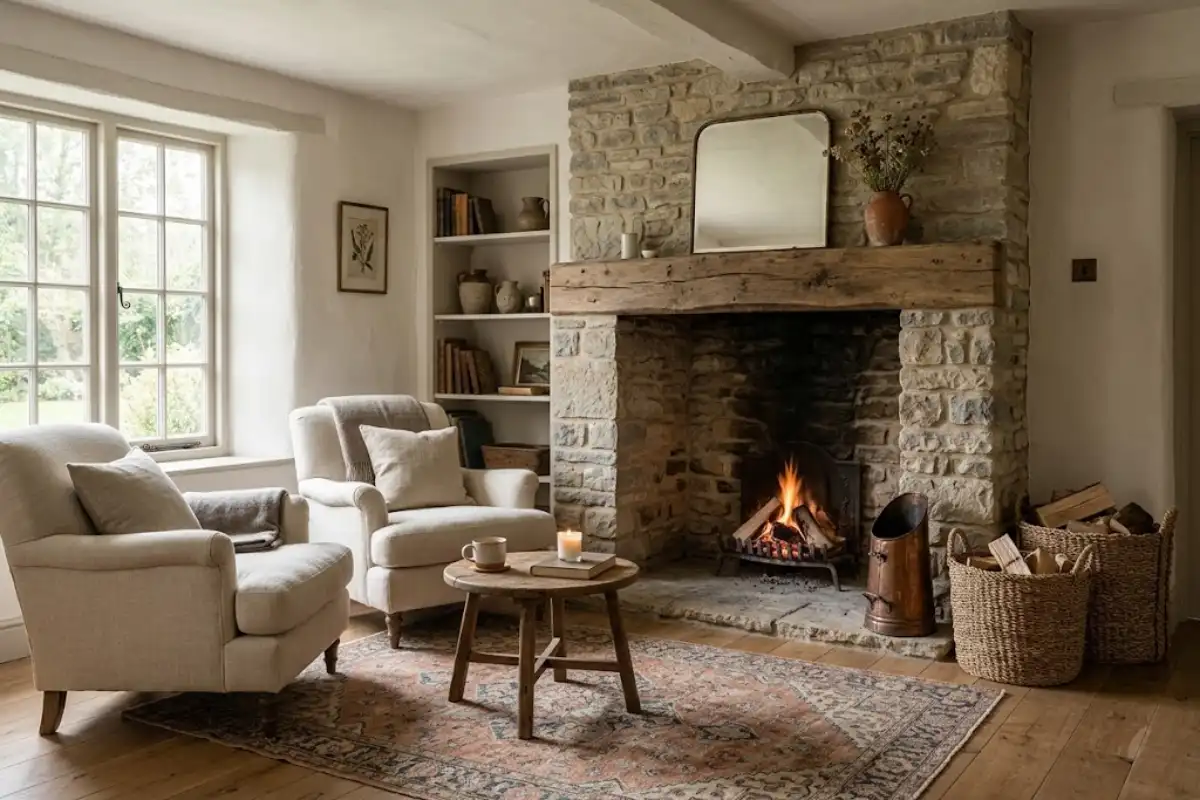
Let the stone fireplace become the room’s main focal point. Keep the mantel styling restrained with one antique mirror, a small ceramic vase, or a few framed prints. If replacing the fireplace is outside your budget, consider a compatible stone-look finish or a carefully styled existing surround.
A fireplace feels especially inviting when the furniture encourages conversation rather than simply facing the television. Arrange two comfortable chairs near the hearth, leaving enough clearance for safe movement. Choose natural fabrics and weathered wood nearby to complement the stone without competing with its texture. Always follow the fireplace manufacturer’s clearance and installation requirements.
Warm Neutral Color Palettes
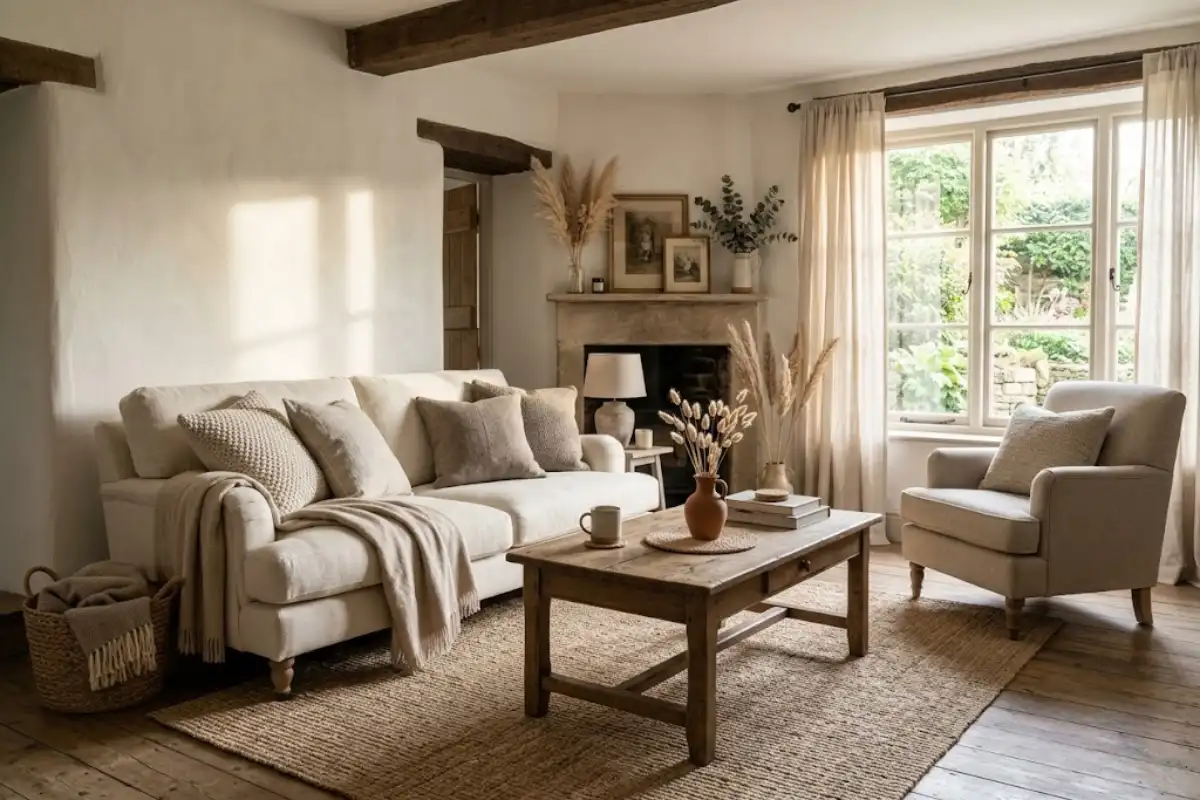
A warm neutral palette makes rustic interiors feel calm without losing their character. Cream walls, oatmeal upholstery, and sandy beige textiles provide a soft background for weathered furniture and vintage accessories. Small differences in shade keep the room interesting while allowing natural materials to stand out.
For a cohesive result, start with three main colors: a light neutral for walls, a medium tone for upholstery, and a deeper brown for wood or accents. Introduce texture through linen curtains, knitted cushions, and woven rugs. This approach works especially well in smaller living rooms where too many contrasting colors can feel distracting.
Reclaimed Wood Coffee Tables
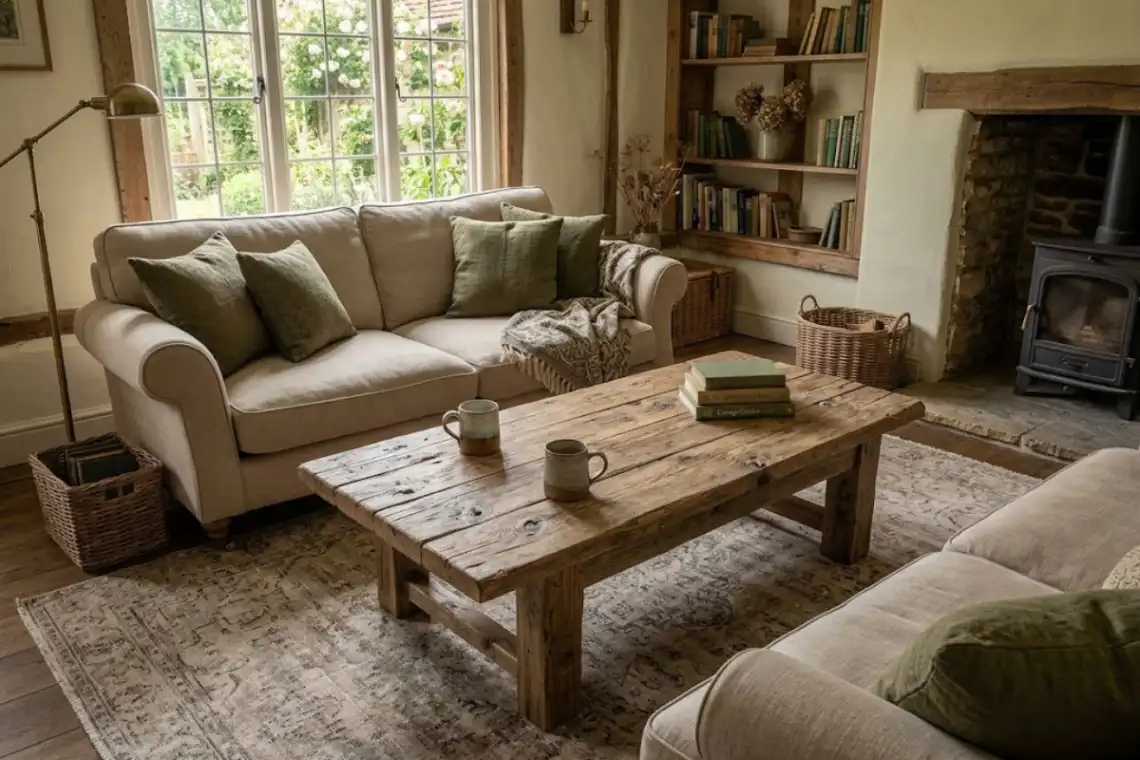
Reclaimed wood gives a living room a sense of history that brand-new furniture sometimes lacks. A sturdy coffee table with uneven grain, subtle marks, and natural imperfections adds character while providing a practical surface for everyday living.
Look for a table that leaves comfortable walking space around the seating area. Style it with a shallow ceramic bowl, two or three favorite books, and a small vase of seasonal greenery. Avoid covering every inch of the tabletop because the wood itself should remain visible. For a budget-friendly alternative, explore secondhand furniture and check that the piece is stable, clean, and free from pests before bringing it indoors.
If you love mixing weathered wood with antique accessories, explore these vintage-inspired decorating ideas for more ways to create a collected look.
Antique Wooden Cabinets
BEFORE
A living room with plain storage units can feel impersonal, especially when every surface looks new and uniform. Books, blankets, and decorative objects may also end up scattered around the room.
AFTER
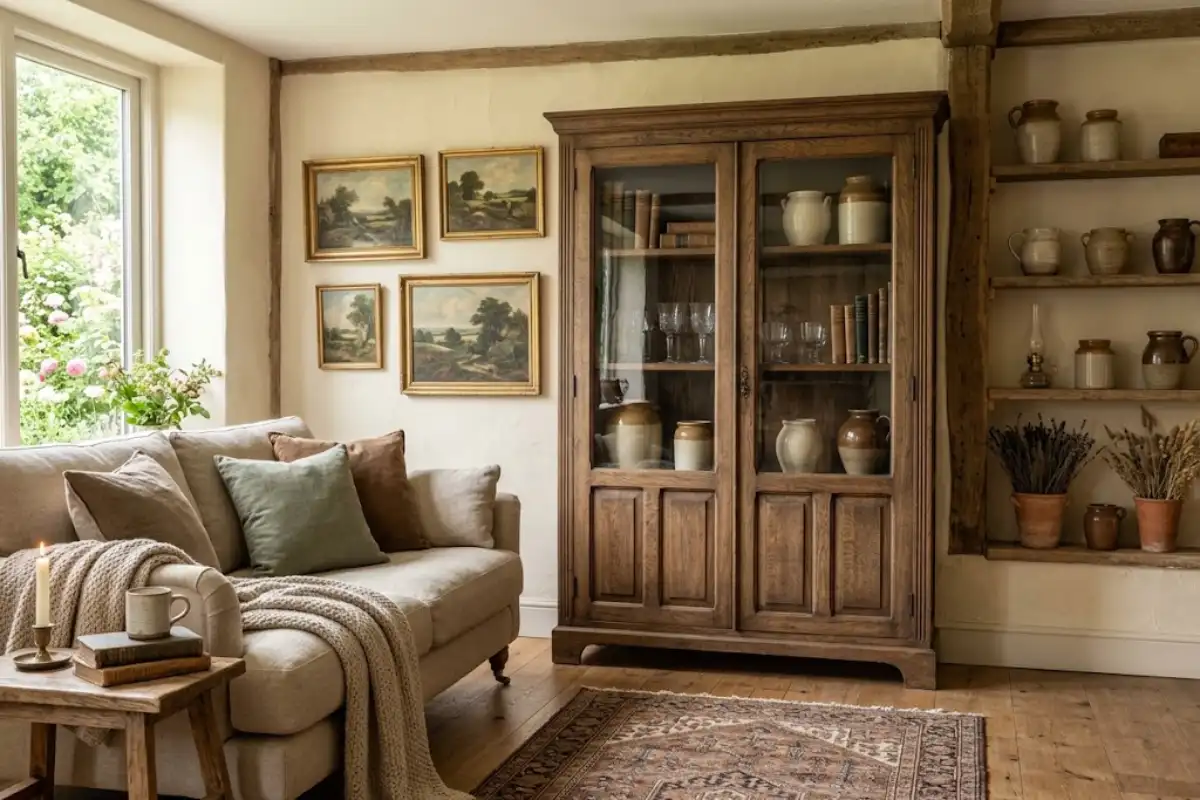
An antique wooden cabinet brings warmth, practical storage, and a sense of history. Glass doors showcase favorite books and pottery, while closed compartments hide everyday clutter.
Choose a cabinet with proportions that suit your wall rather than squeezing an oversized piece into a narrow corner. Keep the display selective, mixing books with ceramics and a few personal treasures. A gently worn finish adds character without requiring the entire room to look aged. Secure tall cabinets properly, especially in homes with children or pets. If you plan to sand or refinish old painted furniture, review lead-safe renovation practices for older furniture and homes first.
Chunky Knit Throws
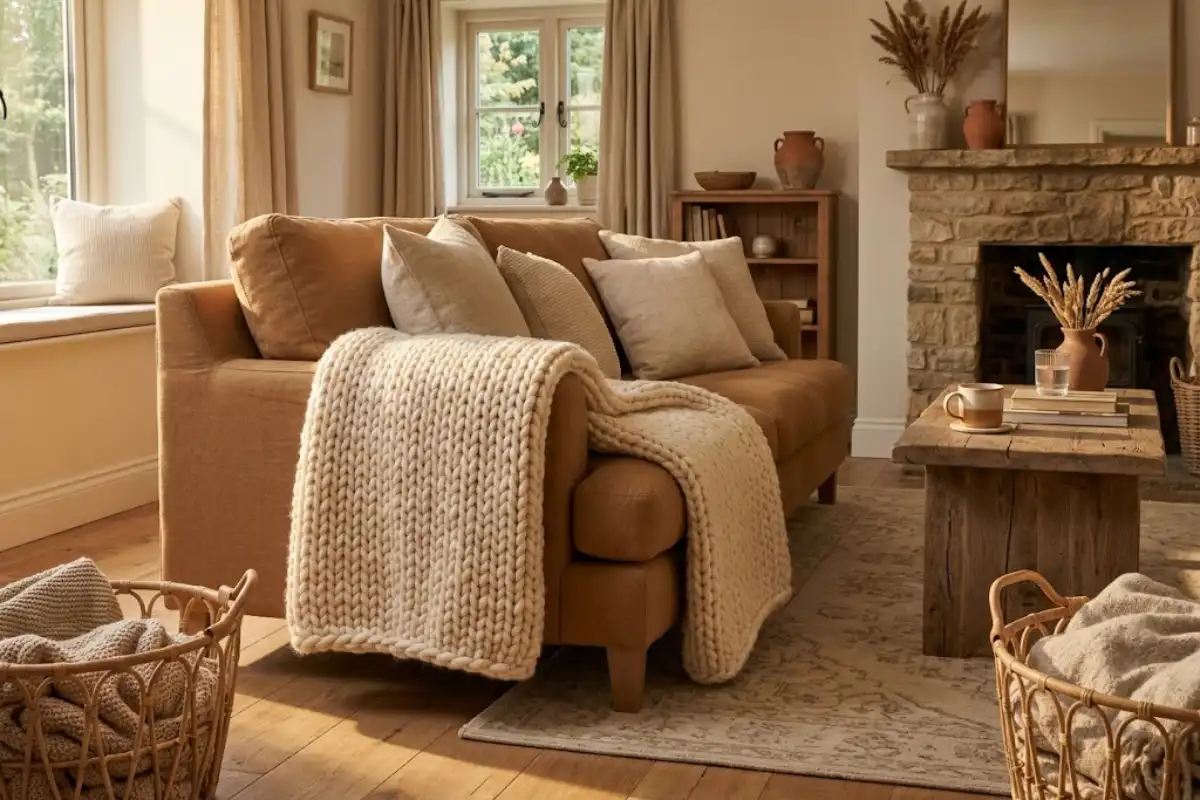
Cold evenings feel cozier when a thick knitted throw is within easy reach. This simple textile adds softness to wooden furniture, leather seating, and linen upholstery without requiring a major decorating change.
- Choose a natural-looking color. Cream, oatmeal, mushroom, and warm taupe complement rustic materials.
- Drape it loosely. Fold the throw over one sofa arm or across the backrest.
- Mix the textures. Pair chunky knitting with smooth linen or subtly patterned cotton cushions.
- Keep it practical. Place a woven basket beside the sofa for extra blankets.
A chunky throw can also soften a room filled with hard surfaces, such as stone fireplaces and wooden floors. Choose washable materials if the sofa gets regular family use, and avoid covering every cushion with bulky knits.
Reclaimed Wood vs. Painted Furniture
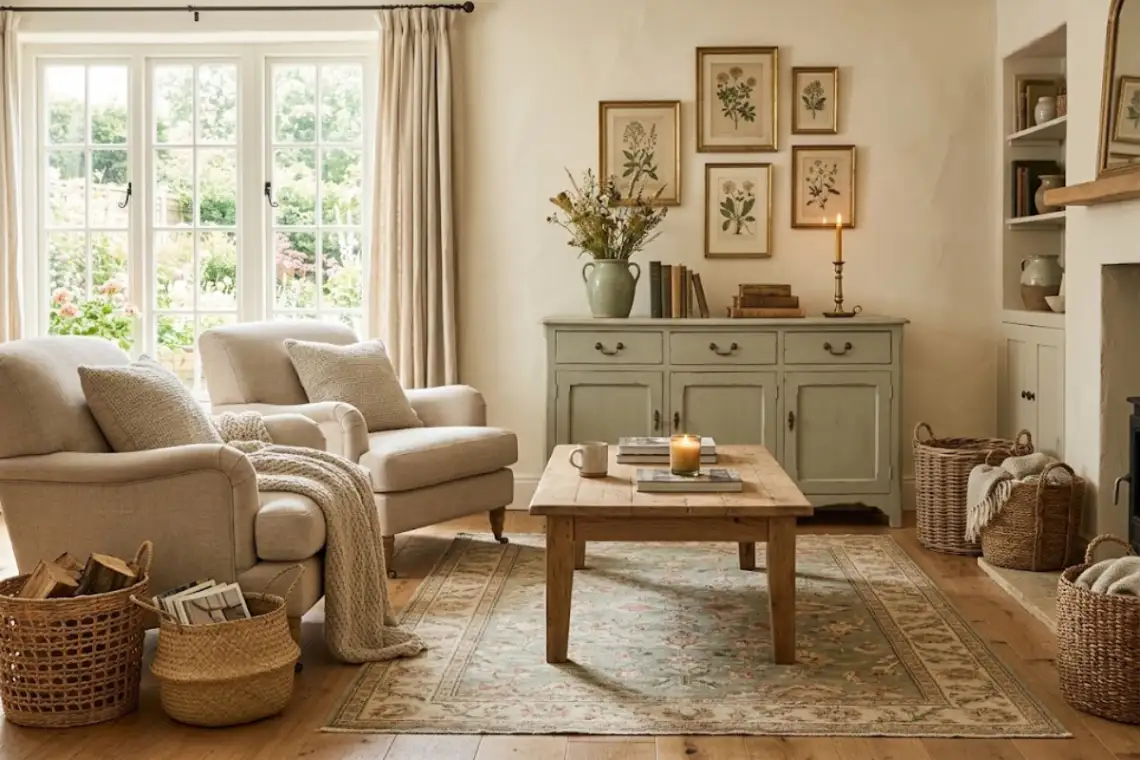
The right furniture finish depends on whether you prefer a natural woodland look or a softer cottage-inspired atmosphere. Both styles can work beautifully in the same room when their colors and proportions complement each other.
| Design feature | Option A: Natural wood | Option B: Painted furniture |
|---|---|---|
| Overall feel | Earthy and grounded | Soft and charming |
| Best colors | Oak, walnut, honey brown | Sage, cream, muted blue |
| Visual texture | Visible grain and knots | Smooth or distressed finish |
| Best placement | Coffee tables and shelving | Cabinets and side tables |
For a collected-over-time appearance, combine both finishes rather than matching every piece. A reclaimed oak coffee table looks especially appealing beside a sage-painted cabinet. Repeat one or two colors elsewhere in the room to create a connection between the furniture pieces without making the space feel like a matching showroom.
Linen Slipcovered Sofas
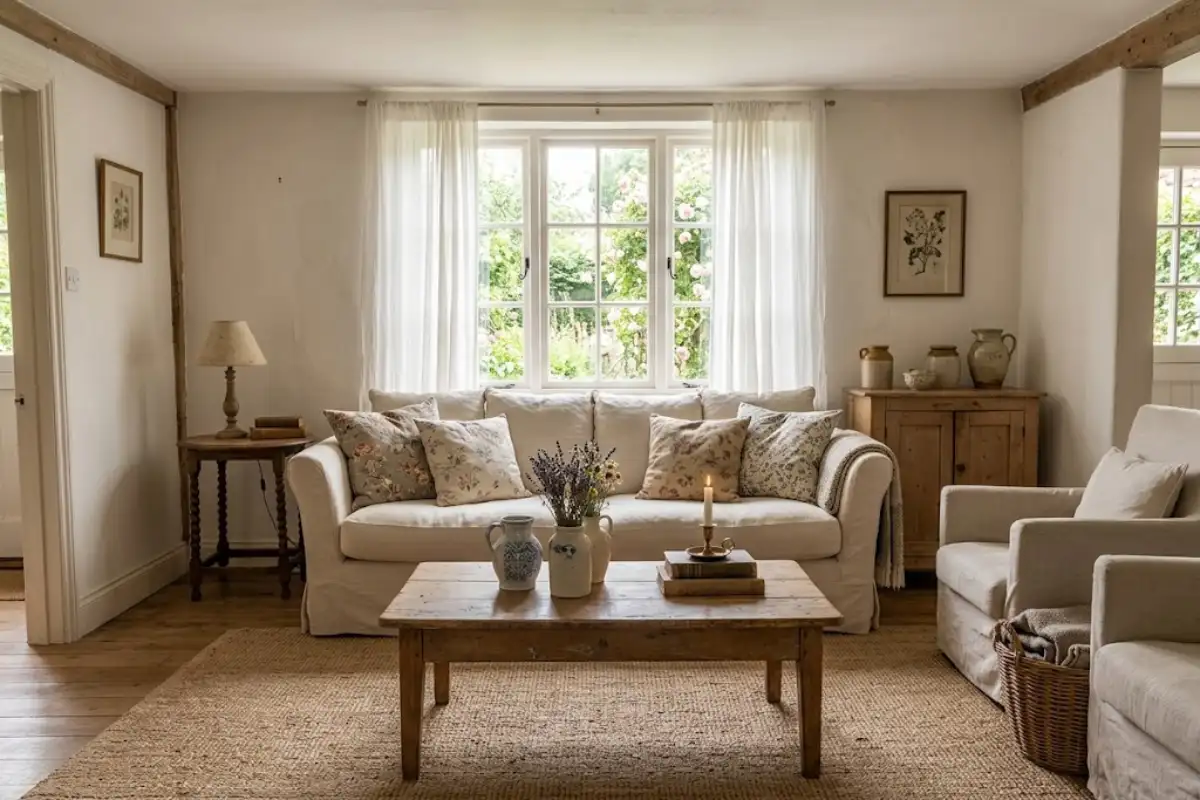
Relaxed linen upholstery gives a rustic living room a comfortable, lived-in appearance. Its natural creases and soft texture complement reclaimed wood, vintage accessories, and woven rugs without making the room feel overly formal.
- Choose warm ivory or oatmeal for a light, versatile foundation.
- Add muted floral or striped cushions for a subtle vintage touch.
- Pair the sofa with darker wood to create contrast.
- Select removable, washable covers when everyday messes are a concern.
Linen blends can offer a practical balance between texture and durability, depending on their construction. Before purchasing, check the fabric’s cleaning instructions and whether replacement covers are available. A slipcovered sofa works particularly well in cottage-style homes where comfort matters more than perfectly crisp upholstery.
Layered Vintage Rugs
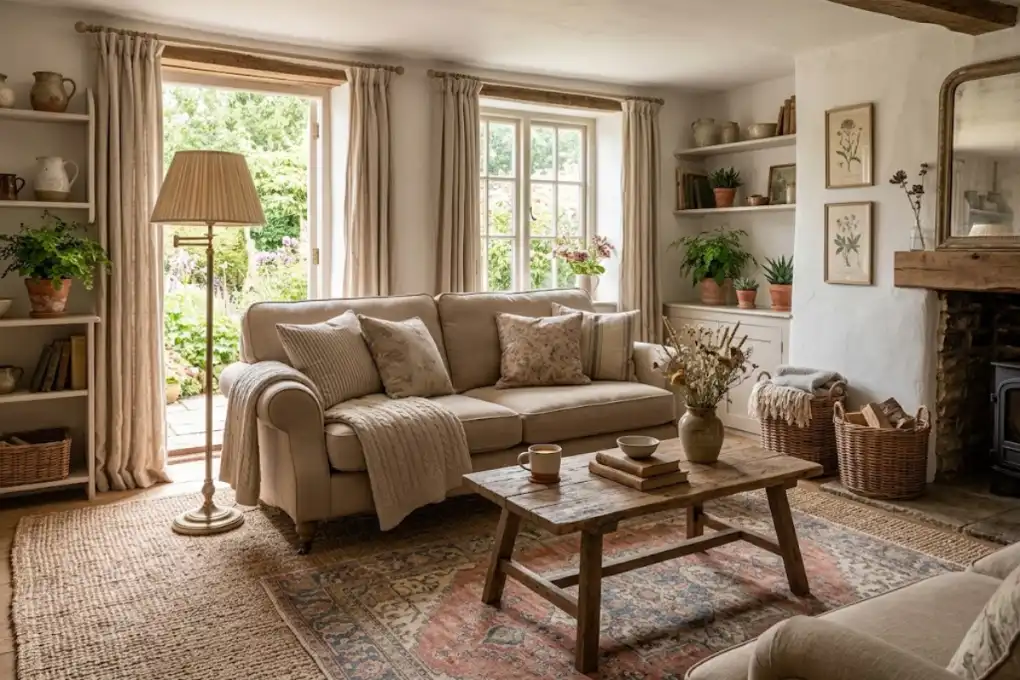
Layered rugs add depth, color, and softness to a room with wooden or stone flooring. A large neutral base creates visual unity, while a smaller vintage-inspired rug introduces pattern and personality without overwhelming the furniture.
Quick Tip:
Start with a jute or flat-weave rug large enough to anchor the main seating area. Place a smaller patterned rug over it, keeping the edges visible so both textures contribute to the design. Make sure the upper rug lies flat and use suitable non-slip pads to reduce slipping and bunching.
Muted reds, faded blues, olive greens, and warm creams work well with rustic wood tones. For a small living room, avoid overly busy patterns in both layers. Let one rug provide texture and the other supply the strongest color or pattern. The finished arrangement should feel intentional, comfortable, and easy to walk across.
Rustic Open Shelving
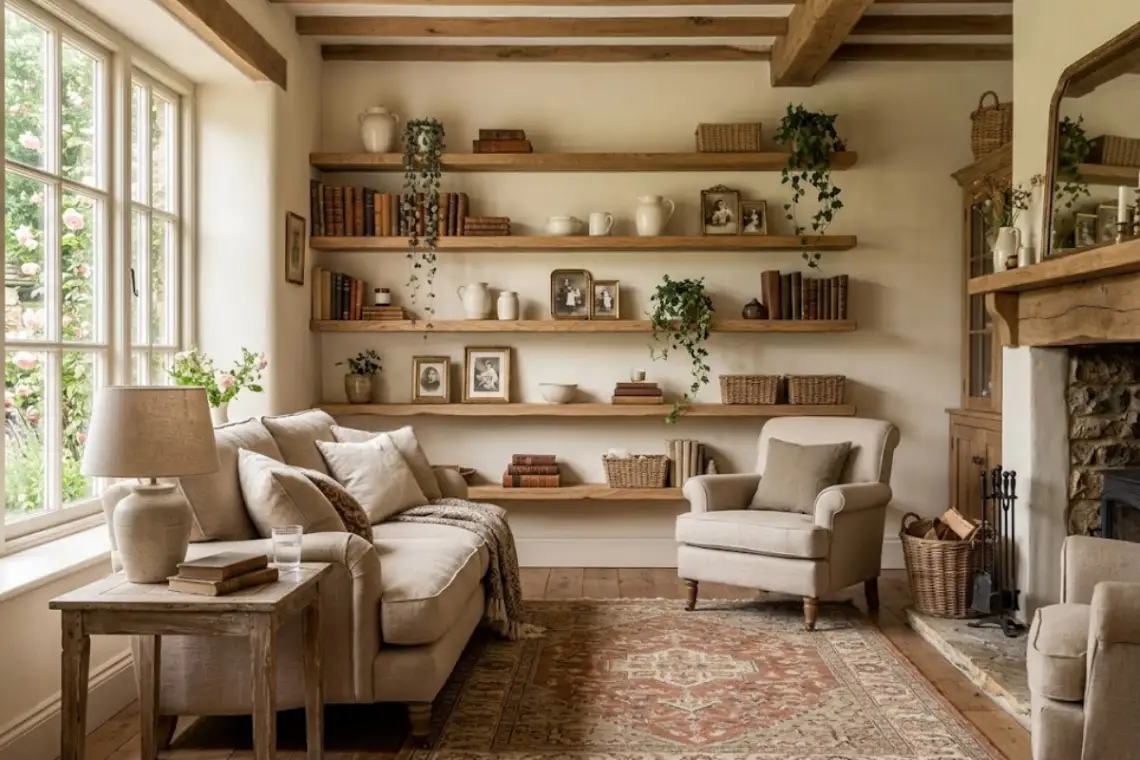
DO
- Install sturdy wooden shelves with visible grain and a naturally aged finish.
- Mix upright books with horizontal stacks to vary the shapes.
- Leave open space between decorative objects for a relaxed appearance.
- Add a few plants, ceramic pieces, or framed vintage prints.
DON’T
- Fill every inch with small ornaments.
- Mix too many unrelated colors and finishes.
- Place heavy objects on shelves without checking their load capacity.
- Display items so close to the edge that they can fall easily.
Open shelving gives rustic living rooms personality while keeping favorite objects within reach. Displays feel more natural when useful items sit alongside decorative pieces. Start with books and pottery, then add greenery sparingly. Repeat the room’s wood tone to connect the shelves with the surrounding furniture.
Muted Sage Green Accents
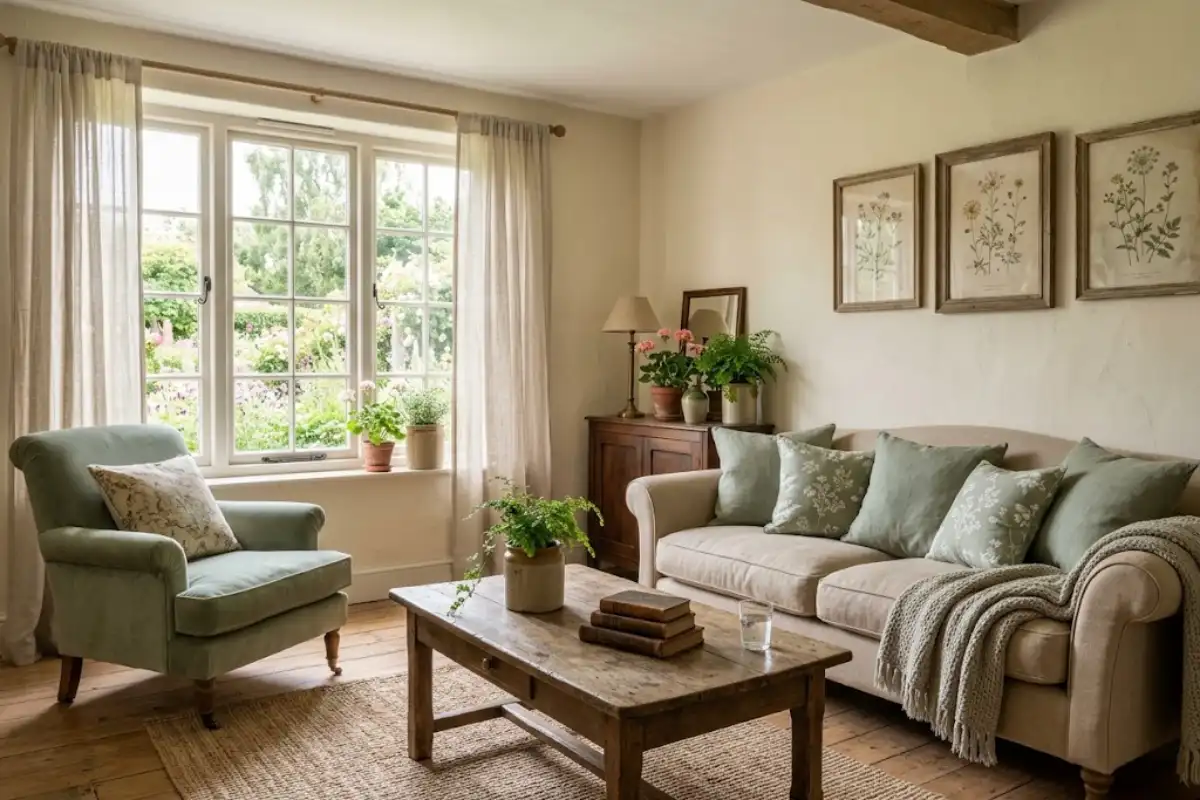
Cost: Low to moderate, depending on the accessories or furniture selected.
Time: One afternoon for cushions, throws, and small decorative changes.
Skill Level: Beginner-friendly.
Best For: Neutral living rooms that need a gentle touch of color.
Sage green brings a natural, restful quality to rustic interiors without the intensity of brighter shades. Start with two cushions or a soft throw before committing to painted walls or a new armchair. Pair the color with warm wood, creamy fabrics, and aged brass for a balanced cottage-inspired finish. For a cohesive look, repeat sage in just two or three places.
Antique Brass Lighting
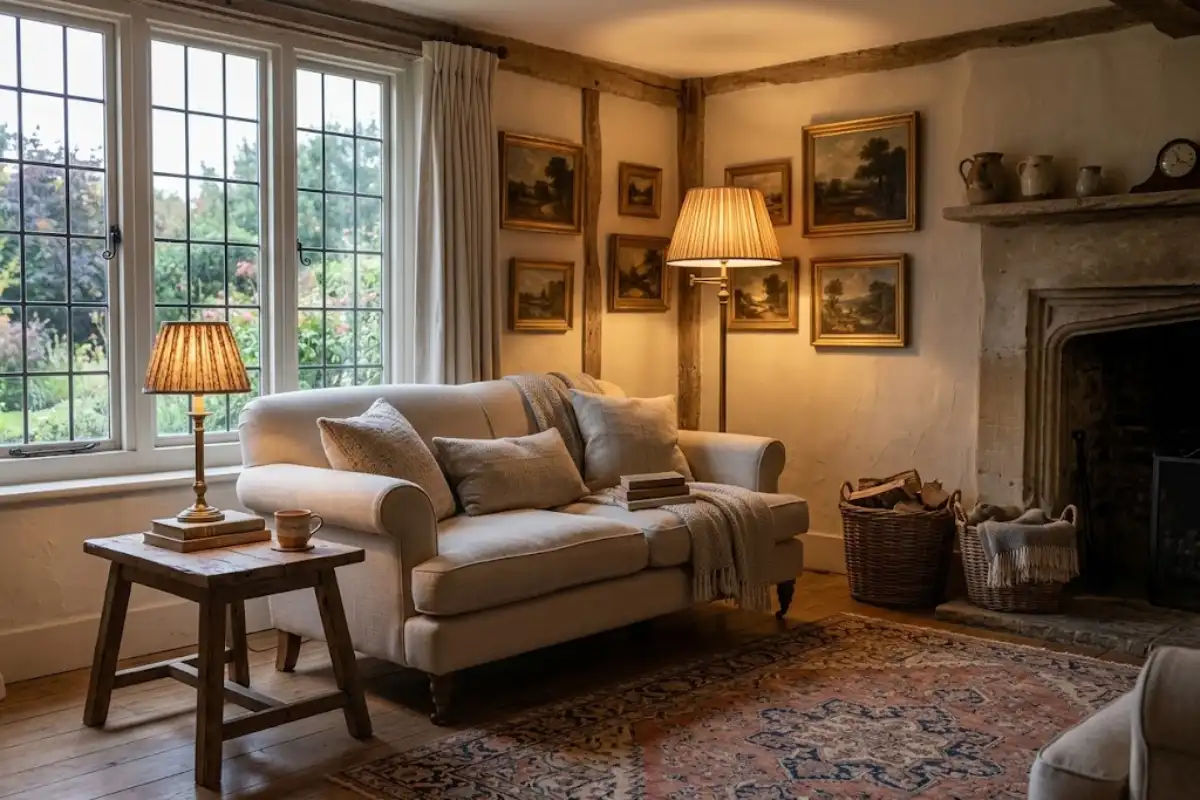
Antique brass lighting creates a welcoming glow while adding a subtle vintage detail. Instead of relying on one bright overhead fixture, combine a floor lamp beside the sofa with a smaller table lamp near a reading chair.
Choose warm-white bulbs and lampshades that diffuse light rather than producing harsh glare. Brass finishes pair especially well with oak, walnut, cream upholstery, and muted green accents. If your room already contains several decorative metals, keep the lighting finish consistent with one or two existing details. The goal is a comfortable living space where you can read, relax, or entertain without relying entirely on overhead lighting.
Woven Basket Storage
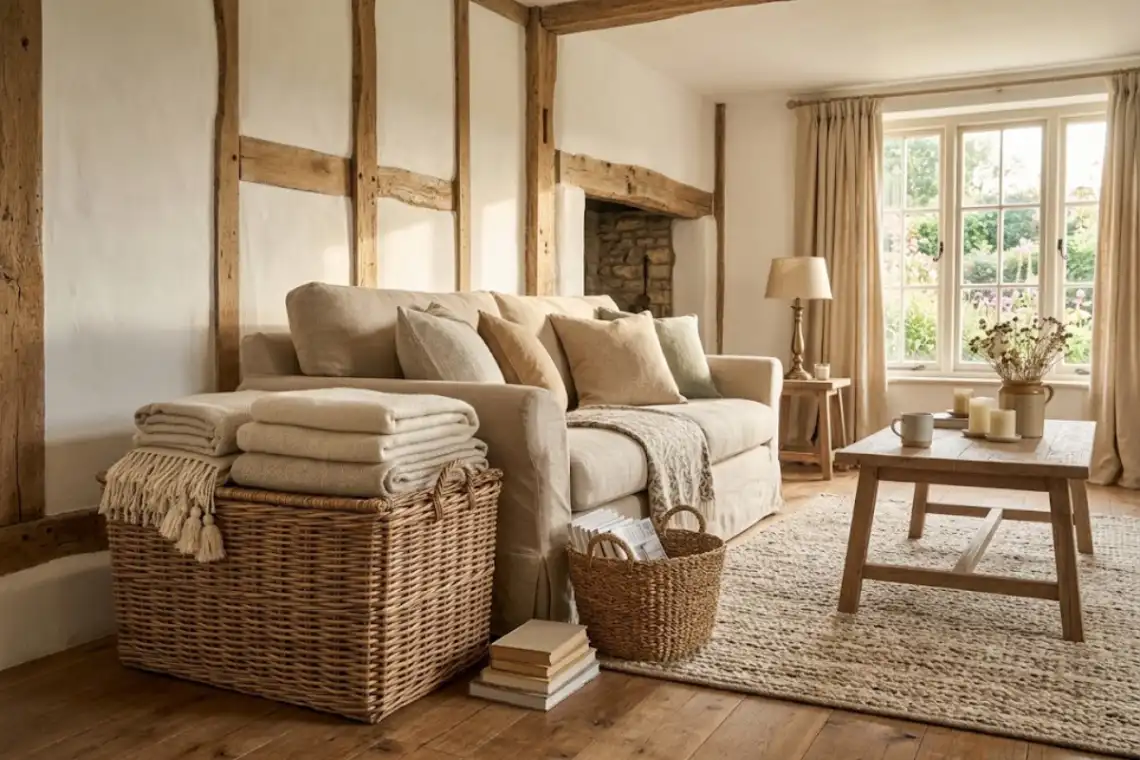
A cluttered living room can lose its cozy charm quickly, especially when blankets, toys, and magazines have nowhere to go. Woven baskets offer attractive storage that suits rustic furniture and natural materials.
- Place a large basket beside the sofa for extra throws.
- Use a lidded basket for toys or miscellaneous household items.
- Keep a smaller basket near an armchair for books and reading accessories.
- Choose natural fibers that complement the room’s wood tones.
Match basket sizes to their purpose rather than buying an identical set for every corner. Seagrass, wicker, and rattan each bring slightly different textures. Keep baskets away from damp areas, and check that their bases sit securely on the floor. Practical storage should make everyday tidying easier, not create more visual clutter.
Vintage Floral Cushions
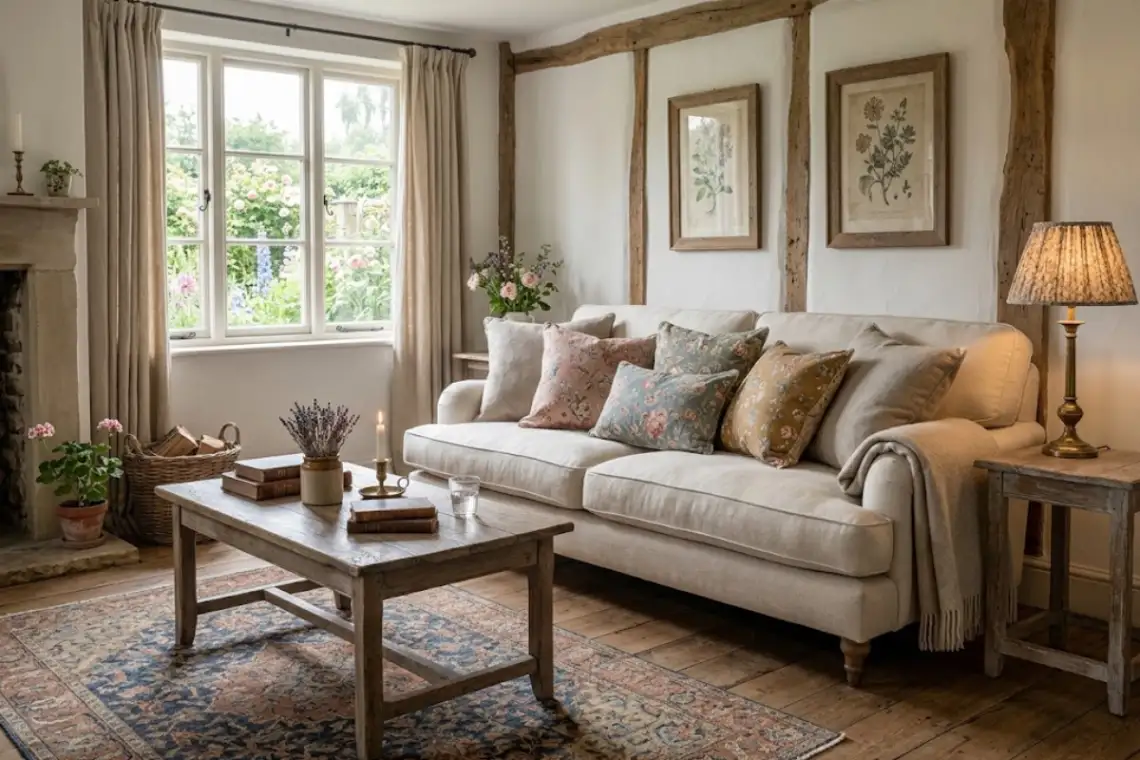
Small floral details can soften the strong lines of wooden furniture and give a neutral sofa a distinctly vintage personality. Choose faded botanical prints rather than overly bright patterns to maintain the relaxed character of a rustic room.
Mix one larger floral cushion with smaller solid-colored cushions in linen, cotton, or velvet. Repeat one color from the print in a nearby throw or piece of artwork so the arrangement feels connected. For a collected-over-time look, combine slightly different floral patterns with a shared color palette. Keep the sofa comfortable and avoid adding so many cushions that there is nowhere to sit.
Distressed Wooden Side Tables
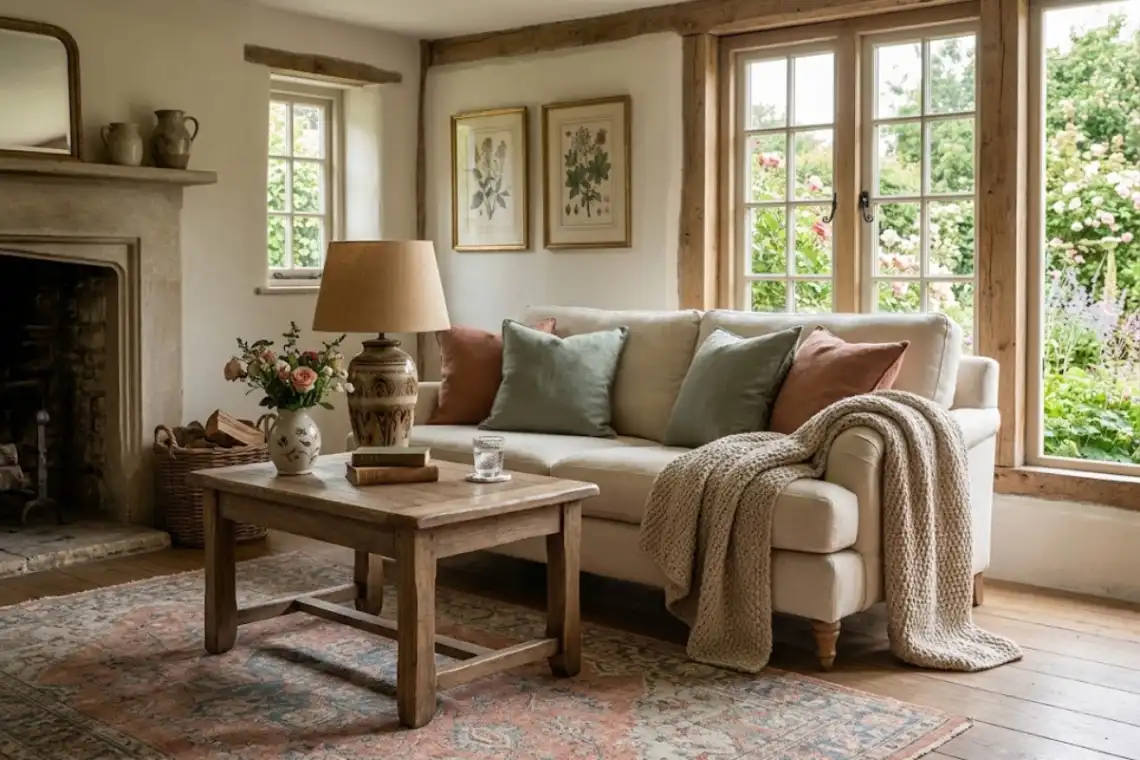
- Choose the right finish: Look for naturally worn edges, visible grain, and subtle imperfections rather than excessive artificial distressing.
- Keep essentials nearby: Place a lamp, reading glasses, or a small tray on the tabletop.
- Mix old and new: Pair the vintage-style table with a comfortable contemporary sofa.
- Check the proportions: Choose a table that sits close to the height of the sofa arm.
A side table can make a seating area feel more complete while providing useful everyday storage. Choose a piece that complements your coffee table without matching it exactly. Different wood tones can work together beautifully when they share warm undertones. Before buying a secondhand table, check its stability, drawer function, and surface condition.
Natural Wood Accent Walls
Quick Tip:
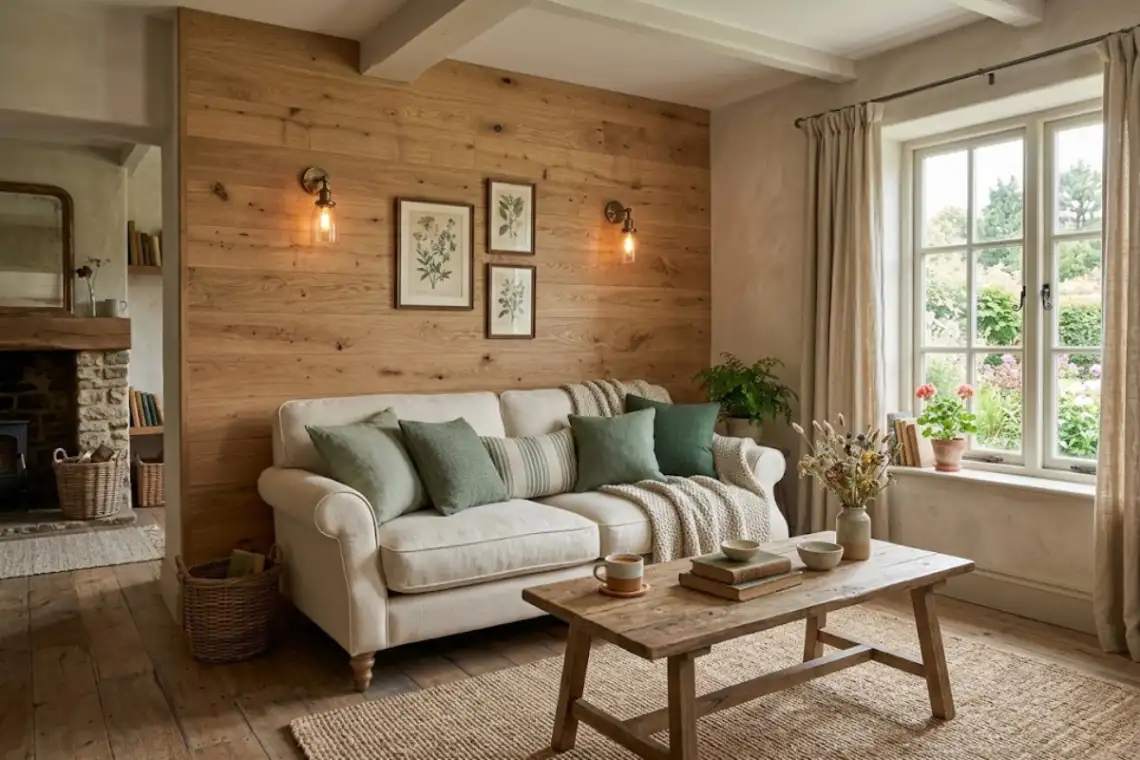
Choose one wall for the wood treatment, ideally behind the sofa or fireplace. Keep the other walls a warm white or soft cream to prevent the room from feeling dark. Sample the wood finish in morning and evening light before committing to the full installation.
Natural wood walls add depth and texture without requiring many decorative accessories. Vertical boards can draw the eye upward, while horizontal planks create a more traditional farmhouse appearance. For a budget-conscious update, consider reclaimed boards or a well-finished wood panel system. Check moisture conditions, fire-safety requirements, and installation instructions before adding wood near a fireplace or other heat source.
Rustic Fireplace Mantel Styling
BEFORE
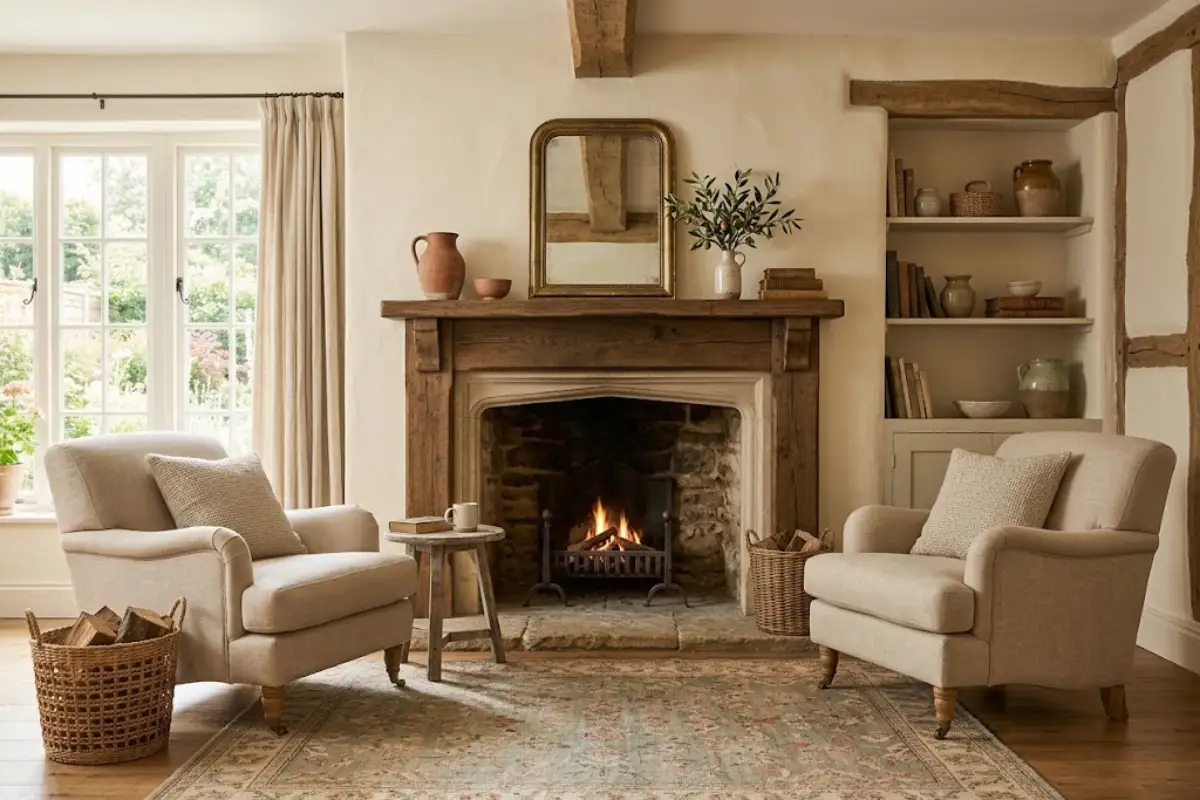
A bare mantel can leave the fireplace feeling disconnected from the rest of the living room. Filling it with too many ornaments, however, can make the area look crowded and distract from the stone or brickwork.
AFTER
A carefully balanced arrangement creates a focal point with just a few meaningful pieces. An antique mirror adds height, while pottery and greenery soften the harder architectural materials.
Start with one large object, such as a mirror or framed artwork, then add two or three smaller pieces at different heights. Leave enough empty space for the mantel itself to remain visible. Keep every accessory within the fireplace manufacturer’s required clearances, especially if you display dried greenery, paper items, or other combustible decorations. Review this official fireplace and home heating safety guidance before styling near an active heat source.
Earthy Terracotta Accents
DO
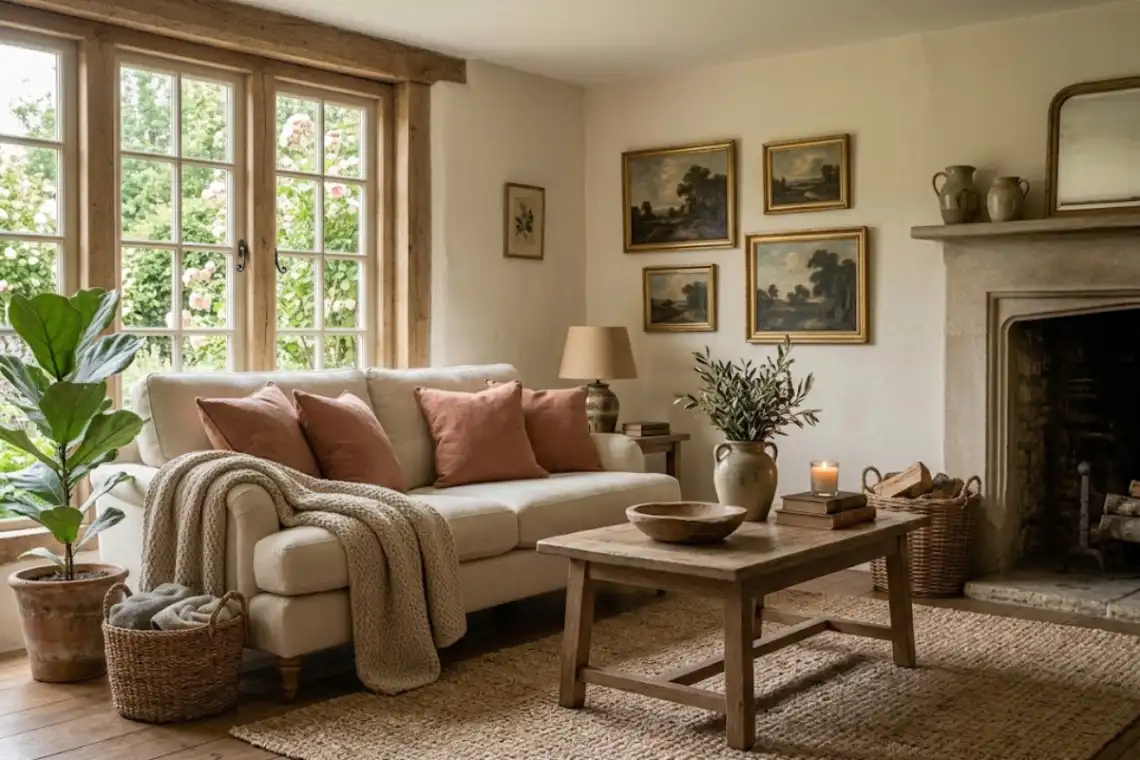
- Introduce terracotta through cushions, pottery, or a small decorative bowl.
- Pair clay tones with cream, warm brown, and muted sage.
- Repeat the accent color in two or three places for visual balance.
- Choose matte ceramics and textured fabrics for a natural finish.
DON’T
- Combine too many competing orange and red shades.
- Cover every surface with decorative objects.
- Choose a strong accent color without considering existing furniture.
- Overlook how artificial lighting changes the appearance of warm colors.
Terracotta adds a grounded warmth that works especially well with natural wood and vintage-inspired textiles. Start with removable accessories so you can adjust the color gradually. A clay-colored vase on a wooden coffee table or two cushions on a neutral sofa can provide enough contrast without overpowering the room.
Cozy Reading Corners
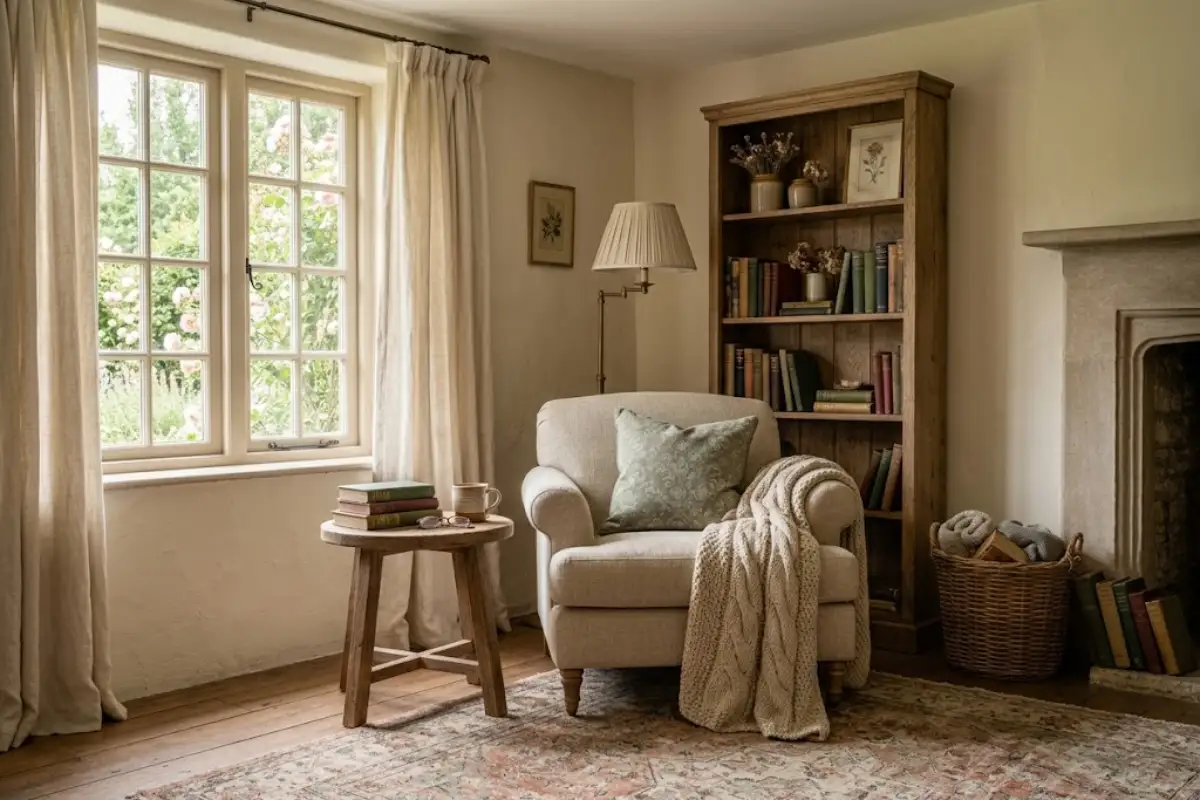
A quiet reading corner gives an underused living room corner a clear purpose. You do not need a separate library or a large floor area. A comfortable chair, focused lighting, and a small surface for books can create a practical retreat.
Place the chair near a window when possible, then add a floor lamp for evenings. Keep a side table within easy reach and use a basket to store blankets or current reading material. Choose upholstery that complements the main sofa, but allow a slightly different texture or color to distinguish the nook. Leave enough clearance around the chair to move comfortably and access nearby shelves.
Reclaimed Wood Shelving
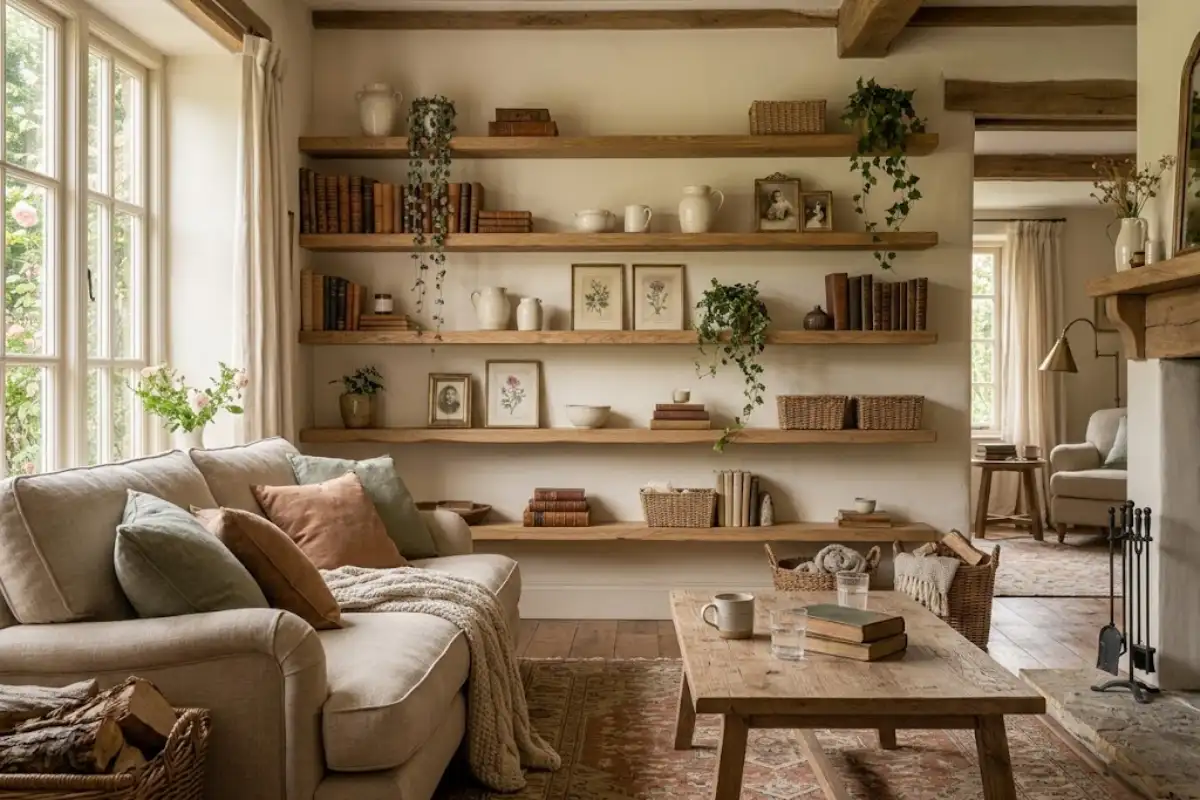
- Select the wall: Choose a section near the sofa or an unused corner where shelves will not obstruct movement.
- Measure carefully: Plan the shelf lengths and spacing around the books and objects you intend to display.
- Install securely: Use suitable brackets and fixings for the wall material and expected load.
- Style in layers: Combine books, pottery, framed artwork, and a little greenery.
- Leave breathing room: Keep some shelf space empty so the arrangement does not look crowded.
Reclaimed wood shelving combines practical storage with the character of aged timber. It works particularly well in rooms where you want to display meaningful objects without filling every surface with furniture. Check reclaimed boards for loose splinters, pests, and structural damage before installation. A consistent wood tone elsewhere in the room helps the shelves feel connected to the overall design.
Farmhouse Window Seating
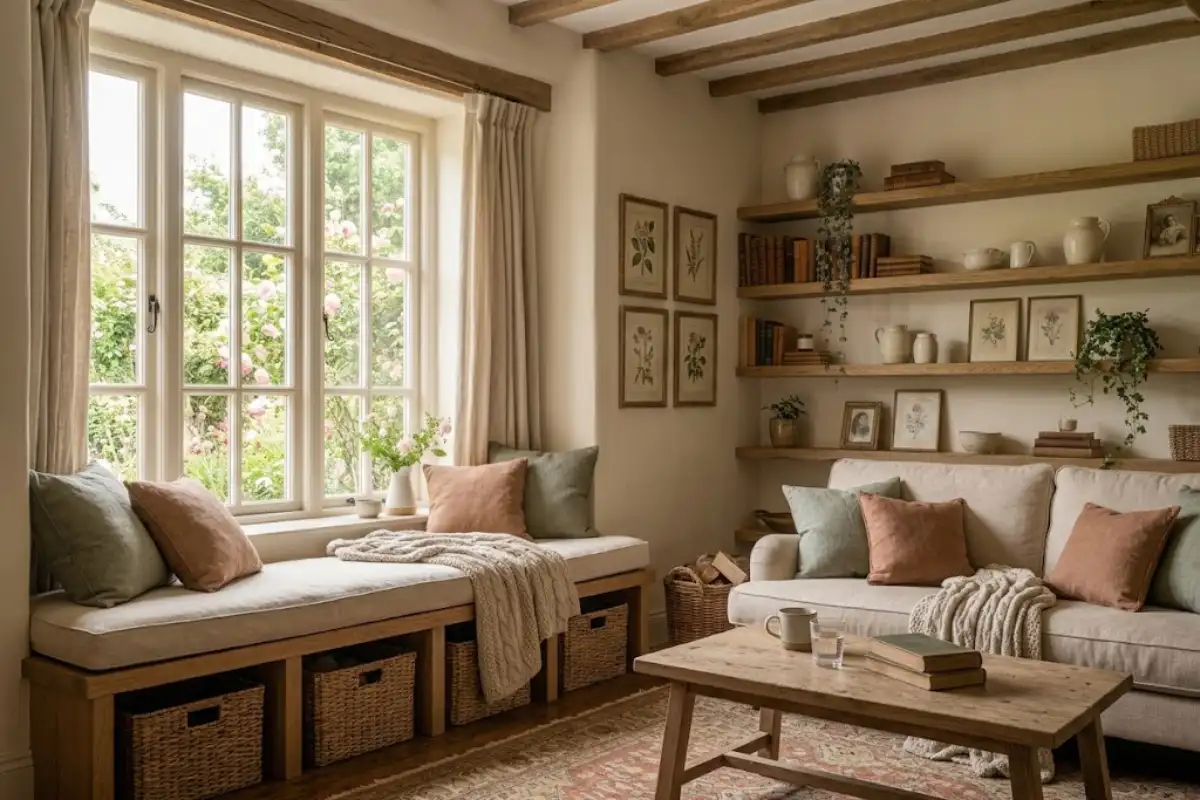
A sunny window seat makes an overlooked area useful while adding a relaxed cottage-inspired feature. The combination of natural light, soft cushions, and simple wooden details creates a comfortable place to read, enjoy a morning coffee, or watch the changing seasons.
Quick Tip:
Measure the window area before buying cushions or planning a built-in bench. Choose firm seat padding for support, softer back cushions for comfort, and removable covers for easier cleaning. If you use the space for storage, baskets or drawers can keep blankets and books organized.
For a more affordable version, position a sturdy wooden bench beneath the window and add a fitted cushion. Keep the styling simple so the view remains the main attraction. Check for drafts, condensation, and nearby heating equipment before placing upholstery close to the window. For more on making good use of daylight, read this guide to how natural daylight can improve indoor spaces.
Rustic Gallery Walls
BEFORE
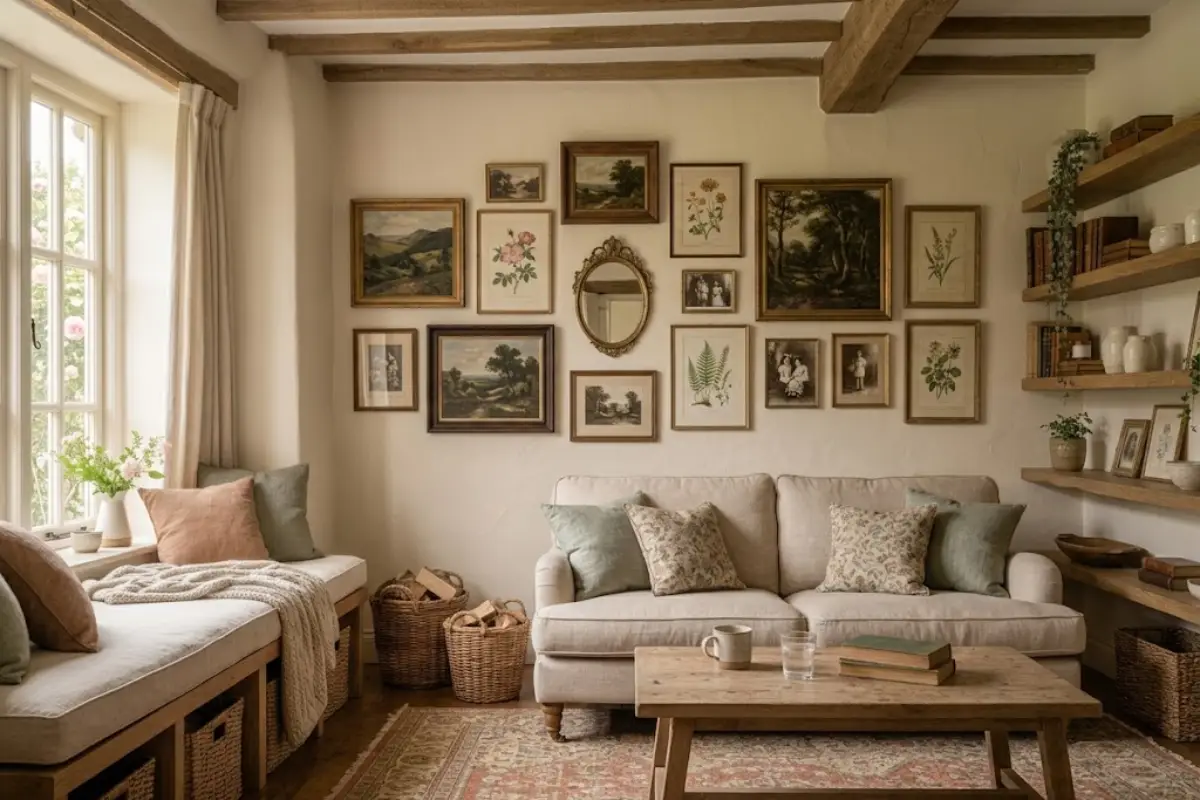
A large blank wall can make a living room feel unfinished, especially above a sofa or beside a fireplace. Randomly placed prints may also look disconnected from the furniture and colors already in the room.
AFTER
A coordinated gallery wall creates a personal focal point using artwork, photographs, and vintage-style frames. Repeating warm wood, brass, or muted colors helps different pieces feel connected.
Lay the frames on the floor first to test the arrangement before hanging anything. Mix larger landscape prints with smaller botanical illustrations, keeping consistent gaps between frames. Position the center of the arrangement at a comfortable viewing height and adjust it to suit the furniture below. Use appropriate wall fixings, particularly for heavy antique frames or mirrors.
Natural Woven Textures
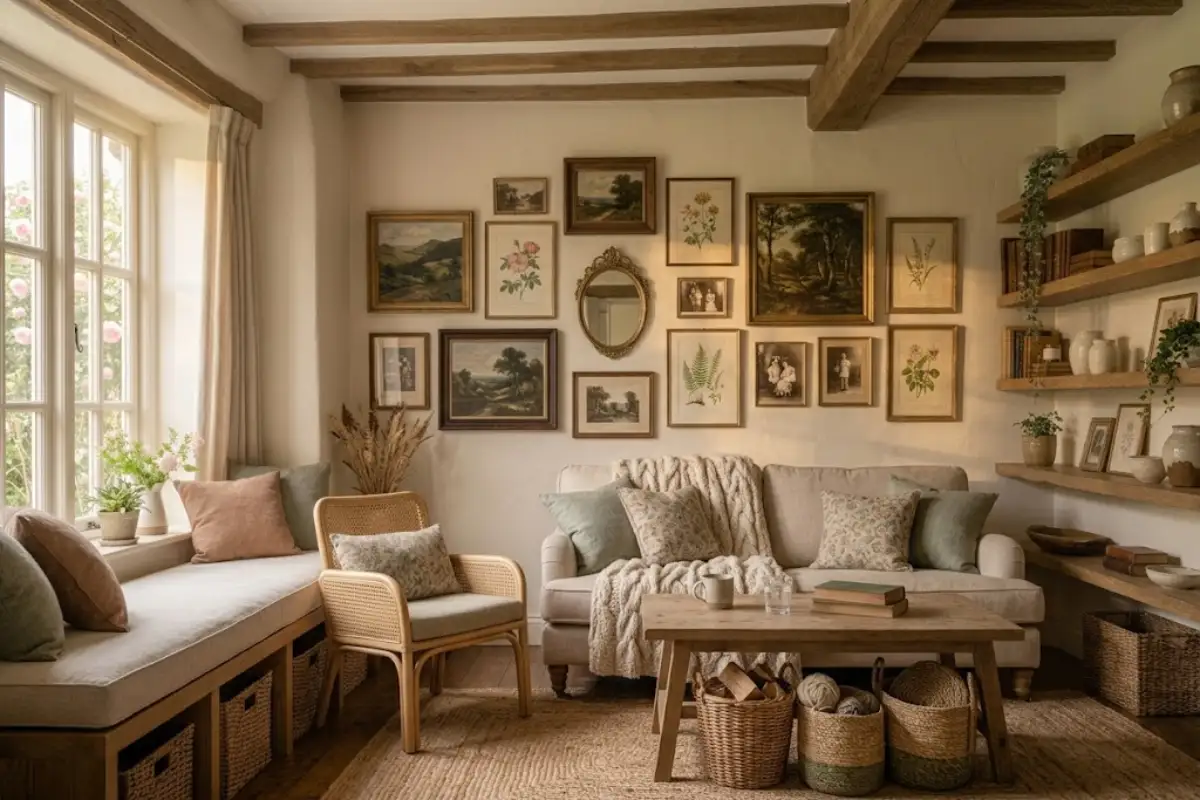
- Start with a textured rug: Choose jute or another natural-looking weave to ground the seating area.
- Add woven storage: Place a seagrass basket beside the sofa for blankets or magazines.
- Mix furniture materials: Pair a cane accent chair with solid wooden tables for visual contrast.
- Soften the arrangement: Use linen cushions and knitted throws to balance the firmer woven surfaces.
Natural textures help a rustic living room feel warm without relying on lots of decorative color. Combine two or three different weaves rather than using the same material everywhere. If you have pets or children, check cleaning requirements and choose durable pieces suited to everyday use. Keep walkways clear and secure lightweight rugs with non-slip pads. For more ways to bring natural textures and collected vintage details into other rooms, browse these cottage home decor ideas for a cozy, collected home.
Conclusion
Creating a warm, inviting living room starts with choosing details that reflect your personality and make everyday life more comfortable. These rustic living room ideas show how natural wood, soft textiles, vintage accessories, and thoughtful lighting can bring timeless charm into your home without requiring a complete makeover.
Start with one simple change, such as adding a knitted throw, styling a reclaimed wood table, or introducing muted sage accents. Small updates can gradually shape a room you love spending time in.
Save this article on Pinterest, try your favorite ideas, and share it with someone who loves cozy, vintage-inspired interiors. Your dream living room can begin with just one thoughtful detail.